

Audio By Carbonatix
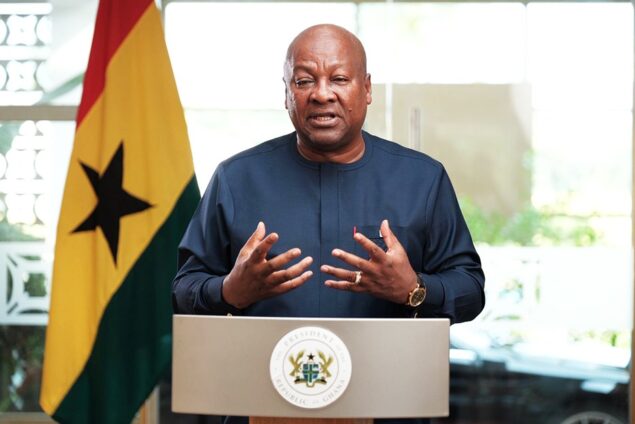
President John Dramani Mahama has urged the international community to adopt a more inclusive and sustained approach to reparatory justice, stressing that acknowledgement of historical injustices must be matched by meaningful action.
Speaking at the opening of the Next Steps Conference on Reparatory Justice in Accra on Thursday, June 18, 2026, President Mahama said the recent adoption of a United Nations resolution addressing slavery and its legacy should be regarded as the start of a broader process rather than a final achievement.
“The adoption of the resolution was never intended to mark the end of the journey,” he said. “It was intended to provide the foundation for a more meaningful process of engagement, reflection, and action.”
The President emphasised that efforts to secure historical justice would be strengthened by expanding participation among nations, institutions and stakeholders with varying perspectives.
According to him, meaningful progress depends on dialogue and cooperation rather than exclusion.
“The pursuit of historical justice is not strengthened by narrowing the circle of participation. It is strengthened by expanding it,” he stated.
He added that engagement should continue even where countries differ in their historical, legal or political interpretations of the issues involved.
President Mahama further noted that the enduring effects of the transatlantic slave trade continue to impose a responsibility on the global community to pursue coordinated responses.
“We are here because recognition creates responsibility, and because the enduring consequences of this history continue to demand thoughtful, coordinated, and sustained international engagement,” he said.
He pointed to Ghana’s castles, dungeons and former slave routes as enduring reminders of a history that shaped societies across Africa, the Americas and beyond.
The President also highlighted the experiences of enslaved women and girls, arguing that their suffering has often been overlooked in historical narratives and must be given greater prominence in discussions on reparatory justice.
“Their suffering was often concealed from the official record, leaving them victims not only of the extinction, but also of historical erasure,” he said.
The conference has brought together heads of state, policymakers, academics and representatives of the African diaspora to explore practical steps towards advancing reparations and addressing the long-term legacy of slavery.
Latest Stories
-
JoyNews’ Jacqueline Ansomah Yeboah selected for UK Media Excellence for Emerging Technology Fellowship
7 minutes -
Mental Health Alliance urges government to operationalise Mental Health Fund
21 minutes -
Ghana–Holy See agreement heads to Parliament after Cabinet approval
25 minutes -
Luv FM Corporate Games 2026: Kumasi Central Prisons, Amanfiman Bank win big amid fun
37 minutes -
WAFU B U17: Ghana top Group A after win over Togo
1 hour -
Ho Central Mosque reopens amid unresolved leadership dispute that led to closure
2 hours -
Minority caucus questions GH¢16.4m in Ablakwa’s SA evacuation spending, demands independent audit
2 hours -
Gender Ministry meets Nana Akua Addo’s husband over domestic violence after hospital discharge
3 hours -
UG Vice-Chancellor urges swift operationalisation of National Research Fund
4 hours -
Pope Leo to have surgery after lump found in lung
4 hours -
Joseph Cudjoe writes: Ghana must break free from the dangerous mindset that natural resources are the foundation for wealth
4 hours -
Children among 109 dead after boat capsizes off Djibouti, UN says
4 hours -
OmniBSIC Bank’s 11th health walk promotes fitness and business growth
4 hours -
2026 World Maritime Day: Danish Embassy organises “The Gulf of Guinea Speaks”
5 hours -
New Economy will tackle unemployment and restore hope – Ato Forson
5 hours