

Audio By Carbonatix
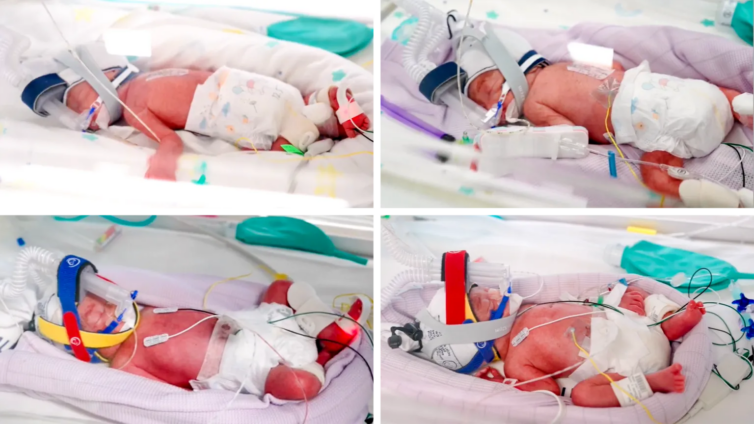
An Australian woman has given birth to rare, naturally conceived identical quadruplets after a pregnancy described as "extremely high risk" by the Royal Brisbane and Women's Hospital.
The four girls, who were delivered via caesarean section at 28 weeks and four days on 14 July, were monozygotic quadruplets - where a single fertilised egg splits into four embryos.
The hospital said the girls' mother, 34-year-old Jenitar Na'amoana, and her husband Jortham, already had four children and were taken by "immense surprise" when told to expect quadruplets.
Dr Alexa Bendall, who cared for the mother from the start of her pregnancy, estimated identical quadruplets occur "at one in every 15 million pregnancies" and said "but to share the same placenta - this is unheard of".
Bendall, who is a maternal foetal medicine specialist and obstetrician, said such a pregnancy was very high-risk, with the hospital admitting Na'amoana as an inpatient at 25 weeks so she could be monitored.
"We always said that if we could get her to 28 weeks, we would be doing well," Bendall said.
"So the fact that we've got four beautiful, healthy babies born at 28 weeks and four days is incredible and we're very happy to be a part of it," she added.
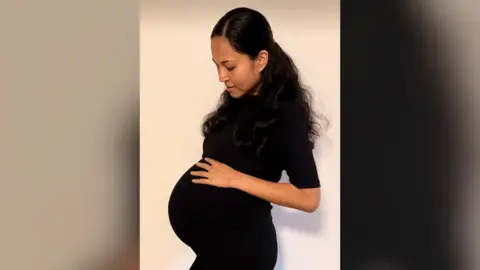
"Jenitar has taken everything in her stride from day one... she has somehow dodged every complication and risk for both herself and her babies," Bendall said.
The newborn girls have been named Emily, Harriet, Catherine, and also Alexa, after Alexa Bendall, who described it as "a beautiful tribute".
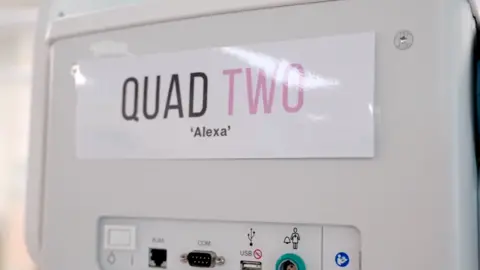
The babies will stay in the hospital's neonatal intensive care unit until they grow to full term and are "currently doing extremely well", Bendall added.
The parents' other children are between one and 10 years old and the mother has recently launched an online fundraising campaign to help buy a van with at least 10 seats.
In a message alongside the fundraiser, which has already received over A$37,000 (£19,261) in donations, Na'amoana wrote: "Our four precious miracles have arrived safely, and while our hearts are overflowing with gratitude, the reality of caring for four newborns at once has brought challenges we never could have imagined."
Naturally conceived quadruplets are extremely rare, with doctors estimating the odds at about one in 700,000 births.
Latest Stories
-
DirectAid concludes flood relief distribution across Greater Accra, Kasoa
21 minutes -
Volcano eruption leaves 150,000 passengers stranded in Indonesia
23 minutes -
Black Princesses Coach Charles Sampson confident ahead of World Cup opener against Ecuador
2 hours -
TV presenter among 12 sentenced to death in Egypt drugs case
2 hours -
Accra Airport VIP Lounge project to be completed this year without taxpayer funds – Ablakwa
3 hours -
NPP clears all 47 aspirants for 2026 national officers’ election
3 hours -
Domelevo backs OSP probe into GH¢70k allegation
4 hours -
CAF Confederation Cup: Dennis Korsah confident Nations FC can overturn Mali defeat
4 hours -
Chief Justice should stop commenting on some political issues – Domelevo
5 hours -
‘I don’t trust OSP’ to probe GH¢70k ‘bribe’ allegation – Kwasi Kwarteng
5 hours -
Road inspections not to witch-hunt contractors – Kwame Agbodza
5 hours -
Inter Milan mount stunning comeback to beat Napoli
5 hours -
Modric plans to play for Croatia past 41st birthday
5 hours -
Bayern fail to score for first time in 59 games
6 hours -
Bawumia preparing new cocoa policy package for farmers – Annoh-Dompreh
6 hours