

Audio By Carbonatix
The Bank of Ghana (BoG) has warned that traders, transport operators, businesses and individuals who refuse to accept cedi and pesewa coins as payment for goods and services risk arrest, prosecution, fines or imprisonment under Ghana's currency laws.
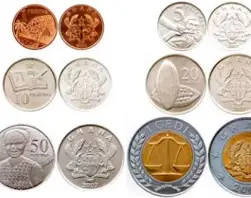
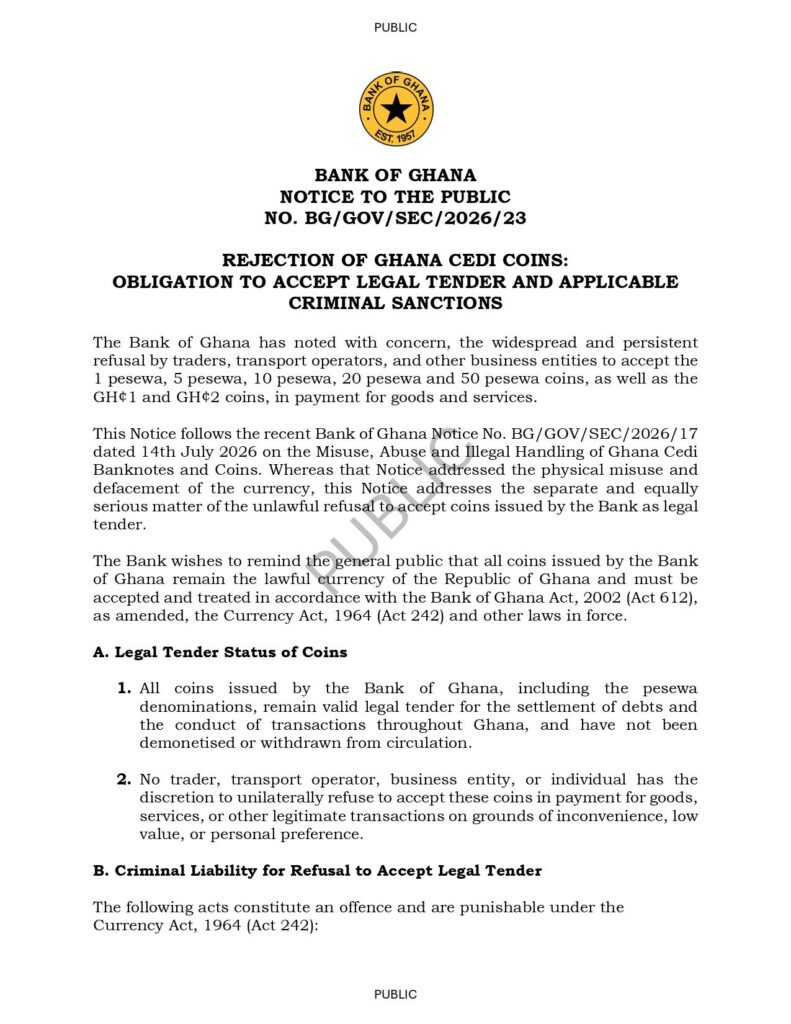
In a public notice issued on 22 July 2026, the central bank expressed concern over what it described as the "widespread and persistent refusal" by some traders, transport operators and business entities to accept 1 pesewa, 5 pesewa, 10 pesewa, 20 pesewa and 50 pesewa coins, as well as GH¢1 and GH¢2 coins, during commercial transactions.
The notice follows an earlier directive issued on 14 July 2026 on the misuse, abuse and illegal handling of Ghana cedi banknotes and coins. While that notice focused on the physical abuse and defacement of the currency, the latest directive addresses the unlawful refusal to accept coins issued by the Bank of Ghana as legal tender.
Coins remain legal tender
The Bank reminded the public that all coins issued by it remain valid legal tender and must be accepted in accordance with the Bank of Ghana Act, 2002 (Act 612), as amended, the Currency Act, 1964 (Act 242) and other applicable laws.
It stressed that none of the coins currently in circulation has been demonetised or withdrawn.
"All coins issued by the Bank of Ghana, including the pesewa denominations, remain valid legal tender for the settlement of debts and the conduct of transactions throughout Ghana, and have not been demonetised or withdrawn from circulation."
The central bank further stated that no trader, transport operator, business entity or individual has the discretion to reject coins simply because of their denomination or personal preference.
"No trader, transport operator, business entity, or individual has the discretion to unilaterally refuse to accept these coins in payment for goods, services, or other legitimate transactions on grounds of inconvenience, low value, or personal preference."
Offenders risk jail term, fines
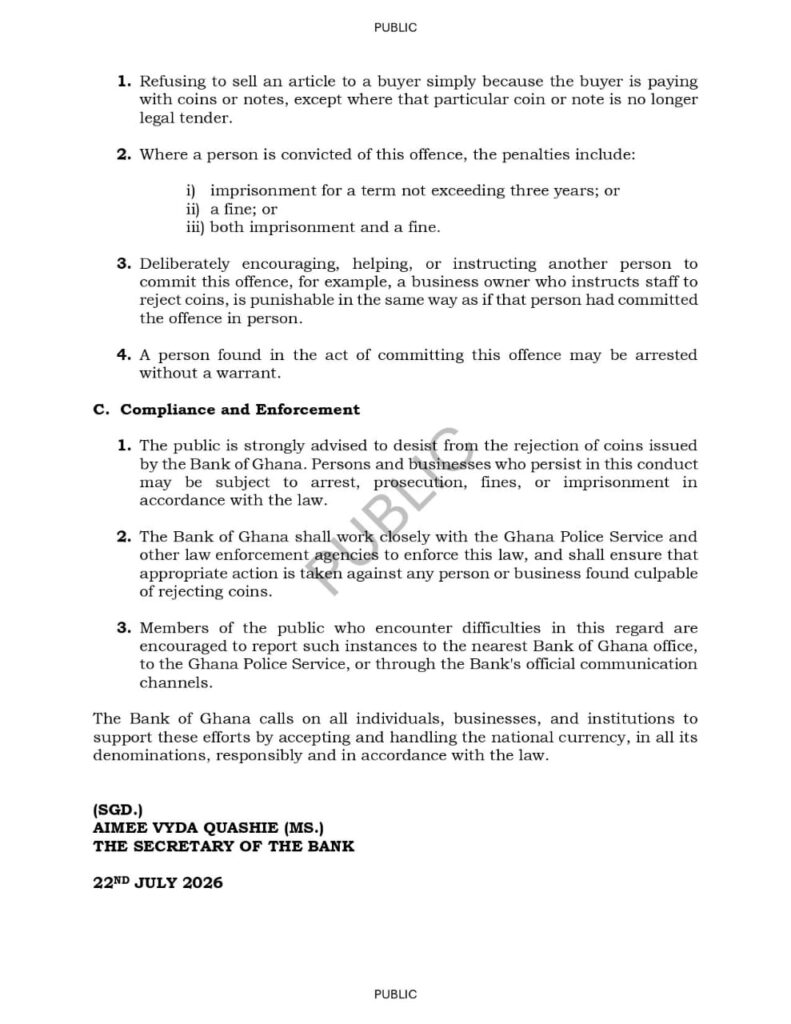
The Bank warned that refusing to sell goods or provide services because a customer is paying with coins constitutes an offence under the Currency Act, 1964 (Act 242), unless the coins or notes in question have ceased to be legal tender.
According to the notice, persons convicted of the offence face: Imprisonment for a term not exceeding three years; A fine; or both imprisonment and a fine.
The Bank also cautioned business owners against directing employees to reject coins, saying they would be held equally liable.
"Deliberately encouraging, helping, or instructing another person to commit this offence, for example, a business owner who instructs staff to reject coins, is punishable in the same way as if that person had committed the offence in person."
It further warned that: "A person found in the act of committing this offence may be arrested without a warrant."
Police to enforce directive
The Bank of Ghana said it would work closely with the Ghana Police Service and other law enforcement agencies to ensure strict enforcement of the law.
"The Bank of Ghana shall work closely with the Ghana Police Service and other law enforcement agencies to enforce this law, and shall ensure that appropriate action is taken against any person or business found culpable of rejecting coins."
The public has also been urged to report any instances of refusal to accept coins to the nearest Bank of Ghana office, the Ghana Police Service, or through the Bank's official communication channels.
Public urged to comply
The central bank advised businesses and members of the public to desist from rejecting coins, warning that persistent offenders could face criminal sanctions.
"The public is strongly advised to desist from the rejection of coins issued by the Bank of Ghana. Persons and businesses who persist in this conduct may be subject to arrest, prosecution, fines, or imprisonment in accordance with the law."
The Bank concluded by calling on all individuals and institutions to support efforts to preserve confidence in the national currency by accepting and handling all denominations responsibly.
"The Bank of Ghana calls on all individuals, businesses, and institutions to support these efforts by accepting and handling the national currency, in all its denominations, responsibly and in accordance with the law."
Latest Stories
-
Mourinho prints out ‘red card’ incidents after Real lose derby
15 minutes -
Atletico beat 10-man Real in feisty Madrid derby
26 minutes -
Twelve Tribes of Israel Ghana to mark 40 years with anniversary celebration
54 minutes -
GPL 2026/27: Hearts held by Bechem as Kotoko, Samartex share spoils
1 hour -
My Story (Kwaku Antwi-Boasiako)
1 hour -
We expect growth rate to re-accelerate in second-half of 2026 – IC Insights
1 hour -
The ungodliness and unrighteousness underlying the National Cathedral mess!
2 hours -
T-bills auction: Government fails to achieve target; yield on 91-day-bill remains unchanged
2 hours -
It’s Ghana’s shame to denigrate Nkrumah when the whole world honours him as African of the Century – Asiedu Nketiah
2 hours -
No other nationalist can compare to Nkrumah – Asiedu Nketiah
2 hours -
Collateral Registry: Foreign banks accounted for GH¢19.9bn of secured credit in quarter 2, 2026
2 hours -
This government should expect scrutiny – Asiedu Nketiah
2 hours -
Two-year-old girl dies in domestic fire at Cantonments
3 hours -
Asiedu Nketiah urges better working conditions for journalists
3 hours -
JoyNews’ Precious Semevoh wins climate change reporting award at Bono GJA Awards
3 hours