

Audio By Carbonatix
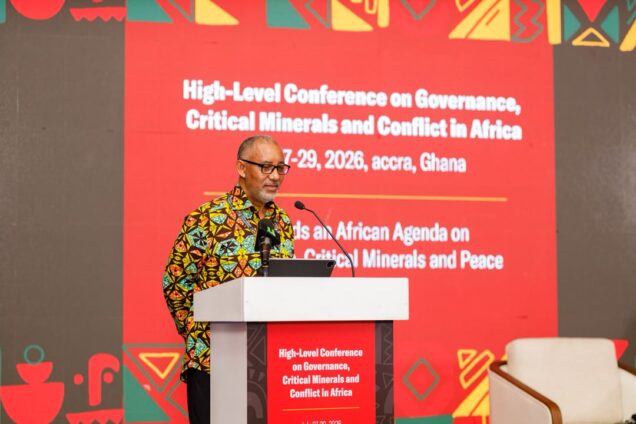
The Acting Chief Executive of the Millennium Development Authority (MiDA), Alexander Kofi-Mensah Mould, has cautioned African leaders and policymakers against allowing the continent’s emerging critical minerals boom to become another resource curse.
He urged a new approach centred on good governance, value addition and inclusive development.
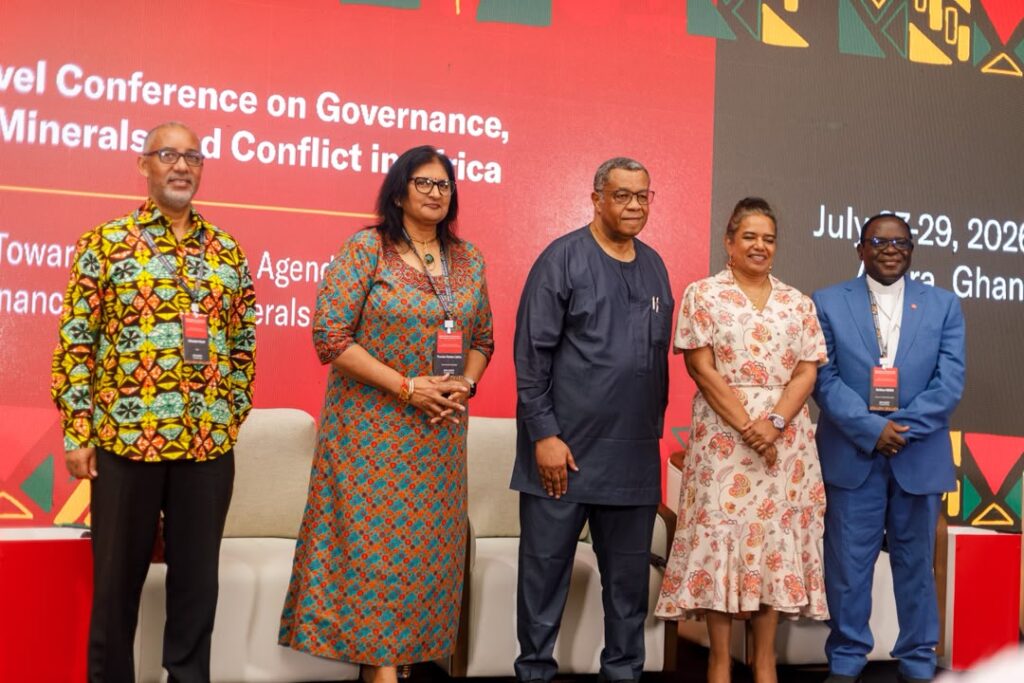
Mr Mould made the call while delivering the opening remarks at the High-Level Conference on Governance, Critical Minerals and Conflict in Africa, organised by the Open Society Foundations (OSF), in Accra.
The three-day conference, which brought together government officials, policymakers, development partners, researchers and civil society actors, is examining how Africa can responsibly harness its critical mineral resources to promote peace, strengthen democratic governance and drive sustainable economic transformation.
According to the MiDA CEO, Africa is entering a defining period in its development journey as critical minerals become increasingly important to the global economy, particularly in the transition to cleaner energy, advanced manufacturing and emerging technologies.
He described critical minerals as “the new oil, the fuel of the green transition and the foundation of tomorrow’s economy,” but stressed that the key question Africa must confront is not only what the world wants from the continent, but what Africa wants for itself.
"Before we ask what the world wants from Africa, perhaps we should ask a more important question: What does Africa want for itself?" he said.
Mr Mould noted that the growing global demand for minerals such as lithium, cobalt, graphite and other strategic resources presents Africa with an extraordinary opportunity.
However, he warned that natural resource wealth on its own has never been a guarantee of prosperity.
He pointed to the experiences of resource-rich countries around the world, noting that while some nations have successfully transformed their natural resources into stronger institutions, diversified economies and improved living standards, others have experienced conflict, inequality and instability.
"The difference was never simply the resource. The difference was governance," he stated.
The MiDA Boss explained that effective governance goes beyond the extraction and management of mineral resources. “It requires building institutions that command public trust, ensuring transparency and accountability, managing expectations fairly and ensuring that communities benefit meaningfully from the resources found within their territories.”
He cautioned that when citizens and host communities feel excluded from the benefits of their natural wealth, economic opportunities can quickly become sources of frustration and tension.
"When people feel excluded from the benefits of their own natural wealth, opportunity can give way to frustration, and frustration can all too easily give way to instability," he said.
Mr Mould challenged African countries to move beyond a commodity-export model and focus on building industries, technologies and enterprises that capture greater value from the mineral value chain.
He argued that Africa’s success should not only be measured by the volume of minerals extracted and shipped abroad, but by the industries created, jobs generated, skills developed and African businesses empowered to compete globally.
“Can Africa move beyond measuring success by what leaves our shores, and begin measuring success by what we build within them?" he asked.
He stressed that the future of Africa’s mineral sector should not be framed as a choice between international investment and African ownership, but rather as an opportunity to build partnerships that deliver mutual benefits while strengthening African capacity, leadership and participation.
"The future is not a choice between international investment and African enterprise. Rather, it lies in building partnerships that create value for all while steadily strengthening African capability, ownership and leadership across the entire mineral value chain," he said.
Mr Mould also highlighted the human dimension of the critical minerals conversation, reminding participants that behind every mineral deposit are communities, families and young people whose aspirations and futures depend on the decisions being taken today.
He said the debate must ultimately focus on whether Africa’s mineral wealth will become a catalyst for peace, opportunity and shared prosperity or another chapter of unrealised potential.
“Ultimately, this conference is about far more than minerals. It is about people," he emphasised.
He urged participants to embrace difficult conversations and develop practical solutions that will guide Africa towards a future where critical minerals support inclusive growth and stability.
According to him, future generations will not judge Africa’s current leaders by the abundance of resources inherited, but by the wisdom, integrity and foresight with which those resources were governed.
“Future generations will not judge us by the abundance of the resources we inherited. They will judge us by the wisdom, integrity and foresight with which we governed them," Mr Mould said.
He expressed the hope that the conference would strengthen collective resolve and inspire policies that ensure Africa’s critical minerals become a foundation for peace, prosperity and shared progress across the continent.
Latest Stories
-
Video: Immunity should be exercised without creating classism – Inusah Fuseini on cocaine bust
10 minutes -
Ghana Air Force passes out 293 recruits after six months of intensive training
18 minutes -
EOCO vrs Baffour Awuah: EOCO should have secured warrant before arrest attempt at court – Inusah Fuseini
22 minutes -
Triple fibre cuts disrupt telecom services across Northern, Oti regions – Sam George
25 minutes -
Politicisation could undermine parliamentary probe into cocaine seizures – Dr Osae-Kwapong
31 minutes -
EOCO chases MP: Can Section 41 cure lacuna in EOCO Act? – Inusah Fuseini asks
34 minutes -
GNFS, GWL inspect fire hydrants in Ministries enclave; 23 found faulty
40 minutes -
Gov’t directs release of 50,000 bags of grain to ECOWAS
42 minutes -
Ghana, Germany deepen cooperation on railways, labour mobility
47 minutes -
Huge crowds greet Pope in Paris for open-air Mass
58 minutes -
‘I never said I’ll declare a state of emergency’ – President Mahama on galamsey
2 hours -
Bobby Banson condemns EOCO’s attempted arrest of Nana Agyei Baffour Awuah
2 hours -
When Kumasi begins to look like somebody is in charge
2 hours -
Parliamentary probe into cocaine seizure would be a waste of time – Inusah Fuseini
2 hours -
Cocaine seizure: Focus on Ghana’s reputation, not partisan blame – Osae-Kwapong
2 hours