

Audio By Carbonatix
University leaders have raised concerns that Ghana's tertiary institutions are not adequately preparing students for the demands of the modern job market, warning that the gap between academic training and industry needs is contributing to graduate unemployment.
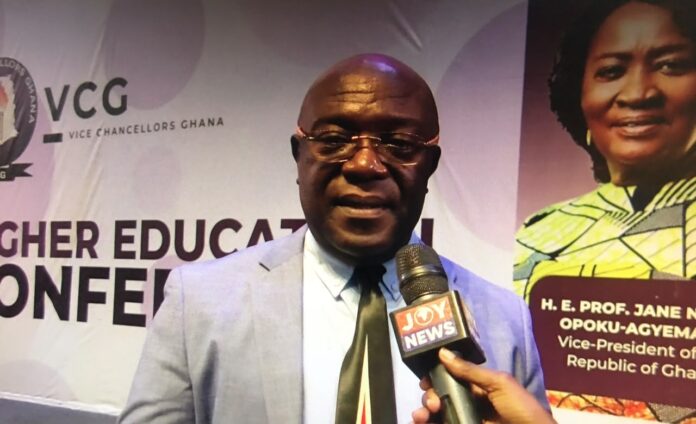
The concerns were raised at the Vice Chancellors Ghana Conference in Accra, where education leaders called for stronger collaboration between universities and industry to improve graduate employability.
Speaking at the opening of the conference, Chairman of Vice Chancellors Ghana, Professor Richard Kwasi Amankwah, urged universities to place greater emphasis on practical, technical and entrepreneurial skills alongside academic instruction.
"We should be able to train our students in such a way that they acquire the necessary skills and, by the time they complete school, within a short time, they will be able to find a job for themselves or create one for themselves," he said.
Professor Amankwah acknowledged that many students are unable to gain sufficient practical experience before graduating because of limited opportunities for industrial attachment and internships.
"If we are training about two hundred electrical engineers in the classroom, we need two hundred spaces in industry for these people to be able to try their hands on the things that they have learnt. If they are not able to get it, then there is a little gap," he explained.
He stressed that addressing the challenge would require stronger partnerships between universities, industry and other stakeholders to expand opportunities for experiential learning.
"It is important for all of us to support and create more avenues where people who complete our programme will get the chance to go through the training that they require to be ready for the world of work," Professor Amankwah said.
The conference brought together vice chancellors and higher education stakeholders to discuss strategies for improving the quality and relevance of university education in Ghana amid changing labour market demands.
Participants emphasised that equipping graduates with practical and employable skills will be critical to reducing graduate unemployment and supporting national economic development.
Latest Stories
-
FTBLRLIFE targets Ghana in expansion of global grassroots football network
1 hour -
Former ‘American Idol’ contestant sentenced to life without parole for wife’s murder
3 hours -
Education Ministry commends Ghanaian teachers on World Teachers’ Day 2026
3 hours -
NPP can reconcile with aggrieved members who want to return – Nana Akomea
3 hours -
Tamale Child Deaths: Vehicle owner arrested as IGP deploys homicide team
4 hours -
From ShattaFest to MoMo Fest: Entertainment takes centre stage in youth engagement
4 hours -
Nigerian military aircraft crashes, killing 32
4 hours -
MTN encourages Ghanaians to use MoMo for saving, investing and financial planning
4 hours -
Absa Bank Ghana names Stephen Ato Frimpong as Board Chair
4 hours -
Pickford ‘almost caused crash’ with careless driving
4 hours -
Author and former politician Jeffrey Archer dies aged 86
4 hours -
No education reform can succeed without teachers – Education Ministry
4 hours -
Gauff condemns racist abuse after China Open win
4 hours -
Medvedev disqualified for hitting spectator with ball
5 hours -
Oliseh scores twice in late comeback win for France
5 hours