

Audio By Carbonatix
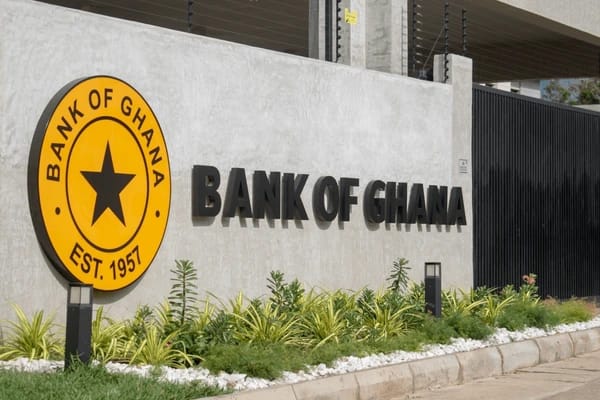
A member of Parliament's Economy and Development Committee, Fred Kyei Asamoah, says current concerns about the Bank of Ghana's negative equity should not come as a surprise, insisting that questions surrounding some of the central bank's operations had been raised years earlier.
Speaking on Joy FM's Top Story, Mr Kyei Asamoah questioned why the Minority's assertion that the central bank had become technically insolvent or bankrupt was being treated as a new development.
According to the Offinso North MP, this was not the first time the Bank of Ghana had reported negative net equity.
He said concerns over some of the bank's programmes had previously been brought before Parliament, but attempts to subject them to broader parliamentary scrutiny were unsuccessful.
“If you remember correctly, in 2025, we called the Bank of Ghana Governor and the bank to come and explain issues regarding their buildings,” he said on Tuesday, August 18.
Mr Kyei Asamoah added that the Minority later sought to have the central bank appear before a bipartisan parliamentary group to provide further explanations on some of its programmes to prevent additional financial losses.
However, he alleged that those efforts were blocked by the Majority.
“When we raised another issue that we wanted the bank to come and explain to Parliament through a bipartisan group so that we could also act and ensure that we did not incur more losses regarding programmes the bank engaged in, the Majority blocked that,” he claimed.
The Offinso North MP also referenced Ghana's recent economic reforms under the International Monetary Fund (IMF)-supported programme, noting that the country had already gone through a painful restructuring process aimed at restoring macroeconomic stability.
He also cited the Bank of Ghana's domestic gold purchase programme, arguing that some of the policies adopted by the central bank had long been a subject of concern.
Mr Kyei Asamoah said Parliament and policymakers must learn from previous experiences and ensure that the country does not repeat past mistakes.
“We've learned some lessons from the past, and we hope to ensure that this country does not go through those losses again,” he said.
He also questioned the sustainability of the current situation, describing it as a “steroid-infused game” and suggesting that underlying structural issues still needed to be addressed.
His comments come amid renewed debate over the Bank of Ghana's financial position and whether the central bank's negative equity amounts to technical insolvency.
Latest Stories
-
Mr President, Ghana was mentioned at the UN; why aren’t we talking about it?
1 hour -
Accra to convene Africa’s regulators and markets on tokenisation at AVAS 2026
1 hour -
The Paradox of Plenty — When every smartphone becomes a newsroom
2 hours -
GTA sensitises taxi drivers in ‘Know Ghana’ tourism campaign
3 hours -
Archbishop Agyinasare calls for responsible speech amid growing social media abuse
3 hours -
‘It will be inexcusable for gov’t not to honour payment of teachers’ arrears by 30th October’ – Haruna Iddrisu
3 hours -
Forbes’ World’s Best Employers 2026: No Ghanaian firm ranked among 900 companies
3 hours -
Electronic processing of teachers’ data: ‘The decision is the Controller’s’ – GES boss
3 hours -
Teachers’ Strike: Haruna Iddrisu questions paper-based processing of promoted teachers’ data
3 hours -
Savannah Region: Kunfusi bridge collapses again, leaving nearly 4,000 residents cut off
4 hours -
Teachers’ strike: GES targets Monday deadline to submit promotion data to Controller
4 hours -
Inflation to average 11.3% in 2027 – Fitch Solutions
4 hours -
‘I didn’t campaign for NDC to come and do this nonsense’ – Kpebu on EOCO’s conduct
4 hours -
Fitch Solutions maintains policy rate forecast of 14% by December 2026
4 hours -
Diaspora Nasara Caucus congratulates Mohammed Ali Suraj, new NPP executives
6 hours