

Audio By Carbonatix
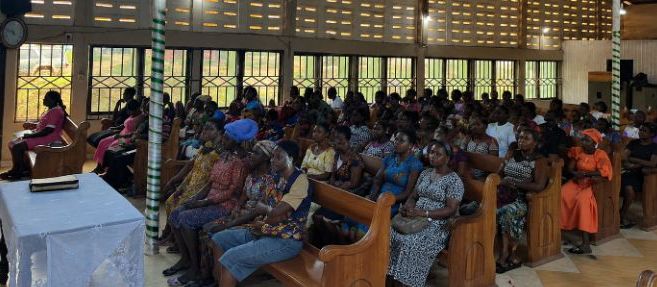
The Eastern Regional Coordinating Council (ERCC), in collaboration with the United Nations Population Fund (UNFPA), has engaged parents on adolescent sexual and reproductive health to help them guide their children through adolescence.
The engagement formed part of efforts to help parents understand the challenges adolescents face and support them with the right information and guidance at home.
Michael Agyeman, the Eastern Regional Programme Focal Person, told the Ghana News Agency (GNA) that the training was organised under the Adolescent Girls Programme (AGP).
It is a sub-component of the UNFPA-Government of Ghana (GOG) Eighth Country Programme, sponsored by the Canadian government.
He said the programme was designed to empower young people, particularly adolescent girls, with information, education, and services to help them realise their full potential and grow into responsible adults.
Mr Agyeman said 120 parents took part in two separate engagements held at Akoase in the Birim North District and Nkawkaw in the Kwahu West District.
He explained that the parent engagements followed earlier sessions with students, adding that it was important to involve parents so they could understand the issues discussed with the adolescents and continue the conversations at home.
“The idea was that, after meeting the students, we should also meet the parents and discuss the same issues with them so they can appreciate what the adolescents are going through,” he said.
“When they go back home, they are expected to discuss the issues with their children and guide them to shape their future and become the responsible adults we all expect them to be,” he added.
The training was facilitated by experienced personnel from the Ghana Health Service and other institutions.
Madam Edith Asiedua, a Public Health Nurse at the Eastern Regional Health Directorate, urged parents and communities to promote positive masculinity by encouraging boys and men to adopt healthy behaviours and attitudes.
She said promoting positive masculinity could help prevent violence, build healthier relationships and support peaceful living in families and communities.
Madam Asiedua also briefed parents on gender-based violence and urged them to pay attention to changes in their children’s behaviour, which could be signs of abuse.
She said parents had an important role to play in creating safe homes for children, noting that children often learned behaviours and attitudes from what they saw at home.
She encouraged parents to show respect, avoid violence and communicate openly with their children to help them develop healthy attitudes towards relationships, gender and conflict resolution.
Madam Asiedua also introduced parents to available referral pathways for abuse cases and stressed the need for families to know where and how to seek professional help when children experienced or were at risk of violence and abuse.
She identified the Ghana Education Service, the Department of Gender, Social Welfare, and the Domestic Violence and Victim Support Unit (DOVVSU) of the Ghana Police Service, as well as community leaders as key stakeholders in addressing gender-based violence.
Latest Stories
-
Benjamin ‘Clean Sheet’ Asare wins GPL Player of the Year, bags $38,000 vehicle from JAC Motors
2 minutes -
‘We need to investigate the ‘system’—IES calls for probe into recent blackouts
3 minutes -
AMCOA conference in Accra to tackle health worker migration, patient safety
7 minutes -
NCA Director-General urges journalists to protect public trust in digital era
7 minutes -
NSMQ 2026: Accra Girls make flying start, cruise past Asamankese, Sandema to book one-eighth spot
9 minutes -
Schools as sanctuary
10 minutes -
Bilingual and Multilingual Education: Harnessing linguistic diversity for better learning
11 minutes -
2026 Joy Sports Invitational Tournament: The Luckiest confirmed as headline sponsors
13 minutes -
NSMQ 2026: Edinaman SHS ends seven-year wait, qualifies for one-eighth stage
16 minutes -
2027 Women’s World Cup playoffs: Black Queens to face Ecuador, Uzbekistan and Papua New Guinea
17 minutes -
FDA records GH¢70m surplus in 2025 despite laboratory equipment, illicit product concerns
42 minutes -
‘Are we regulating danger or birthdays?’ – IMANI questions 15-year used vehicle restriction, asks GSA
43 minutes -
Russia, Ghana discuss transport cooperation and logistics development
44 minutes -
Government clears $1.47bn legacy energy debt, saves $500m through fuel-switching — Jinapor
47 minutes -
Why October for Wontumi’s bail application when it could have been heard in August or September? — Frank Davies
53 minutes