

Audio By Carbonatix
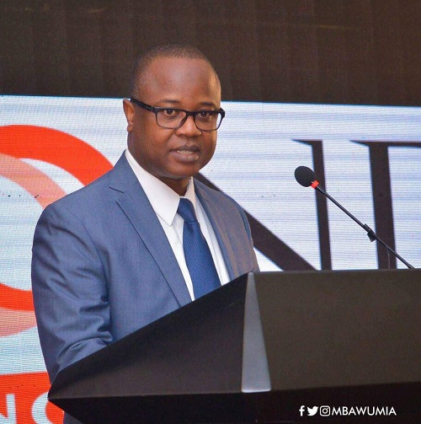
Ghana’s banking sector was undercapitalised for much of the decade preceding the 2017 cleanup, with weak governance and risk-management practices across parts of the system, former Bank of Ghana First Deputy Governor, Dr. Maxwell Opoku-Afari, has revealed.
According to hm, the 2017–2019 banking-sector clean-up and recapitalisation was therefore critical to restore confidence and strengthen prudential standards, including by resolving weak institutions and reinforcing governance in line with core supervisory principles.
In a paper titled “How not to Miss a Crisis: Lessons from Ghana”, he said the fiscal costs were, however, significant.
The paper highlighted the International Monetary Fund’s (IMF’s) 2024 review of Ghana’s Economic Credit Facility (ECF)-supported programme, the resolution and clean-up costs of the domestic banking system that reached about 7.1% of Gross Domestic Product (GDP) over 2017–2021, largely absorbed by the state in the absence of an effective deposit insurance framework at the time.
In addition, the paper revealed that the recapitalisation bonds equivalent to about 2.6% of GDP were issued to support undercapitalised banks as part of broader financial-sector strengthening following the Domestic Debt Exchange Programme (DDEP).
These interventions illustrate a “spillback” from the financial system to the budget to safeguard financial stability and depositor confidence.
Persistent Fiscal Deficits, Others Visible Before Crisis
Dr. Opoku-Afari continued that these weaknesses — persistent fiscal deficits, weak revenue mobilisation, quasi-fiscal operations, and rising sovereign exposure within the banking system — were visible well before the crisis.
“Yet political incentives and overly optimistic assumptions contributed to delayed recognition and corrective action by key domestic and external stakeholders, until risks crystallised”.
Notwithstanding elevated vulnerabilities, he pointed out that fiscal policy continued to be approved through the budget process, market access was maintained for a time (including oversubscribed Eurobond issuances), and external partners continued to provide financing and complete programme reviews.
According to him, this disconnect between underlying fundamentals and financing conditions raised questions about risk pricing, the effectiveness of domestic oversight, and the extent to which surveillance frameworks adequately captured liquidity and rollover risks.
He added that this feedback loop is central to understanding the subsequent domestic-debt build-up.
“As fiscal financing increasingly shifted toward Cedi-denominated instruments, banks and other institutional investors became the primary absorbers of government issuance, tightening the sovereign–bank nexus and increasing the macro-financial costs of any loss of market confidence. The next section therefore broadens the lens beyond the banking system to examine how domestic debt expansion—alongside off-budget obligations and contingent liabilities—shaped Ghana’s overall debt dynamics and amplified crisis transmission”.
Latest Stories
-
Eight projects win €2m Ghana grants for vaccine and drug research
2 minutes -
Ghana steps up Ebola surveillance amid rising cases in Africa
14 minutes -
Acting Rent Control Commissioner directs landlords, hostel operators to issue rent cards
14 minutes -
Nsawam Prison to host Teacher Licensure Examination for inmates for first time
14 minutes -
IES demands stronger safeguards amid temporary Akosombo power arrangement
20 minutes -
Four workers dead after being hit by train in Japan
35 minutes -
Fact-check: Did GoldBod make a loss in 2025? Here’s what the records show
50 minutes -
Rev. Adzraku Kevi calls for more women in leadership
52 minutes -
Dagbon Kingdom suspends Damba Festival to honour late Overlord
54 minutes -
Harry and Meghan’s UK security arrangements remain a ‘private matter’ – Andy Burnham
59 minutes -
At least 15 killed in Kyiv as Ukraine grapples with air defence shortages
1 hour -
Existing banking model could draw a dagger through Ghana’s 24-Hour Economy
1 hour -
NSMQ 2026: Heartbreak for Techiman SHS as Wesley High edge them by one point in prelims
1 hour -
IES demands release of July 29 blackout report after latest nationwide outage
1 hour -
Eastern TESCON backs Boakye Agyarko for NPP National Chairman
2 hours