

Audio By Carbonatix
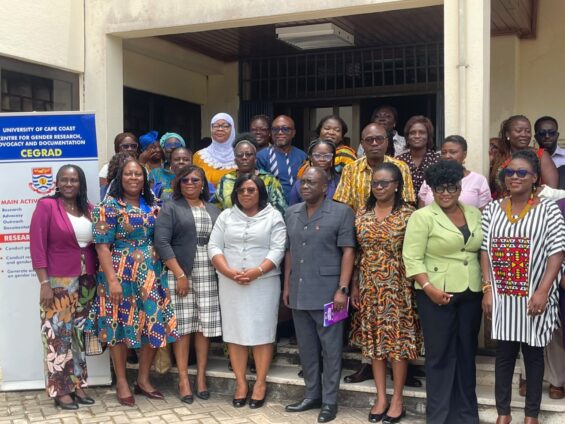
The Institute for Educational Planning and Administration (IEPA) and the Centre for Gender Research, Advocacy and Documentation (CEGRAD) have launched the “Women Leading Change in Africa” programme to equip women educators with the digital skills and leadership capacity needed to drive transformation in education and educational leadership.
The initiative, implemented in collaboration with the International Centre for Higher Education Innovation under UNESCO (UNESCO-ICHEI) and the UNESCO Institute for Information Technologies in Education (UNESCO IITE), is a landmark programme aimed at systematically bridging digital and Artificial Intelligence (AI) competency gaps among female educators and institutional leaders across Ghana.
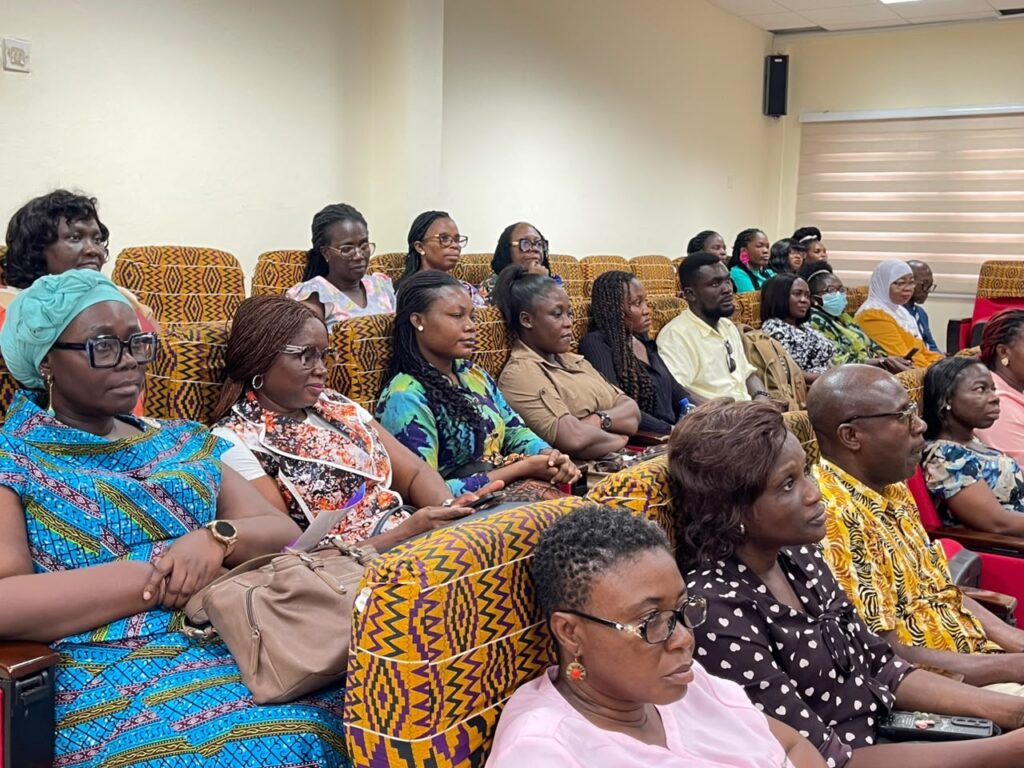
At the launch of the initiative at the Institute of Education of the University of Cape Coast (IEPA-UCC), the Director-General of the IEPA, Prof. Michael Boakye-Yiadom, while addressing the formidable structural barriers faced by women in academia, noted that the initiative will help equip female educators and institutional leaders with the digital and AI competencies needed to overcome these barriers and advance their careers.
“The ambition of African women in academia is not in question, but the structural barriers they face remain formidable. If women are to steer this digital transformation rather than be sidelined by it, we must provide targeted, high-level capacity building. This is why we are rolling out this comprehensive online capacity-building platform,” Prof. Boakye-Yiadom stated.
Prof. Boakye-Yiadom also stated that the initiative is anchored in Africa’s tradition of female leadership, where women have historically played key roles in shaping communities and driving change.
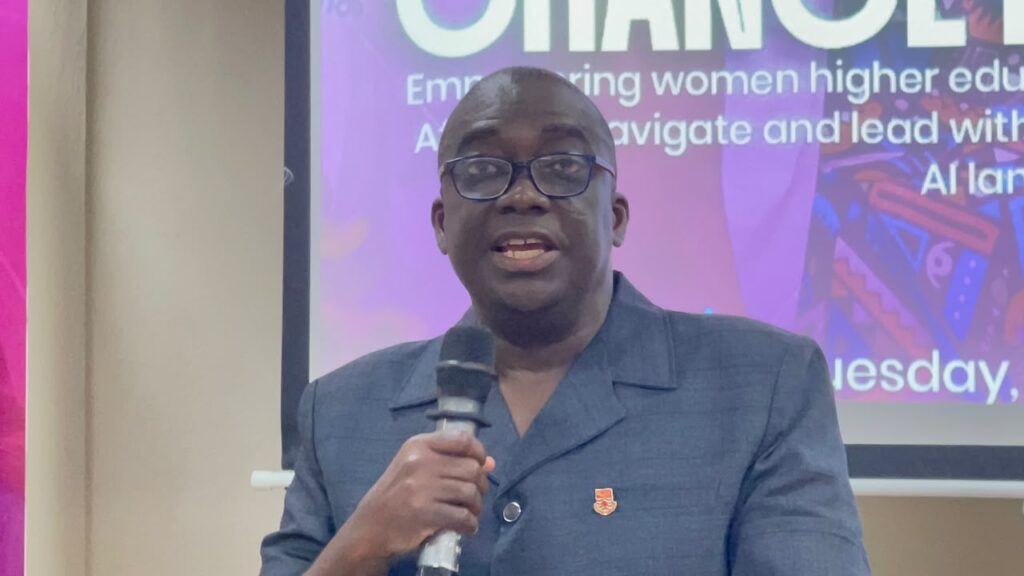
“This initiative is profoundly rooted in our heritage of Afrocentric leadership. The African female has consistently been the trusted advisor, the visionary leader and the resilient implementer. The story of Yaa Asantewaa comes to mind. True transformation will only occur when we match this inherent leadership capacity with cutting-edge technological opportunity,” he noted.
Although Artificial Intelligence continues to reshape higher education and administrative processes, only one in five education administrators feel adequately equipped to lead the technological transition.
The “Women Leading Change in Africa” programme, therefore, seeks to address this gap by providing women in education with free, comprehensive and micro-credentialed training through the IIOE platform, complemented by intensive in-person capacity-building sessions.
According to the director of CEGRAD, Prof. Eunice Fay Amissah, even though technology presents significant opportunities to expand access to education, improve teaching and research, strengthen administration and drive innovation, its benefits must be deliberately made inclusive and accessible to women and girls.
She stated that, “If women are absent from the spaces where digital tools are designed, adopted, governed and evaluated, existing inequalities may simply be reproduced in new and more sophisticated forms, and we do not want that. That is why this initiative is both timely and necessary. At CEGRAD, we believe that gender equality is not an optional addition to development.”
Prof. Amissah emphasised that the initiative is targeting 1,000 female higher education professionals by the end of 2027, as part of efforts to strengthen digital and leadership capacity within the sector.
“Through digital micro-certifications, online leadership training and targeted policy advocacy, this project seeks to equip higher education professionals with the knowledge, skills, networks and confidence needed to lead in a rapidly changing educational environment. Reaching 1,000 professionals by the end of 2027 is significant. But beyond the numbers, we must focus on transformation. One trained woman can influence students in her classroom and create meaningful change within her institution and community.”
She also called on the private sector to create safe and accessible opportunities for women and girls, while urging governments to champion policies that promote and support women’s advancement.
The Acting Pro Vice Chancellor of the University of Cape Coast, Prof. Christine Adu-Yeboah, reaffirmed the university's support and said that the initiative will strengthen collaboration among universities and equip women in education with the skills needed to navigate the rapidly evolving digital and Artificial Intelligence landscape.
“IEPA will work closely with universities across the country to extend these courses to women professionals and leaders. This inter-university cooperation further demonstrates UCC’s role as a collaborative leader in advancing the national education sector. I encourage female leaders, educators and administrators across the country to enrol in these courses and equip themselves with the skills needed to navigate and lead in the digital era. The use of artificial intelligence in higher education is increasing rapidly and is moving from a novelty to a fundamental and non-negotiable skill.”
With UNESCO-ICHEI and UNESCO IITE supporting the programme’s implementation and expansion to women across the country, the Women Leading Change in Africa initiative is set to strengthen digital leadership and equip women in higher education with the skills to drive meaningful change in Ghana and beyond.
The Director of UNESCO, Prof. Jin Li, pointed out that "it is now Ghana's turn to write its own chapter”, with hope that the programme “will reach women across the country, and through them, the next generation of students they teach and mentor”.
The Project Coordinator and Deputy Director in charge of Administration at the IEPA, Ama Serwaa Nerquaye Tetteh, said the initiative will extend its reach beyond the 26 colleges of education to equip more women across the education sector.
“We will work with all 26 colleges of education and even go beyond them. We are targeting 1,000 females in education, from higher education professionals to pre-tertiary educators.”
The programme will be delivered through the IIOE.org online platform, where participants can register for more than 57 micro-certification courses covering areas including agriculture, health, arts, home economics and other IEPA programmes.
The programme is 100% free and aligned with UN Sustainable Development Goals 4 and 5 as well as the African Union Agenda 2063. It is expected to run from August 2026 to November 2027.
Latest Stories
-
Mahama calls for responsive healthcare regulation to improve patient safety
6 minutes -
IERPP accuses GoldBod of breaching transparency law, says quarterly trading reports removed from website
11 minutes -
Future of Energy Conference: Africa cannot industrialise in the dark – ECOWAS Bank President
12 minutes -
Help comes to Alajo as DirectAid brings relief items to flood victims
32 minutes -
“Somebody created the loss” – Haruna Mohammed backs Minority’s call for GoldBod probe
33 minutes -
Hope for agroecological farmers: Scientific Research supports urine-based weed management as safer alternative to glyphosate
34 minutes -
Israeli Film Festival returns to Accra with free screenings to boost cultural exchange
34 minutes -
SONABEL considers opening Bagré Dam spillway on Friday amid rising water levels
36 minutes -
Ghana Maritime Authority, Humanity First commission 4 boreholes in Wa to end water scarcity and keep children in class
47 minutes -
In Photos: Day Two of ‘SYPALA 2026’ focuses on governance, economic freedom and youth leadership
1 hour -
Wontumi withdraws from NPP chairmanship race, urges support for Bawumia
1 hour -
UCC-IEPA, CEGRAD launches free digital skills programme to empower 1,000 women in education
1 hour -
NPP dismisses extortion allegation against Afenyo-Markin, says focus remains on GoldBod losses
2 hours -
Guinness Ghana DJ Awards 2026 set for December 4 as ‘All Out’ era begins
2 hours -
GhIE inducts 183 engineers, calls for stronger action on galamsey and infrastructure
2 hours