

Audio By Carbonatix
The Ghana Chamber of Mines is calling for targeted energy interventions to help make local gold refining commercially viable as Ghana moves to retain more value from its gold resources.
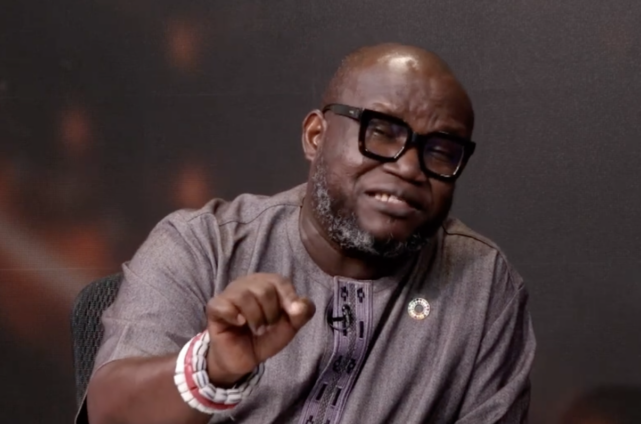
Chief Executive Officer of the Chamber, Dr Ken Ashigbey, says the cost of power, taxes and other operational expenses could make local refining more expensive. He believes government and industry must work together to reduce those costs.
Speaking on Joy News’ PM Express on Wednesday, Dr Ashigbey said local value addition comes with a cost, but all stakeholders must contribute to making the policy work.
“But before I even get to the time scale, in terms of the issue about the cost, you know, and again, we should all realise the fact that you know, when you want to do this local content, it comes with some cost.”
He said the government must also play its part by reviewing taxes and levies affecting the sector.
“But again, all of us need to chip in. The more we do in this country, and the more we all work together, government needs to put its skin in the game.”
Dr Ashigbey said discussions are already underway on the taxes and levies associated with the refining drive.
“The issue, of course, is that the taxes and the levies that are on government would have to look at that, and I know that conversation is going on.”
He also wants private refinery operators to invest in technology that can bring down their costs.
“The issues of these private sector people who own the refineries in terms of the technology that they need to put in to be able to ensure that they reduce their cost, it’s something that we need to do.”
But energy remains a major concern.
Dr Ashigbey believes policy decisions could be considered to give refineries access to cheaper power, particularly hydroelectricity.
“The issues of even power, you know, currently the cost of power, so there might be some policy decisions that would have to be taken.”
He posed a specific question for policymakers.
“Because of the criticality of refineries, is it possible that in the energy mix, we will give them, you know, a lot more of the hydro that is cheaper?”
He also pointed to plans under the 24-hour economy to develop large solar plants that could lower energy costs.
“The conversations, the 24-hour economy is thinking of putting together some solar, you know, large solar plants, you know, and which will reduce the cost of energy to around 3 to 4 cents per kilowatt-hour.”
His comments come as Ghana intensifies efforts to process more gold locally. GoldBod has directed Self-Financing Aggregators to refine gold doré in Ghana before export, effective September 1, 2026.
The directive means unrefined gold doré will no longer be approved for export. Refining must be done at a refinery approved or designated by GoldBod, with the cost borne by the aggregator or its approved offtaker.
The move forms part of GoldBod’s mandate under the Ghana Gold Board Act, 2025 to regulate gold refining and value addition.
It also aligns with the broader government objective of increasing local value retention in the gold industry.
Dr Ashigbey believes the policy is necessary but must be implemented collaboratively.
“So I think that this issue of beneficiation is a good thing for us, and, you know, all of us need to chip in.”
“But it has to be done collaboratively. Government need to embrace industry to all work together so that we all can reduce the cost of doing this, because we’re looking at the issues of value.”
He said the mining sector is already absorbing some additional costs under existing arrangements.
“So there’s some pain again, like the large scale, for example, the GANRAP, we are starting with a 0.55 when we are doing a weighted average of 0.098.”
“So that’s some extra subsidisation that we’re doing for government, but we all need to work together as a collective, as a country, as investors working together with government to reduce the cost.”
Latest Stories
-
Central Region NPP women executives endorse Justin Kodua for second term
34 minutes -
Oil extends losses on hopes for Middle East talks to ease supply woes
41 minutes -
Gov’t must put its skin in the game – Chamber of Mines demands tax, power relief for local gold refining
48 minutes -
I was suspended for defending NPP constitution, not opposing Akufo-Addo – Sammy Crabbe
59 minutes -
NPP suffered serious systemic failure in 2024 polls – Sammy Crabbe
1 hour -
AMA arrests six drivers, mates over alleged overcharging of passengers
1 hour -
NDC activist backs Sammy Gyamfi, calls for facts in GoldBod $1.7bn debate
1 hour -
‘Don’t exclude us, then blame us for indiscipline’ – Catholic Bishops on GES Council removal
1 hour -
Minority accuses Majority of wasting parliamentary time after emergency recall
1 hour -
Catholic Bishops warn galamsey becoming source of employment for Ghanaian youth
1 hour -
Can we give refineries more cheap power? – Chamber of Mines pushes energy solution for local gold refining
1 hour -
Parliament to vet Zanetor Agyeman-Rawlings, Mahama Ayariga today
1 hour -
Presby Moderator urges government to show political will to end galamsey
2 hours -
Lower Manya Assembly supports PwDs with livelihood items
2 hours -
Legislation to regulate EV charging in the offing – Energy Minister
2 hours