

Audio By Carbonatix
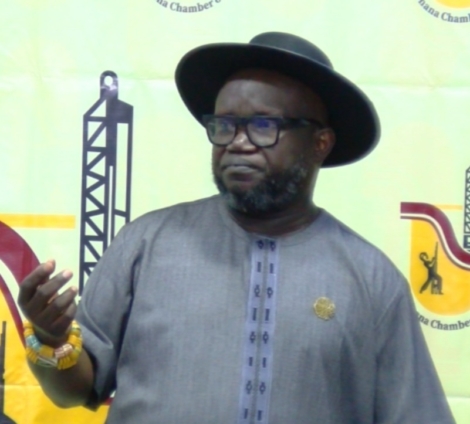
The Chief Executive Officer of the Ghana Chamber of Mines, Dr Ken Ashigbey, says Ghana’s push to refine gold locally will come with additional costs for industry players, but the country must be prepared to absorb some of the financial burden to retain more value from its mineral resources.
Speaking on JoyNews’ PM Express on Wednesday, Dr Ashigbey said local content and value-addition initiatives inevitably involve additional costs.
“But before I even get to the time scale, in terms of the issue about the cost, you know, and again, we should all realise the fact that you know, when you want to do this local content, it comes with some cost,” he said.
He, however, stressed that the burden should not be left to mining companies alone, arguing that government and industry must work together to make local refining commercially sustainable.
“All of us need to chip in. The more we do in this country, and the more we all work together, government needs to put its skin in the game,” he said.
Chamber calls for tax, technology and energy interventions
Dr Ashigbey said government should review taxes and levies that could increase the cost of refining, while private refinery operators must invest in technology to improve efficiency and reduce operating expenses.
“The issue, of course, is that it is coming from the taxes and the levies that are on; government would have to look at that, and I know that conversation is going on,” he said.
He also urged private refinery owners to adopt technologies that would help bring down their production costs.
“The issues of these private sector people who own the refineries in terms of the technology that they need to put in to be able to ensure that they reduce their cost, it’s something that we need to do,” he added.
Energy costs, he said, remained another major consideration for the refining industry.
“The issues of even power, you know, currently the cost of power, so there might be some policy decisions that would have to be taken,” Dr Ashigbey said.
He suggested that government consider providing refineries with greater access to relatively cheaper hydroelectric power because of their strategic importance.
“Because of the criticality of refineries, is it possible that in the energy mix, we will give them, you know, a lot more of the hydro that is cheaper?” he asked.
He also pointed to planned large-scale solar investments under the government’s 24-hour economy initiative as a potential means of reducing energy costs.
According to him, the initiative could bring the cost of electricity down to between three and four US cents per kilowatt-hour.
GoldBod introduces mandatory local refining
Dr Ashigbey’s comments come as Ghana intensifies efforts to increase local processing and value addition in the gold industry.
GoldBod has directed Self-Financing Aggregators to refine gold doré in Ghana before export, effective September 1, 2026.
Under the directive, unrefined gold doré will no longer be approved for export. Refining must be undertaken at a refinery approved or designated by GoldBod, with the cost borne by the aggregator or its approved off-taker.
The directive forms part of a wider government push to retain more value from Ghana’s mineral resources and reduce the export of raw minerals.
GoldBod has also set a 2030 target for Ghana to achieve London Bullion Market Association (LBMA) accreditation for at least one local refinery.
Dr Ashigbey said the objective of local beneficiation was important but would require collective efforts to manage the additional costs associated with the transition.
“So I think that this issue of beneficiation is a good thing for us, and, you know, all of us need to chip in,” he said.
He stressed the need for stronger collaboration between government and industry to ensure that the policy achieves its intended economic benefits without imposing unsustainable costs on businesses.
“But it has to be done collaboratively. Government need to embrace industry to all work together so that we all can reduce the cost of doing this, because we’re looking at the issues of value,” he said.
Miners already absorbing additional costs
Dr Ashigbey cited the Ghana Accelerated National Reserve Accumulation Programme (GANRAP) as an example of additional costs being absorbed by large-scale mining companies.
“So there’s some pain again, like the large-scale, for example, the GANRAP, we are starting with a 0.55 when we are doing a weighted average of 0.098,” he said.
He said the additional costs should be viewed within the broader objective of creating greater value from Ghana’s mineral resources.
“So that’s some extra subsidisation that we’re doing for government, but we all need to work together as a collective, as a country, as investors working together with government to reduce the cost,” he added.
Latest Stories
-
Power restoration fault suspected in Kumasi Central Market fire
4 hours -
The 7-foot giant of Ngleshie Amanfro: Seven-foot Ghanaian Ephraim Saawa dreams of joining the national basketball team
5 hours -
Government promises support for Kumasi Central Market fire victims
5 hours -
Vibes The Movie: Big Ghun’s Ghanaian film earns five nominations at 2026 REFFA
6 hours -
MamaCare CEO warns unresolved conflicts among health workers could undermine maternal and neonatal care
6 hours -
Health professionals urged to translate medical knowledge into practice to save mothers
6 hours -
Conflicts among care providers linked to maternal, neonatal deaths – Expert
8 hours -
GIS marks 10th TIME conference, champions improved teaching practices
8 hours -
BRICS Or Balance? What Ghana’s bid really means
8 hours -
GPRTU wants full TRAFFITECH-GH implementation to start in 2027
9 hours -
How 10-mile walks for basic education birthed a 50-year legal career for Justice Korbieh
9 hours -
Mahama announces plans to import electric wheelchairs for PWDs
9 hours -
KGL U17 Colts 2026: Western beat Prempeh Elite Academy to set up final final with Greater Accra Region
9 hours -
Late Solanke strike salvages 10-man Spurs draw at Man United
9 hours -
Gender Ministry to monitor welfare of Nana Akua Addo’s children amid domestic violence case
9 hours