

Audio By Carbonatix
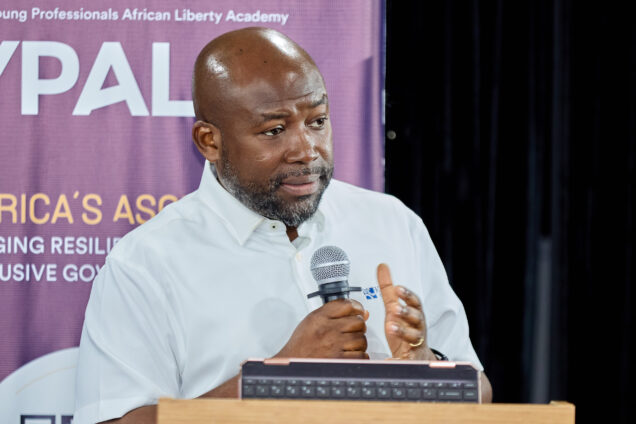
Founder and Executive Chairman of Kleeve and Tove Ltd, Senyo Hosi, has warned that Africa cannot achieve meaningful economic transformation if its economies continue to record growth without creating enough jobs for young people.
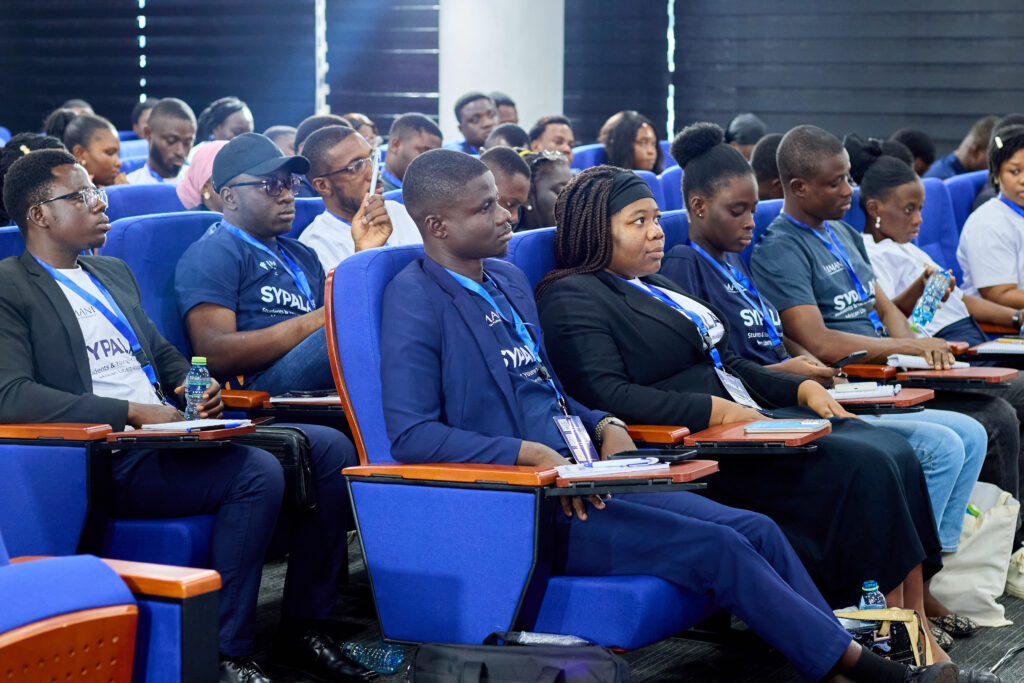
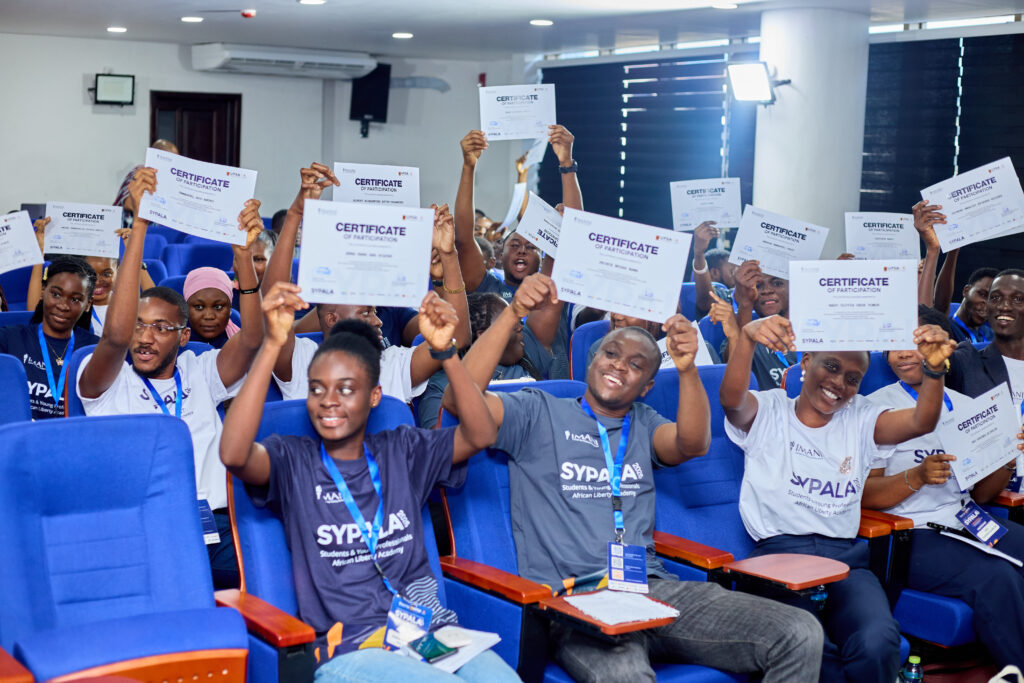
Speaking on the topic "Beyond Politics: How Business and Public Policy Can Drive Africa’s Transformation”, at the Students & Young Professionals Africa Liberty Academy (SYPALA) 2026 organised by IMANI Africa, Mr Hosi said African countries must move away from an excessive focus on headline economic growth and place greater emphasis on production, enterprise, productivity and job creation.
“We talk about GDP as if we eat GDP,” he said.
“This continent cannot afford us continuing to grow without jobs. We cannot afford budgets that favour consumption over productivity, or policies that reward political access more than enterprise and innovation,” he added.
According to him, Africa’s growing youth population presents both an opportunity and a serious economic risk if governments fail to create productive jobs at the scale required.
He warned that the pressure created by limited economic opportunities was already encouraging some young people to see political connections as a route to employment.
“Every young man now wants to go out there and insult somebody and hope to get an appointment,” he said.
Mr Hosi said the situation should not be reduced to unemployment figures because the underlying challenge was much broader.
“If this crisis is not really seen for what it is, we have a big problem. The crisis is one of production and scale,” he said.
My Hosi said that the discussion around unemployment in Africa often focuses too heavily on labour market statistics without examining whether economies are producing enough goods, services and businesses capable of creating large numbers of sustainable jobs.
“The issue is not simply whether young people are busy. It is whether they are productively employed, securely engaged, and connected to a pathway of rising income,” he said.
He said the problem should therefore be viewed not only as a labour market crisis but also as a production crisis.
“Unemployment is often discussed as a labour market problem. But Africa is also a production problem,” he said.
Mr Hosi criticised the growing tendency to describe almost every young person running a small activity as an entrepreneur without considering whether those businesses have the capacity to grow and employ others.
“We have too few firms producing at scale. Everybody is a village young man. Everybody is an entrepreneur,” he said.
He said Ghana reflected this wider African challenge, with too few businesses operating at a scale capable of creating significant employment and adding value to the economy.
“Ghana’s experience, therefore, sits within that bigger problem,” he said.
He identified several structural constraints, including limited industrial production, inadequate access to capital and barriers that prevent small businesses from growing into larger employers.
“There are too few industries adding value, too few firms connected to money markets, too little patient capital, and too many barriers that keep small enterprises from becoming large employers,” he said.
Mr Hosi said governments must therefore stop treating youth employment as an issue that could be addressed separately from broader economic policy.
“We must stop treating youth employment as a side issue,” he said.
“And you must stop thinking of it as a normal issue. It is central to our macroeconomic stability, our social cohesion, our democratic legitimacy, and national security,” he added.
Mr Hosi also challenged businesses to accept a greater responsibility in addressing Africa’s economic challenges.
He said the private sector should not be viewed simply as an activity conducted for individual profit, arguing that productive businesses provide wider benefits to society.
“Business is not just a private activity. At its best, business is a public good,” he said.
He explained that productive enterprises contribute to society in several ways by identifying problems, taking risks, creating employment and developing skills.
“Every productive enterprise solves a problem for society. It takes risks, it organises talent, transforms inputs, serves customers, pays taxes, creates employment, and builds capabilities,” he said.
Mr Hosi called on African businesses to raise their ambitions and move beyond strategies aimed merely at surviving difficult economic conditions.
“Africa must rise and must absolutely raise this ambition. Raise this ambition of enterprise,” he said.
According to Mr Hosi, many African businesses remain trapped in survival mode because of the difficult operating environment they face.
He cited unreliable electricity, expensive credit, informal payments, extortion, unpredictable regulations, small and fragmented markets, and weak logistics as some of the obstacles holding businesses back.
“We have too many businesses who are forced to survive unreliable power, expensive credit, informal payments, extortion, unpredictable regulation, small fragmented markets, and weak logistics,” he said.
He said economic transformation would require businesses to make a fundamental shift in how they operate.
“For transformation, firms must move from survival to scale, from trading to production, from import dependence to value addition, and from isolated markets to continental competitiveness,” he said.
He said this would require stronger links between businesses and wider regional markets, particularly as African countries seek to benefit from continental trade opportunities.
While challenging businesses to do more, Mr Hosi said governments must also create conditions that allow enterprises to grow.
He said that businesses could not achieve scale without supportive and predictable public policy.
“But business cannot scale in a vacuum. It needs a policy environment that makes productivity possible.”
Mr Hosi described public policy as the foundation on which economic activity operates.
“Public policy is the operating system of a given economy,” he said.
He said that governments must therefore design policies that encourage investment, production, innovation and job creation rather than policies that favour consumption or political connections.
Mr Hosi’s central message was that African countries must rethink what they consider economic success.
He questioned the value of celebrating GDP growth when large numbers of young people remain without secure and productive employment.
“This continent cannot afford us continuing to grow without jobs,” he said.
For him, the priority should be building an economy in which young people can move from education into productive employment, establish sustainable businesses and experience rising incomes.
He also called for a shift in government spending away from excessive consumption and towards activities that increase productive capacity.
“We cannot afford budgets that favour consumption over productivity,” he said.
“A young continent cannot afford economies that grow without jobs,” he added.
Latest Stories
-
Mason jailed 35 years for defiling two daughters
16 minutes -
Ayitey Powers remanded over alleged death threat to NSA boss
26 minutes -
Court orders the state to file disclosures in Wontumi bank fraud case
35 minutes -
Ghana among 8 countries selected to pilot WHO tool for stronger clinical trial systems
35 minutes -
Selma Yudha joins race for 60th NUGS President with promise of student-focused leadership
43 minutes -
NSMQ 2026: Botwe denies Wesley Girls’ seeded spot, secures quarter-final spot after fierce battle
48 minutes -
Zoomlion begins disinfection and disinfestation exercise across Upper East Region
55 minutes -
Ghana AIDS Commission strengthens community-level HIV data collection to track 2030 target
55 minutes -
Parliament approves three new Supreme Court Justices
1 hour -
Zoomlion intensifies disinfection, disinfestation exercise across Ahafo Region
1 hour -
GHASALC income rises 89% to GH¢1.84m as sector prepares for 2027 reforms
2 hours -
‘Africa is being short-changed because we fail to negotiate well’ – Col Festus Aboagye
2 hours -
NSMQ 2026: PRESEC Legon keeps 9th title dream alive as Mfantsipim looms in quarter-finals
2 hours -
Zoomlion begins fumigation exercise across Eastern Region after floods
2 hours -
Police suspend concrete mixer truck operations in Accra and Tema for 3 days
2 hours