

Audio By Carbonatix
Gaps in Ghana’s suicide reporting system are hindering efforts to accurately determine the scale and patterns of suicide in the country.
Medical Director of the Accra Psychiatric Hospital, Dr Kwadwo Marfo Obeng, noted that stigma, fragmented data sources and weaknesses in death certification continued to affect the quality of suicide statistics needed to guide prevention interventions.
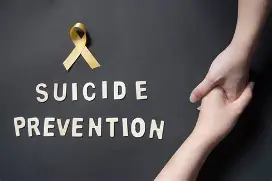
He made the observation at the launch of the National Suicide Situational Report, Media Reporting Guidelines and Scorecard for Ghana in Accra, held to commemorate World Suicide Prevention Day.
Dr Obeng explained that although suicide was decriminalised in Ghana in 2023, the effects of its previous criminalisation continued to influence how families, health professionals and other stakeholders reported suicide cases.
The analysis, he noted, sought to establish the country’s current epidemiological profile, identify key risk and protective factors, map existing policies and services, and provide a basis for developing a national suicide prevention strategy.
The exercise involved a review of relevant policies and documents, questionnaires administered to selected stakeholders, interviews and a stakeholder validation meeting.
According to Dr Obeng, Ghana relied on four major sources of suicide data: the District Health Information Management System (DHIMS), the Births and Deaths Registry, police data and research.
However, each source had limitations, resulting in significant gaps in the national picture.
Dr Obeng observed that while DHIMS was relatively accessible, it did not adequately capture details such as the age of the deceased and the method of suicide.
The Births and Deaths Registry, he explained, provided useful information, including age, but did not capture the specific method of death, while police data contained important information but was difficult to access.
Research data, he added, was often based on small populations and could therefore not easily be extrapolated nationally.
Some suicide deaths were also never formally reported, as people who died at home or in communities were sometimes buried traditionally without being reported to health facilities or the police.
Dr Obeng highlighted stigma as another major barrier to accurate reporting, noting that it affected information provided by families and communities.
Health professionals who had worked under the former criminalisation regime could also be reluctant to record suicide as the cause of death.
Instead, immediate physical causes such as trauma or severe blood loss might be recorded, preventing such deaths from being captured as suicides.
He further identified gaps in the transfer of certificates of cause of death from health facilities to the Births and Deaths Registry.
DHIMS recorded about 90 suicide deaths between 2022 and 2023, equivalent to approximately 0.29 deaths per 100,000 population, Dr Obeng disclosed.
Following the decriminalisation of suicide in 2023, reported deaths increased to about 134 before falling again to around 90 in 2025.
The trend, he noted, suggested that legal reform alone was not enough to produce sustained changes in reporting and behaviour.
Data from the Births and Deaths Registry more closely reflected the expected pattern of suicide deaths, with males accounting for approximately three to nearly five times the number of female deaths.
About 51 per cent of recorded suicide deaths occurred among people aged between 35 and 60 years, making the working-age population particularly vulnerable.
The analysis identified mental health conditions, previous suicide attempts, hopelessness, impulsivity, chronic illnesses, interpersonal conflicts, trauma, abuse, bullying, bereavement, academic pressures, financial stress and unemployment among key risk factors.
Agricultural factors, access to lethal means, unwanted pregnancy, homelessness and social exclusion were also identified.
Dr Marfo Obeng highlighted social support, community connectedness and seeking professional help as key protective factors.
Religion could also provide support, although some people reported negative experiences when seeking help through religious settings.
He called for compassionate mental health services, stronger suicide surveillance systems and responsible media reporting.
He urged families, schools, workplaces, communities, religious organisations and health professionals to break the silence around suicide and encourage people experiencing distress to seek help.
“Every suicide is a tragedy that has profound social, emotional and economic consequences for families, friends and workplaces,” he said.
Sustained public education, improved access to mental health services and coordinated national action, Dr Obeng concluded, were necessary to reduce suicide and strengthen Ghana’s response to suicidal behaviour.
Latest Stories
-
Mahama convenes high-level meeting to strengthen border security and narcotics control
13 minutes -
Thara Mills Simmonds named 2026 Forty Under 40 Achiever in Education
17 minutes -
Ghana deepens diaspora diplomacy: Embassy pledges enhanced consular support for Ohio communities in Columbus
25 minutes -
Ghana’s maternal health success story at risk without rural incentives – UNFPA
25 minutes -
Gaps in suicide data affect prevention interventions in Ghana – Accra Psychiatric Hospital MD
26 minutes -
Ghana Armed Forces to participate in Accra-Kumasi Expressway construction – Mahama
27 minutes -
Use chiefs to stop disputes from flooding Ghana’s courts – Deputy AG to governing council of ADR
41 minutes -
Four arrested as police bust alleged kidnapping, torture and extortion syndicate
43 minutes -
NPA increases price floor from September 16; petrol to sell at GH¢16, diesel at GH¢16.77
1 hour -
OMJ fufils BECEPIP schorlaship promise, awards 12 learners
1 hour -
Photos: GAF hands over 175.6km right-of-way for Accra-Kumasi Expressway construction to gov’t
1 hour -
Accra-Kumasi Expressway to be operated and maintained for 50 years through toll revenue
1 hour -
LGA holds Landmark Conference, AGM and Elections as the Committee on Politics and Elections emerges as the Overall Best Committee for 2025/2026.
1 hour -
JSALK Beverages pays medical bills of struggling nursing mothers at Nkawie-Toase Hospital
1 hour -
Accra-Kumasi Expressway to be operated as business to recover taxpayers’ investment – CEO
1 hour