

Audio By Carbonatix
Between 2022 and 2025, fraud cases among Ghana's payment service providers nearly doubled. At a recent COCLAB workshop, Matilda Asante Asiedu, the Second Deputy Governor of the Bank of Ghana, presented that figure and advocated for a shift in both strategy and perspective. She is right regarding the modification.
Examine the same four years in the financial system as a whole. The number of fraud cases reported by banks decreased from 716 in 2024 to 472 in 2025, representing a 34% decrease. The number of specialised deposit-taking institutions decreased by half, from 344 to 182. Ghana did not experience an explosion of fraud. It shifted away from institutions that strengthened their defences and settled in areas where defences remained weak.
The industry's preferred rationale is rendered obsolete by that singular migration. The Bank of Ghana links the concentration in payment service providers partly to lower digital literacy among users. Nevertheless, the same Ghanaians are served by institutions that are exposed to the same scam contacts and use the same phones. There was no sudden increase in the sophistication of their clientele.
The institutions merely filled in the voids, and the figures followed. Fraud has consistently been associated with inadequate design. The provider is only responsible for a complaint, while the consumer who incurs a loss is responsible for the loss under the current regulations. The concentration we are currently observing is precisely the result of that arrangement. By adjusting the location of the loss, the design problem begins to resolve itself.
Britain responded in a straightforward manner to a comparable scenario. Providers are required to reimburse victims of authorised push-payment fraud up to £85,000 within five working days from October 2024. The cost is equally distributed between the transmitting and receiving firms. The second half is critical; the institution that established the account into which the funds disappeared now bears half of the liability. Suddenly, each provider in the chain has a specific cause to halt the mule account prior to its opening.
Ghana has the ability to construct its own version, which will betailored to the local environment. The reimbursement cap can be set at GH¢20,000. That figure would still encompass the vast majority of cases; the average cost of each of the 24,778 incidents and GH¢101 million at risk is approximately GH¢4,000. Establish exceptions for customers who disregard explicit warnings. To allow fintechs to prepare, the rule will be phased in over a period of eighteen months. The fundamental action is to render a fraud case expensive for the provider. It is currently costing them almost nothing.
Three practical fixes cease to await regulation and commence competing for budgetary resources upon the arrival of that cost. Prior to payment, the sender is required to verify the actual identity associated with the recipient's account, which effectively eliminates the majority of impersonation schemes at the time of transfer. The 118% increase in fraudulent withdrawals (currently GH¢3.97 million) could be mitigated by an emergency block that secures a wallet within ninety seconds. Speed is the determining factor in these instances; document inspections can be implemented at a later time. Additionally, a shared mule-account registry, which would be visible to all providers within an hour, would prevent a single compromised number from travelling the entire ecosystem, thereby mitigating the very risk that Mrs. Asante Asiedu identified.
None of these instruments is particularly uncommon. The playbook has already been demonstrated to be effective by Ghana's banks. Ghana is at risk of sliding back into the FATF grey list; this is the costly version of the discussion. The less expensive version commences with a single principle: the institution that holds the funds is responsible for any losses. Give providers a bill, and the people who built the systems will fix them.
*********
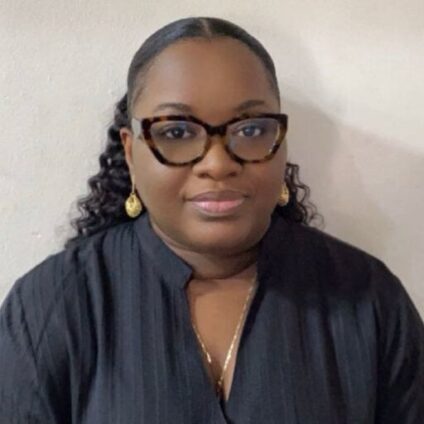
Writer: Dr. Genevieve Sedalo, Department of Marketing, University of Professional Studies. gdsedalo@gmail.com
Latest Stories
-
Protect strategic assets, prioritise local ownership in PPPs – Hassan Ayariga
15 seconds -
NSMQ and Science Digest Show: A partnership advancing science and health education in Ghana
3 minutes -
MSDA President calls for national political heritage centre in Saltpond
4 minutes -
Four dead after powerful Typhoon Dujuan lashes Japan
4 minutes -
Frequency, magnitude of recent drug trafficking cases worrying – Security analyst
8 minutes -
Autopsy shows Hayden Panettiere died from a drug overdose
10 minutes -
Ghanaian interest comes first in 2027 Budget – Dr Ato Forson
15 minutes -
Government must answer how 80 bags of cocaine passed through Ghana’s ports – Miracles Aboagye
35 minutes -
Ghana Women’s Movement announces protest over alleged intimidation of women
37 minutes -
‘I was waiting for the list to believe my Black Stars call-up was real’- Ronald Donkor
40 minutes -
Mahama has ordered NACOC back into port container inspections – Tanko-Computer
44 minutes -
Photos: Vice President joins ECOWAS Parliament, calls for stronger regional cooperation
44 minutes -
Two arrested over alleged GH¢30k bribe attempt in narcotics case
47 minutes -
Bodi, Juaboso and Bibiani SHSs qualify for 2026 National Public Speaking Competition
49 minutes -
Minority calls on government to sustain local crude supply to TOR
50 minutes