

Audio By Carbonatix
Former Trade and Industry Minister and Flagbearer for the United Party, Alan Kwadwo Kyerematen, is advocating private-sector financing for the proposed US$4 billion Accra–Kumasi Expressway, arguing that government should not commit scarce public resources to infrastructure projects capable of generating revenue.
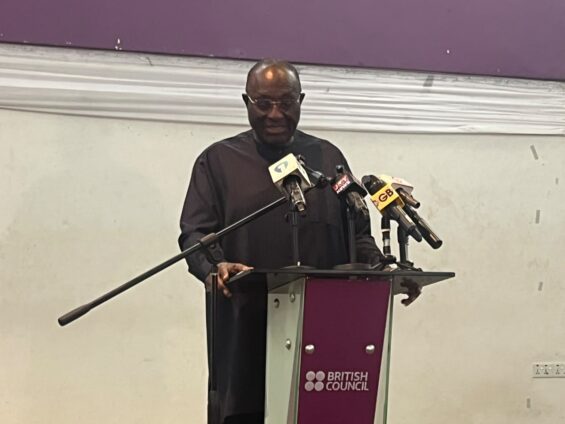
Speaking at a public lecture at the British Council on the theme “Transformation of the Ghanaian Economy: From Stability to Prosperity,” Mr Kyeremanten questioned why the state should fully finance a commercially viable road when private investors could provide the capital and recover their investment from the project.
The Accra–Kumasi Expressway is currently estimated to cost about US$4 billion. Government has said it intends to finance the project without borrowing, with significant domestic funding already mobilised.
But Alan Kyeremanten believes the project presents an opportunity to demonstrate a different approach to infrastructure financing.
“You are using four billion dollars to finance a commercial road, which currently can be financed by the private sector. What happens in every country? Once the toll road is constructed, you don’t use government resources to fund it. It can pay for itself,” he noted.
He argued that instead of committing the entire US$4 billion to the expressway, the government could allow private investors to finance, construct and operate the road under an arrangement that enables them to recover their investment.
“We need to commend the government for at least thinking about public-private partnerships between our two actors, because it doesn’t make sense that for over 60 years we continue to rely on government resources to finance everything,” he stated.
Alan Kyeremanten says the principle should extend beyond the expressway to other infrastructure projects with the capacity to generate their own revenue.
“Once the road is constructed, you don’t use government resources to fund it if it can pay for itself. Let the private sector manage that. Can you imagine what we can do with our public resources if we free them up?”
He believes such an arrangement could release substantial public funds for other pressing infrastructure needs, including the rehabilitation and construction of roads within communities across the country.
The proposal comes as government prepares to begin construction of the expressway after completing the clearing of its right-of-way. President John Mahama recently announced that an initial US$2 billion had been secured domestically, with government targeting the full funding requirement by the end of 2026.
Alan Kyeremanten argues that greater use of private capital should form part of a broader economic transformation strategy in which government creates the policy environment while commercially viable projects are increasingly financed by the private sector.
Latest Stories
-
Lawyer for Salomey Baffoe appeals bail refusal, petitions CJ to intervene
3 minutes -
Washington State delegation explores healthcare partnership with Ghana Medical Trust Fund
7 minutes -
BoG backs cedi payments for Ghana-China trade
8 minutes -
EPA shuts down Earl International mining operation at Gbane over environmental breaches
11 minutes -
GoldBod resumes significant gold shipments, supporting reserves – BoG
13 minutes -
FX interventions are rules-based, not discretionary-BoG
17 minutes -
DVLA explains delinquency charges related to expired driver’s licences
25 minutes -
High Court denies bail application for Salomey Awiti Baffoe
27 minutes -
GES urges communities to help provide kitchens for school feeding programme
34 minutes -
Mahama invokes Nkrumah, says Ghana’s freedom must serve Africa
34 minutes -
From Cotonou to Bata: Ghana and Côte d’Ivoire’s rivalry enters a new chapter
36 minutes -
UN Charter must reign supreme over ‘might makes right’ – Mahama
38 minutes -
BoG to introduce new Heritage Series banknotes in November 2026
39 minutes -
Mahama warns against weaponising identity to fuel exclusion and conflict
41 minutes -
Mahama calls for global equality, says “no race is superior, no nation is inferior”
41 minutes