


Audio By Carbonatix
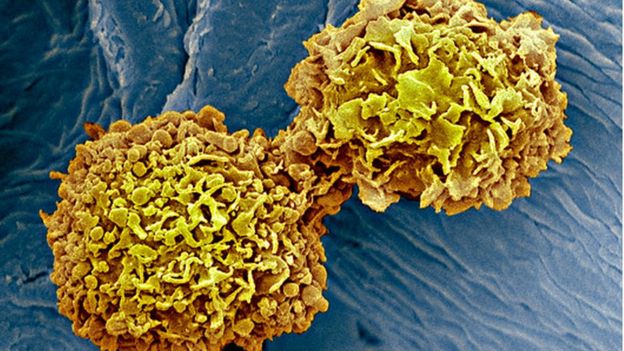
Breast cancer can resurface after remaining dormant for 15 years following successful treatment, a study has found.
Women with large tumours and cancer that had spread to the lymph nodes had the highest 40% risk of it coming back.
Researchers writing in the New England Journal of Medicine said extending treatment with hormone therapy could reduce the risk of it recurring.
Scientists analysed the progress of 63,000 women for 20 years.
All had the most common form of breast cancer.
This is a type fuelled by the hormone oestrogen which can stimulate cancer cells to grow and divide.
Every patient received treatments such as tamoxifen or aromatase inhibitors which block the effects of oestrogen or shut off the hormone's supply.
Although after five years of treatment their cancers had gone, over the next 15 years a steady number of women found that their cancer spread throughout their body - some up to 20 years after diagnosis.
Women who originally had large tumours and cancer that had spread to four or more lymph nodes were at highest risk of the cancer returning the next 15 years, the study said.
Women with small, low-grade cancers and no spread to the lymph nodes had a much lower 10% risk of cancer spread over that time.
'Remarkable'
Lead researcher Dr Hongchao Pan, from University of Oxford, said: "It is remarkable that breast cancer can remain dormant for so long and then spread many years later, with this risk remaining the same year after year and still strongly related to the size of the original cancer and whether it had spread to the (lymph) nodes."
Doctors have long known that five years of tamoxifen reduces the risk of recurrence by about a third in the five years after stopping treatment.
Recent research has suggested that extending hormone therapy to 10 years may be more effective at preventing breast cancer recurrence and death.
But there are side effects with hormone treatments which can affect patients' quality of life and cause them to stop taking the pills.
These include menopausal symptoms, osteporosis, joint pain and carpal tunnel syndrome.
Prof Arnie Purushotham, senior clinical adviser at Cancer Research UK, which funded the study, said that since the research began, new drugs had been used to treat breast cancer and those worked in different ways to tamoxifen.
He said: "It's vital that work continues to better predict which cancers might return.
"We also need to know what the difference for women might be in taking hormone therapies for 10 years instead of five, the side effects and how this affects patients' quality of life."
Latest Stories
-
GOIL CEO praises Star Oil counterpart despite fierce market rivalry
34 minutes -
Como ease past Leipzig in dream Champions League debut
50 minutes -
Gordon a better fit for Barca than Rashford – Deco
59 minutes -
GOIL won’t give up ground as Star Oil battles for market share, says Edward Bawa
1 hour -
Kidnapped man begs family for help as captors threaten death over GH¢45,000 ransom
2 hours -
Fenerbahce boss stuns club by quitting after Roma draw
2 hours -
Spurs and Richarlison in dispute over contract
2 hours -
Arsenal close to finalising new contract for Arteta
2 hours -
Abandoned vehicles face auction under new road safety rules – National Road Safety Authority
2 hours -
KNUST Management responds to UTAG, says statutes review still ongoing
2 hours -
10 SOEs recorded net loss of GH¢8.8bn in 2024 – IMF
2 hours -
EOCO questions former Deputy AG Joseph Kpemka over BOST dealings, grants him bail
2 hours -
Alleged romance scam pastor’s case withdrawn from Circuit Court
3 hours -
Oil, gas and borrowing costs surge as fears over Middle East escalate
3 hours -
PRESEC’s ADO9 moment sparks social media frenzy after NSMQ victory
3 hours