

Audio By Carbonatix
Cancer is a word that instils fear in many families. In Ghana, many of us have either seen someone battle the disease or felt the pain of losing a loved one to it.
Dr. Mrs. Beatrice Wiafe Addai, who is the President of Breast Care International (BCI) and former Board Chair for the Ghana Cancer Board, said cancer cases have been on the rise since 2018. Ghana records around 24,000 new cases every year and over 15,000 deaths.
Breast cancer claims the most lives, followed by liver, cervical, and prostate cancer, as revealed by the Global Cancer, Mortality and Prevalence Report 2020.
Traditional treatments such as chemotherapy, radiation, and surgery are often long, painful, and do not prevent disease recurrence. These treatments are costly and may start too late to make a difference. However, a promising discovery is rewriting the story of cancer treatment worldwide.
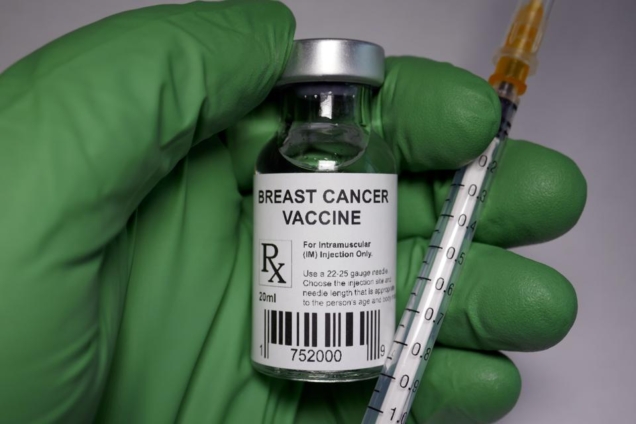
For the first time in decades, cancer treatment is moving beyond fighting harder to fighting smarter. Scientists have developed “personalised cancer vaccines” that are showing results once thought impossible.
Simply put, these vaccines train the body’s immune system to recognise and destroy cancer cells. This is something medicine has been trying to achieve for decades. It may take some time, but these vaccines will soon be available in Ghana.
In April 2021, researchers Eryn Blass and Patrick A. Ott published a study highlighting progress in the development of personalised neoantigen-based therapeutic cancer vaccines. This review showed that patients with advanced skin cancer who received the vaccine recorded a 44% lower risk of the cancer recurring. Nearly 8 out of the 10 patients stayed cancer-free for at least 18 months.
More significant results were achieved in the treatment of kidney, pancreatic, brain, and neck cancers, with all patients staying cancer-free for over two years.
This is a breakthrough in medicine because cancer is cunning. Cancer cells hide in the body by disguising themselves as normal cells. As a result, treatments like chemotherapy and radiotherapy often act like blunt weapons, attacking both healthy and cancerous cells simultaneously. This leads to the harsh side effect patients dread, but the new vaccine exposes cancer’s tricks, helping to target and eliminate these deceptive cells.
Here is how this new vaccine is designed. Every cancer cell carries tiny “identification tags” called neoantigens. These neoantigens are unique identification tags that appear only on cancer cells.
Scientists can now read a patient’s tumour, find those “identification tags” and design a vaccine that shows the immune system exactly what to attack. It is just like giving the body’s security guards a detailed wanted poster. Once they know what the criminal looks like, they can track them down anywhere in the body. This process is highly personal; no two cancers are alike, so no two vaccines are the same. Each one is custom-made for the patient using the same technology that powered COVID-19 vaccines.
While these vaccines are still in trials and cost over $100,000 per patient, the technology is advancing fast. Production times have been reduced from nine weeks to less than four weeks.
Experts say the first approved neoantigen cancer vaccines might be available by 2029. This timeline gives Ghana a chance to prepare. With growing investment in biotechnology and health research, our medical community can play a crucial role in ensuring that life-saving treatments reach Ghanaian patients faster.
There are still challenges with this new therapy that are being addressed. For now, these vaccines are highly effective when administered shortly after surgery, before the cancer spreads widely. They must also be combined with other special drugs to achieve the best results. The costs must also come down before widespread use is possible, but the direction is clear. Cancer vaccines are not miracles, but they mark a significant advancement in the long fight against a disease that affects nearly every family. As more than 120 clinical trials continue worldwide, one thing is certain: future of medicine is moving towards care that is not only effective but also personalised, tailored for each patient.
The writer is a final year student pursuing a bachelor of science in Biochemistry and Molecular Biology from the School of Basic and Biomedical Sciences (SBBS) at the University of Health and Allied sciences (UHAS), Ho, Volta Region, Ghana.
Contact : princehenryhonya@gmail.com
Latest Stories
-
Judges’ conference forces further adjournment of Salomey Baffoe case
8 minutes -
GRA assures Tullow of collaboration to settle $393m tax liability without disrupting its petroleum operations
38 minutes -
South Korea demands apology from Pyongyang for landmine blasts that injured three
42 minutes -
Carlos Queiroz not the sort of coach Black Stars need – Nii Lante Vanderpuye
1 hour -
AFCON 2027Q: ‘Our Black Stars team is gone’ – Former Sports Minister
2 hours -
Prof. Prempeh calls for public review of draft constitutional reform bills
2 hours -
AFCON 2027Q: ‘I have never seen a poor performance from Black Stars like against Gambia’ – Nii Lante Vanderpuye
2 hours -
Bawumia backs insurance sector reforms after engagement with IBAG
2 hours -
Nigeria set to launch National Digital Address System 9 years after Ghana showed the way
2 hours -
Policy rate decision takes time to reflect in lower lending rates – BoG
2 hours -
Western Regional Minister applauds Karpowership’s role in Ghana’s power sector
3 hours -
Playback: Road safety crises: Where are we getting it wrong?
3 hours -
Enterprise Life celebrates 25 years of protecting families and building trust
3 hours -
ICC London rules in favor of Ghana against Tullow over $400m tax charge
3 hours -
We are disappointed in ICC’s ruling over our corporate income tax assessment in Ghana – Tullow Oil
3 hours