

Audio By Carbonatix
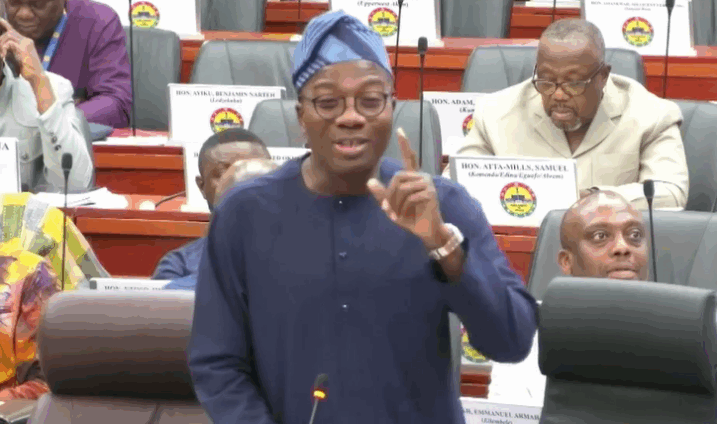
The Majority Leader, Mahama Ayariga, has cautioned that dissolving the Office of the Special Prosecutor (OSP) will not prevent the prosecution of implicated former government officials.
Addressing Parliament on Thursday, December 4, during discussions on the arrest and detention of private legal practitioner Martin Kpebu by the OSP, he stressed that accountability processes will continue regardless of whether the office is abolished.
“Mr Speaker, let me sound a warning that abolishing it will not let off the hook those who we are considering prosecuting for violations of the law when it comes to corruption,” he said.
“I can assure you that abolishing the Office of Special Prosecutor will not let off anybody who is found culpable.”
He noted that the call to scrap the OSP should not be misinterpreted as an attempt to protect officials who may face prosecution.
“People should not see the call for the abolition of the OSP as an indication that those who are going to be held accountable will be let off the hook. Indeed, I will ensure that the process is even expedited,” he added.
Mr Ayariga reiterated his firm position that the OSP has outlived its usefulness and should be dissolved, whether through a private member’s bill, as previously suggested by former Speaker Prof. Mike Oquaye, or by an executive-led amendment.
According to him, the establishment of the OSP was a “futile constitutional experiment” rooted in the wrong assumption that a politically appointed Attorney General cannot effectively fight corruption.
“Is the OSP coming from space? Who is nominating him? The same political process is going to generate the occupant,” he argued.
“You will not be freed of that political pressure.”
He maintained that genuine anti-corruption success depends on strong political leadership, not the proliferation of new institutions with “fanciful names” and big budgets.
“This government has been in office for about 11 months now. We haven’t reported a single scandal because of the political commitment to ensure accountability,” the Majority Leader said.
“Political corruption is a function of political leadership. If political leadership is determined not to be corrupt, they will not be corrupt.”
The Majority Leader insisted that the resources allocated to the OSP should instead be channelled to the Attorney General’s office, which is constitutionally mandated to prosecute criminal cases.
“The money that we are giving to the Office of Special Prosecutor, let’s resource the Attorney General’s office, and I’m sure this particular Attorney General will produce the results we expect of him,” he added.
Latest Stories
-
Be careful with cross-border lending, foreign currency exposures – BoG to financial institutions
1 hour -
GPL 2026/27: Medeama go three clear as Hearts of Oak recover and Bechem stage stunning comeback
1 hour -
Ntiamoah Foundation launches “BEYOND 20” anniversary campaign
2 hours -
Credit Risk Management Directive: BoG to begin implementation for banks, others from July 1, 2027
2 hours -
Ghana Brands Awards 2026: Leading brands, business trailblazers to shine on November 20
2 hours -
T-bills auction: Demand improves as government exceeds target by about 76%; interest rates soften
2 hours -
Ziope undertakes initiative to build a technologically inclined community, commissions self-help ICT lab
3 hours -
ECG announces power outage in parts of Tema, Central Region due to network fault, maintenance
3 hours -
When the Gospel Becomes a Weapon: The church, blackmail and the abuse of faith
4 hours -
JoyNews’ Jacqueline Ansomah Yeboah selected for UK Media Excellence for Emerging Technologies Fellowship
4 hours -
Mental Health Alliance urges government to operationalise Mental Health Fund
4 hours -
Ghana–Holy See agreement heads to Parliament after Cabinet approval
4 hours -
Luv FM Corporate Games 2026: Kumasi Central Prisons, Amanfiman Bank win big amid fun
4 hours -
WAFU B U17: Ghana top Group A after win over Togo
5 hours -
Ho Central Mosque reopens amid unresolved leadership dispute that led to closure
6 hours