

Audio By Carbonatix
Ghana is increasingly being recognised as one of Africa’s most credible examples of how domestic pension savings can be invested in more diverse alternatives and channelled into assets such as private equity, venture capital and SME growth financing.
Ghana has spearheaded notable pension industry initiatives focused on shifting domestic capital pools towards the real economy, including GVCA’s 5% Pension and Insurance Industry Compact, launched in April 2025, Impact Investing Ghana’s Pension Industry Collaborative, and the $70m SME Fund of Funds managed by Savannah Impact Advisory, Ci Gaba.
The fund is structured to invest in private equity and venture funds, adding value through portfolios of small, growing businesses across West Africa.
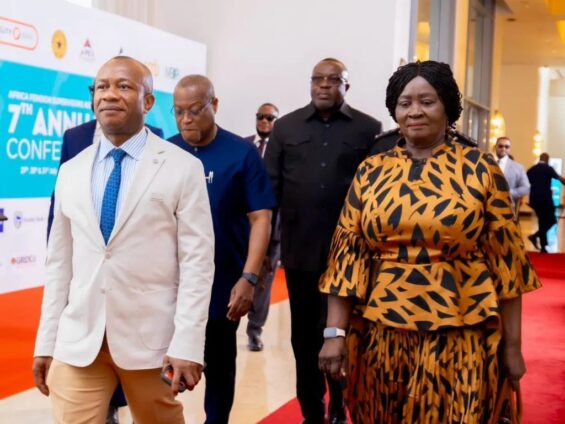
Last month marked an important milestone for African pension funds, as Ghana hosted the 7th Africa Pension Supervisors Association (APSA) Conference in Accra. Vice President Jane Naana Opoku-Agyemang officially opened the conference, hosted by Ghana’s National Pensions Regulatory Authority (NPRA), which convened pension regulators, policymakers, industry leaders, development partners and delegates from across Africa to discuss the future of pension systems on the continent.
The Vice President called for more inclusive and resilient pension systems capable of meeting the needs of Africa's ageing population while expanding retirement protection to workers in the informal sector.
At a recent pension industry capacity-building event, GVCA highlighted a regional mapping published by Growth Firms Alliance (GFA), reflecting a broader shift across Africa, as institutional investors have been moving beyond traditional government bonds and real estate into productive alternative assets that support long-term business expansion, salaried job creation, pension and tax contributions, as well as economic transformation.
Ghana’s pension investment guidelines permit up to 25 percent of pension assets to be invested in alternative instruments, creating one of the continent’s more enabling frameworks for institutional participation in private capital.
The Ci Gaba Fund of Funds structure combined pension trustee engagement, local-currency fund design, catalytic first-loss capital and technical assistance to move investors from interest to actual commitments.
Similar approaches are emerging elsewhere on the continent, including Uganda’s National Social Security Fund acting as an anchor investor in the Yield Uganda Investment Fund and Rwanda’s Social Security Board anchoring SME-focused investment vehicles.
Ghana’s pension reforms began with the establishment of the National Pensions Regulatory Authority in 2008, progressed through the expansion of alternative investment limits in 2021, and have now produced a growing pipeline of pension-backed private equity and SME funds.
The mapping identifies this progression as one of the clearest examples of domestic institutional capital moving from policy ambition to deployment.
In 2023, Ghanaian pension trustees and pension schemes participated in private equity and venture funds such as Injaro Ghana Venture Capital Fund and the Mirepa Capital SME Fund I, both structured in cedis to match domestic liabilities and support local businesses.
The momentum continued in 2026, when the Ci Gaba Fund of Funds reached its first close with commitments from Ghanaian pension investors, demonstrating that local institutional capital can be mobilised into private equity and private debt vehicles through appropriately designed structures.
Among the countries highlighted in the GFA mapping, Ghana stands out alongside Rwanda, Uganda, Nigeria and South Africa as one of the few jurisdictions with publicly disclosed pension-backed commitments into private capital vehicles.
Ghana is a leading West African example of private capital market development and ecosystem building, where strong policy advocacy, public education, capacity building, regulatory reform, local fund management and pension trustee participation in alternative assets have converged into a formidable investment ecosystem.
For financial markets, the significance extends beyond the individual funds. The research estimates that African pension assets exceed US$600 billion, yet less than 10 percent is invested in productive sectors. Ghana’s allocation to alternative vehicles remains below 1 percent despite growing trustee interest and a generous policy environment led by the National Pensions Regulatory Authority.
This suggests that the current wave of pension fund and sovereign wealth fund commitments represents only the early stages of a much larger domestic capital mobilisation opportunity for private sector development and SME growth finance.
The shift is attracting attention because it addresses one of the longstanding weaknesses in African private capital markets: dependence on foreign currency funding.
Businesses that earn revenue in cedis often borrow or raise equity in dollars, exposing them to significant exchange-rate risk. This model is increasingly unsustainable, and domestic institutional capital must play a larger role in financing local enterprises.
Relying almost exclusively on foreign, dollar-denominated capital introduces massive exchange-rate volatility into funds and businesses that earn entirely in local currency. If a business earns in cedis, it needs to be nurtured and funded in cedis by our domestic institutional capital and specialist private equity firms.
Ghana’s experience is being watched regionally and internationally because it offers replicable frameworks and also highlights strong women in leadership, with female fund managers, advisors and investment professionals such as Hamdiya Ismaila, Amma Gyampo, Amma Lartey, Maame Tutua-Dadson, Barbara Ghansah, Shirley Somuah, Alice Osei Okrah and NanaAma Botchway redefining narratives about innovative finance, driving innovation, notable deals and critical ecosystem-building initiatives across international development finance, philanthropy and private capital markets.
For policymakers, the message is equally important. The evidence suggests that unlocking pension participation does not depend solely on raising investment limits.
These institutional investors also require transparent governance, technically and commercially experienced fund managers with a track record of deal-making and private sector portfolio management, risk-sharing mechanisms, innovative insurance wraps or guarantees, investment vehicles and products that both incentivise them and align with their fiduciary responsibilities.
The success of Ghana’s pension industry market-building efforts indicates that these conditions are beginning to take shape. More narratives of successful exits, innovative vehicle structures and local expertise are beginning to emerge and build the confidence of the pension industry.
As global investors search for resilient sources of long-term growth, Ghana’s emerging pension-to-private-capital model offers a compelling signal. Rather than relying exclusively on external financing, the country is demonstrating how domestic savings can be converted into patient equity capital for SME growth and expansion, infrastructure and job creation.
In a continent where pension assets remain largely underutilised, Ghana is increasingly becoming a reference point for how deep local expertise and institutional capital can deepen financial markets, strengthen economic resilience, meet local infrastructure needs, finance Africa’s next phase of private sector development and support economic growth.
Latest Stories
-
Tarkwa court jails labourer for three years over GH¢123,000 theft
42 minutes -
GAEC must retain nuclear scientists for Ghana’s nuclear ambitions – Minister
1 hour -
Man reportedly mistaken for game and shot by hunter dead in forest
1 hour -
19-year-old mason jailed 15 years for defiling seven-year-old pupil
1 hour -
Ghana’s banking sector assets rise 20.47% to GH¢500.2bn – BoG Governor
1 hour -
22 injured as Sprinter bus overturns at Sege after tyre burst
1 hour -
UN housing expert urges Ghana to strengthen Rent Control Department amid housing affordability concerns
2 hours -
Delta-BCI partnership reaches 166,000 people with breast cancer education
2 hours -
Power restoration fault suspected in Kumasi Central Market fire
7 hours -
The 7-foot giant of Ngleshie Amanfro: Seven-foot Ghanaian Ephraim Saawa dreams of joining the national basketball team
8 hours -
Government promises support for Kumasi Central Market fire victims
8 hours -
Vibes The Movie: Big Ghun’s Ghanaian film earns five nominations at 2026 REFFA
8 hours -
‘I’m a fulfilled man’—Justice Korbieh on missing out on Supreme Court despite two nominations
8 hours -
MamaCare CEO warns unresolved conflicts among health workers could undermine maternal and neonatal care
9 hours -
Health professionals urged to translate medical knowledge into practice to save mothers
9 hours