

Audio By Carbonatix
Chair of the African Group of Negotiators on Climate Change (AGN), Nana Dr. Antwi-Boasiako Amoah, has acknowledged Africa’s strong negotiating positions in the global climate change talks.
He, however, says the continent needs to translate these positions into outcomes that are financed, implemented, and felt on the ground.
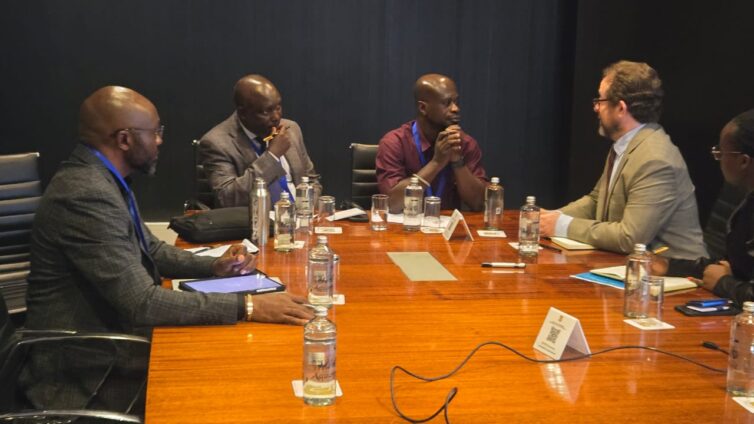
“Africa must move from positions to power,” he said while speaking at the Pre-SB64 Strategy Meeting in Nairobi, Kenya, convened by the African Group of Negotiators Experts Support (AGNES). “Climate finance remains the central issue. The gap between commitments and delivery is still too wide. Africa must approach this with a stronger, more coordinated strategy”.
The meeting ahead of the Bonn Climate Conference builds directly on the AGN Strategic Session recently held in Accra, where African interest groups came together as a continent to reflect, align, and set direction for the next phase of their work.
“We recognized that, to be effective externally, we must strengthen our internal coordination, technical depth, and ability to act as a unified group. That is the foundation for everything else,” said the AGN Chair.
Dr. Amoah acknowledged the important role AGNES continues to play in strengthening Africa’s technical and negotiation capacity, emphasizing that the platform has become central to how Africa prepares, aligns, and engages effectively in the UNFCCC process.
“We are coming out of COP30 with important outcomes that now shape our work. The adoption of the Belém Gender Action Plan gives us a clear framework to advance gender-responsive climate action. At the same time, the work on agriculture under the Sharm el-Sheikh Joint Work continues to highlight the urgency of implementation, especially for Africa’s food systems and livelihoods.
“And alongside this, Article 6 is opening new opportunities to connect climate action with economic value, including for our communities but one thing we must be careful about is this – these are not separate conversations,” he stated.
He also emphasized that agriculture, gender, finance, and just transition must come together in a coherent African approach, adding that implementation does not happen in silos.
“As we look ahead to SB64, our task is straightforward. We must move beyond restating principles and begin to define how things will work: How implementation will happen on the ground. How will finance be accessed? And how our national systems will deliver results. And we must do this with a clear and united African voice.
“We must keep our eyes on what lies ahead. With COP32 to be hosted in Africa, we have a real opportunity to shape the global climate agenda from our own context. That opportunity will not organize itself. We must prepare for it deliberately, and that preparation starts here,” Dr. Amoah said.
Australia’s Counsellor for Climate Change (Africa), Liam Cosgrave, discussed climate change challenges and strategies for engagement across Africa in the lead-up to COP31.
Every year, Parties to the United Nations Framework Convention on Climate Change (UNFCCC), together with its Kyoto Protocol and the Paris Agreement, convene to assess progress in the global response to climate change. These sessions of the Subsidiary Bodies and the Conference of the Parties provide a platform for advancing negotiations, recommending decisions, and strengthening implementation of agreed outcomes.
The Pre-SB64 AGNES Strategy Meeting was therefore convened at a critical point in the broader climate negotiation process.
“Africa is not just participating in this process. Africa is helping to define what implementation should look like in real terms, grounded in development, equity, and justice. Our task now is to ensure that this is reflected in the outcomes we negotiate,” the AGN Chair noted.
Latest Stories
-
Trump says he is considering firing US ambassador to Greece
28 minutes -
Man City bananas ‘brought fun back’, says Varadi
32 minutes -
Meta releases Muse Wonder AI models to challenge Anthropic and OpenAI
41 minutes -
Daily Insight for CEOs: The CEO as Chief Decision Maker
42 minutes -
Burnham had formal meeting with Man City chair while mayor
48 minutes -
Is Ghana producing too many lawyers? What is the best lawyer-to-citizen ratio?
51 minutes -
NDC sinking Ghana’s democracy with Emelia Agbenyo’s appointment – Miracles Aboagye
1 hour -
Seedorf back in football as Corinthians head coach
1 hour -
Hincapié and Zubimendi injured in post-match training session
1 hour -
Fridges in French supermarkets hit by cyberattack
2 hours -
Qantas flight grounded after bedbug outbreak
2 hours -
Reality Zone with Vicky Wireko: International Day of the Girl, shaping today’s girl for tomorrow’s future – ZONTA Clubs lead the way
2 hours -
Global health must be led by countries, not designed for them – Mintah Akandoh
3 hours -
Mahama honoured at 2026 World Health Summit in Berlin for global health leadership
3 hours -
Breast cancer is not a death sentence – Besease Kontire Obaapanin, Magmina Foundation lead awareness campaign
3 hours