

Audio By Carbonatix
A carefully constituted team of experts from the UN Inter-Agency Working Group, in collaboration with the National Disaster Management Organization (NADMO) and other state agencies, is expected to arrive in Mepe, in the North Tongu District of the Volta Region on Tuesday, November 7, to commence an in-depth assessment of the scope of contamination caused by the flood disaster following the spillage of the Akosombo Dam.
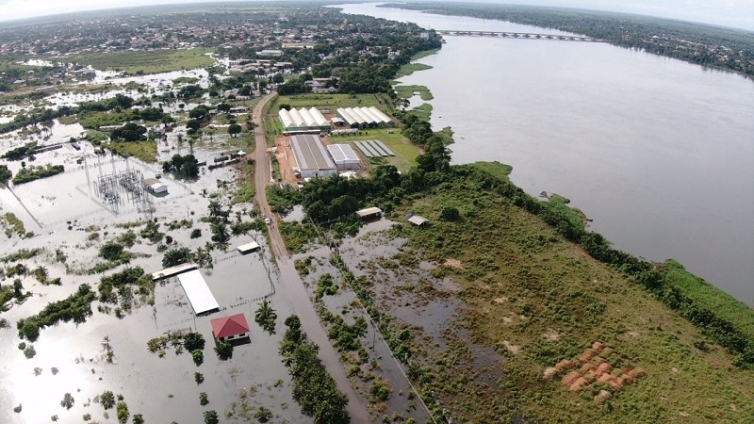
Following the spillage, a total of 192 communities were inundated with floods for weeks, posing major health hazards to residents. Even though floodwaters have receded significantly, NADMO maintains that there is a need for a thorough assessment before allowing flood victims back to their homes.
Speaking to Joy News on Friday, November 3, the Deputy NADMO Director General, Seji Saji Amedonu, revealed that a team of experts from the UN's Inter-Agency Working Group, in collaboration with NADMO and other state agencies, will carry out a crucial assessment to ascertain the scope of contamination across flood-hit settlements.
"You are well aware of the total inundation of some communities. Water from the Volta River entered the communities, washed pit latrines, and even some cemeteries were flooded. We don't know what level of contamination that water that remained in people's homes for about two weeks caused; we don't know the extent of the contamination.”
So, we also need to do an assessment to ascertain the extent of the contamination. Then we can move into proposed solutions as to how to disinfect, fumigate, and decontaminate. And this is what we are carrying out."
Mr. Amedonu, however, revealed, "We have the UN Inter-Agency Group on Emergencies helping with this. We're working with all stakeholders, including the EPA, the Ghana Institute of Engineers, the VRA, and NADMO. They will be moving in on Tuesday, November 7th, 2023, to start this assessment, and they have about three days to complete their work. By the weekend, some solutions will be proposed."
With weeks of the flood disaster that affected 39,333 Ghanaians in 192 communities, NADMO reveals that the disaster has now entered a recovery stage where they are doing all within their power through interventions such as assessment and fumigation to return life to normal.
"We are at the recovery stage. At the recovery stage, what we normally do is to try to restore back to normal, I mean, services and other things that were disrupted as a result of the disaster."
The Deputy Director-General of NADMO also revealed interventions such as digging trenches to channel stagnant floodwaters out of the community as measures being taken by NADMO to bring life back to normal.
Latest Stories
-
EOCO court warrant authorised search of Baffour Awuah’s law firm, not residence – Afenyo-Markin
6 minutes -
NPP delegates conference: 3,000 to 4,000 police personnel deployed for security in Kumasi – Anthony Karbo
7 minutes -
KGL Foundation commits $200,000 to support juvenile football for the next two years
23 minutes -
UNDP invites Mahama Ayariga to Northern Peace Conference in Tamale
28 minutes -
Afoko can give NPP ‘new identity’ ahead of 2028 to overcome NDC – Political scientist, Dr Amakye-Boateng
42 minutes -
2 injured amid gunshots during raid at Nawara Mining office at Nsuapemso
47 minutes -
St Augustine’s College retains 2026 National Investment Quiz title
51 minutes -
KNUST Nursing and Midwifery School staff recognised at 2026 Health Ministry Excellence Awards
59 minutes -
JoyNews’ Esther Esi Nkrumah selected for UK Media Excellence for Emerging Technology Fellowship
1 hour -
Five NDC youth organisers in Western Region pay courtesy call on Armah-Kofi Buah
1 hour -
NACOC demands tighter port controls to prevent Tema Harbour drug trafficking
1 hour -
Ghana’s startup ecosystem must build sustainability into innovation – Ghana Hubs Network
2 hours -
Friday’s beachfront demolition was carried out at Labadi Beach Hotel’s request, not for flood mitigation – Stan Dogbe
2 hours -
LA 2028: Mukarama returns to Black Queens squad for Olympic Games qualifiers
2 hours -
Fusaini Yakubu Abanga leads NPP National Youth Organiser race with 45% in Global InfoAnalytics poll
2 hours