

Audio By Carbonatix
The country is grappling with a concerning spike in fire-related fatalities, with the Ghana National Fire Service (GNFS) reporting a 33% increase in deaths during the first six months of 2025 compared to the same period last year.
The newly released statistics reveal a worrying trend, underscoring the urgent need for enhanced fire safety awareness and preventative measures across the country.
According to data compiled by the GNFS, a total of 16 lives were tragically lost to fire incidents between January and June 2025.
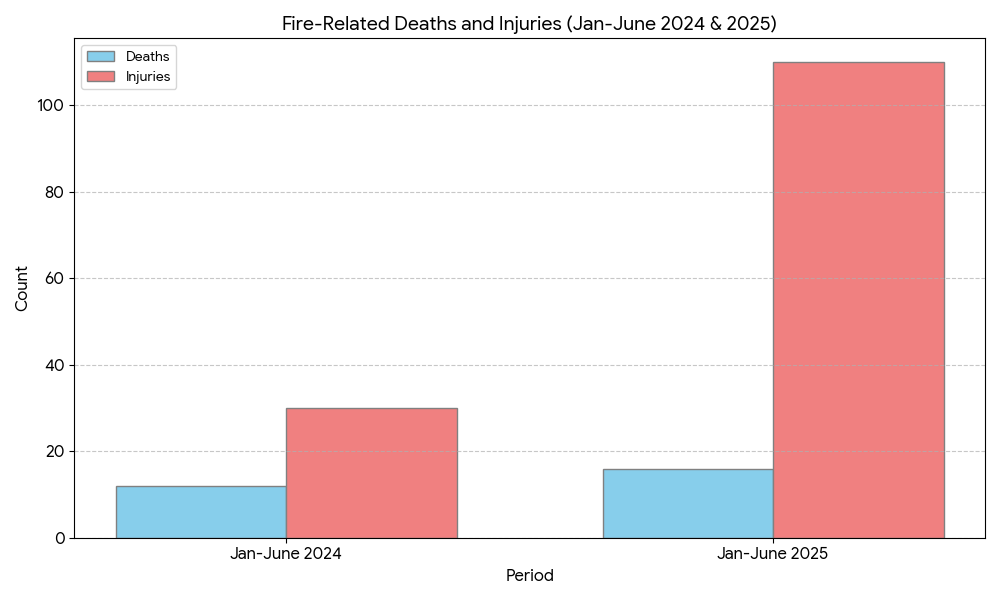
This grim figure marks a significant rise from the 12 fire-related deaths recorded in the first half of 2024.
Beyond fatalities, the number of injuries sustained from fires has also seen a dramatic surge, skyrocketing by over 266% from 30 injuries in January-June 2024 to a staggering 110 injuries in January-June 2025.
These figures paint a stark picture of the escalating human cost of fire outbreaks in Ghana.
Common culprits of fire outbreaks in Ghana often include electrical faults, gas cylinder explosions, careless handling of combustibles, and bushfires, particularly during the dry seasons.
Unregulated electrical wiring, the use of substandard electrical appliances, and the improper storage of highly flammable materials in homes and businesses are frequently cited as contributing factors.
The urban centres, characterized by densely populated areas and informal settlements, are particularly vulnerable.
Accra, Kumasi, and other major cities often experience devastating fire incidents in markets and residential areas due to overcrowded structures and inadequate fire safety infrastructure.
For instance, in previous years, major market fires in Accra and Kumasi have resulted in substantial economic losses, often running into millions of Ghana Cedis, and displaced numerous traders, though specific casualty figures for such incidents are not always immediately linked to the broader national statistics.
The increase in injuries, from 30 to 110, suggests that while the death toll is alarming, many more individuals are surviving with severe burns and other injuries that can lead to long-term physical and psychological trauma, placing an added burden on Ghana's healthcare system. Burn units in major hospitals often operate beyond capacity, especially after large-scale fire incidents.
In response to such trends, the GNFS typically intensifies its public awareness campaigns, often focusing on basic fire safety tips, proper handling of electrical appliances, and the importance of having fire extinguishers in homes and workplaces.
They also emphasise the need for regular electrical checks and adherence to building codes to minimise fire risks.
The GNFS, established under the Ghana National Fire Service Act, 1997 (Act 537), is mandated to manage and prevent fires and to ensure public safety from fires.
This latest data will undoubtedly prompt a deeper analysis by the GNFS into the root causes of the surge in incidents and their lethality.
It serves as a sombre reminder to all Ghanaians about the critical importance of fire safety precautions to protect lives and property.
Latest Stories
-
This Saturday on Prime Insight: Fuel levy suspension, LGBTQ+ legislation, and Damang Mine controversy
2 hours -
Struggling Real suffer title blow with Girona draw
3 hours -
Mahama nominates Pamela Graham as Auditor-General
3 hours -
The five big sticking points in US-Iran talks
4 hours -
Melania Trump’s speech propels Epstein crisis back to forefront
5 hours -
What everyone should know about C-sections
5 hours -
Gunmen kill at least four people at Afghanistan picnic spot
5 hours -
Health Ministry engages Ga Mantse ahead of Free Primary Healthcare launch
5 hours -
We can tackle multiple priorities – Sam George defends Anti-LGBTQ Bill push
6 hours -
Statement: Ghana Chamber of Mines’ Response to Claims in Joe Jackson’s “Ananse Stories about the Economy of Ghana”
6 hours -
GES opens 2026 teacher recruitment for licensed B.Ed graduates
6 hours -
Ghana must value skilled trades, build resilient learners — Ibn Chambas
6 hours -
Ghana must rethink education around relevance, resilience and responsibility — Ibn Chambas
6 hours -
Prince Harry faces defamation lawsuit from charity he co-founded
6 hours -
South Korea deploys thermal cameras to track escaped zoo wolf
6 hours