

Audio By Carbonatix
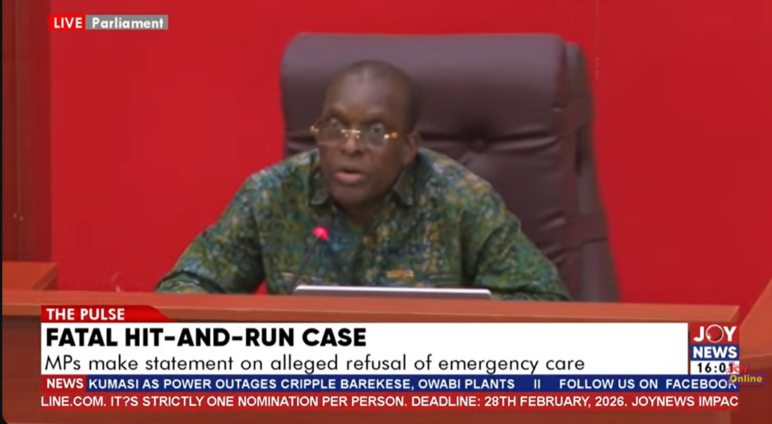
Speaker of Parliament Alban Bagbin has called for urgent investigations and fresh legislation to address Ghana’s recurring “no bed syndrome,” describing recent hospital-related deaths as “needless” and unacceptable.
Speaking during proceedings in Parliament, Mr Bagbin said the House must hold responsible persons accountable and prioritise the passage of an emergency care law to prevent avoidable fatalities.
“We need to enquire further into the matter, and we need to hold people accountable. This is one of the needless deaths we have experienced in this country,” he said. “We need to pass an emergency care law.”
His comments come on the back of renewed national debate over the “no bed syndrome” — a situation where patients in critical condition are turned away from health facilities due to a lack of space, equipment, or personnel.
The discussion was reignited following the recent death of 29-year-old engineer Charles Amissah, who reportedly died after being referred from one hospital to another in Accra without receiving timely care. His case has triggered public outrage and calls for reforms in emergency healthcare delivery.
Mr Bagbin acknowledged the difficult working conditions of health workers but stressed that professionalism and compassion must not be compromised.
“I know the conditions under which health personnel operate. But I also know health personnel have handled accident cases and stabilised patients even in the bush,” he said. “Patriotic health workers have done that, and people have survived.”
He argued that poor attitudes and systemic failures within some health facilities were contributing to preventable deaths.
“When you see the same people working outside, their attitude is different. It means something is wrong here,” he added.
The Speaker also expressed support for calls by Majority Leader Mahama Ayariga for Parliament to take leadership in addressing the crisis.
“That is why I partly agree with the Majority Leader that we should set the agenda as political leaders,” Mr Bagbin said.
In recent weeks, medical professionals and emergency service officials have also raised concerns about weaknesses in Ghana’s referral and emergency response systems.
The Ghana Medical Association and the Ghana National Ambulance Service have cited poor coordination, ageing ambulances, and limited funding as major challenges.
Latest Stories
-
Church of Pentecost supports over 2,000 BECE candidates in Obuasi with career guidance seminar
39 minutes -
Brandon Asante and Coventry all but promoted to Premier League despite Sheffield Wednesday draw
1 hour -
GPL 2025/26: Late Kwartemaa strike downs Hearts in Tema
1 hour -
Ghana Faces Sierra Leone Moment as Prosecutorial Powers come under strain
1 hour -
Don’t consume fish or seafood from Tema Shipyard until further notice – FDA warns
1 hour -
Why volunteering might be Africa’s most underrated career accelerator
1 hour -
ActionAid Ghana raises concern over gender gaps in Feed Ghana Programme
2 hours -
Windstorm wreaks havoc in Gushegu, displacing nearly 2,000 residents and damaging schools
2 hours -
Friends of Bridget Bonnie Marks her 35th birthday with donation to Kasseh Model Health Centre
2 hours -
From Ekumfi Kokodo to the Pulpit Stage: Essi Donkor’s gospel journey takes shape
3 hours -
Landfilling waste management creates no value, it’s an economic waste
3 hours -
Photos: Speaker Bagbin Commissions MPs constituency office under parliamentary decentralisation programme
3 hours -
Black Stars technical advisor Winfried Schäfer sacked as GFA shakes up backroom staff
3 hours -
Wenchi water project almost complete, critical to gov’t agenda – GWL MD
3 hours -
Anti-LGBTQ+ bill not part of government’s legislative agenda – Inusah Fuseini
3 hours