

Audio By Carbonatix
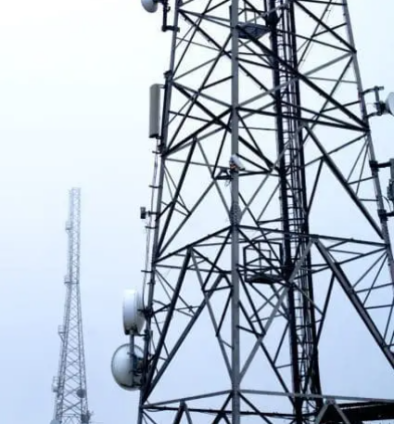
American Tower Corporation's Ghanaian subsidiary has prevailed in an international arbitration against Airtel Ghana over unpaid fees for telecommunications tower services, according to a source close to the matter, bringing to a formal close a contractual dispute that has shadowed Ghana's telecoms sector for several years.
The case was heard before the International Chamber of Commerce (ICC) International Court of Arbitration, one of the world's foremost forums for resolving commercial disputes. The outcome arrives at a delicate moment as AirtelTigo, rebranded AT Ghana following the government's takeover and after Airtel Ghana merged with Tigo, is in the middle of a financial and structural restructuring that has drawn in regulators, the Ministry of Communication, Digital Technology and Innovations, and now a prospective foreign investor.
Debt years in the making
The arbitration is the legal endpoint of a debt that accumulated over several years. AirtelTigo, formed in 2017 through the merger of Bharti Airtel's and Millicom's Ghanaian operations, relied on ATC Ghana's tower infrastructure for its network coverage across the country. Under industry-standard tower-sharing arrangements, mobile operators pay tower companies, known as towercos, recurring fees for access to masts, power supply, and related services.
Payments to ATC fell into arrears, and by the time current Communications Minister, Samuel Nartey George addressed Parliament in March 2025, the figure owed to ATC alone had reached GH¢1.5 billion, a portion of a total debt load on AT Ghana's books that the minister put at over GH¢3.5 billion, equivalent to approximately US$225 million at prevailing exchange rates.
“Those who managed the AirtelTigo process are enemies of our state,” Mr. George told journalists at the time, directing his criticism at the administration that finalised the government's acquisition of AirtelTigo in November 2021 for a nominal US$1, absorbing its liabilities in full. Industry sources have since indicated that the actual ATC debt may have exceeded GH¢2 billion by the time of the crisis.
Disconnections and emergency roaming
Faced with non-payment, ATC Ghana began disconnecting power to AirtelTigo's radio access network sites on September 1, 2025, triggering an immediate risk of service collapse across a subscriber base that then stood at over three million. The National Communications Authority (NCA) and the Communications Ministry intervened, arranging emergency national roaming between AirtelTigo and Telecel Ghana to maintain service continuity.
The government also appointed KPMG to conduct a 60-day financial review of AT Ghana's operations, with a mandate to assess options including fresh investment or a merger with Telecel (formerly Vodafone). The minister subsequently described the forced migration of customers onto Telecel's network as a force majeure, effectively, circumstances beyond ordinary control. AT Ghana, the country's third-largest mobile operator, held an estimated 12.9 percent market share in the first quarter of 2025, behind MTN Ghana and Telecel Ghana. Glo Mobile controlled under one percent of the market over the same period.
Restructuring in progress
A potential path forward has emerged as Canadian infrastructure company Rektron Group signed a memorandum of understanding with the government in May 2025 to acquire a 60 percent majority stake in AT Ghana, in partnership with local firm Afritel Ghana. Rektron has indicated a planned investment of up to US$1 billion over five years, subject to regulatory approval and due diligence.
The ICC arbitration outcome adds a fresh dimension to that process. Any prospective investor will need to account for the enforceability of ATC's award, which Ghanaian courts are expected to give effect to under the country's obligations as a signatory to the New York Convention on the Recognition and Enforcement of Foreign Arbitral Awards.
Legal observers note that enforcement, not just the award itself will be the measure of institutional credibility. How swiftly and completely Ghanaian courts act is likely to be watched closely by infrastructure investors evaluating the country's dispute-resolution environment, they insist. Ghana's Digital Agenda 2030 commits the country to expanding digital infrastructure and attracting private capital into the sector.
Latest Stories
-
52-year-old South African arrested with suspected heroin after arriving from Accra
12 minutes -
Shatta Wale challenges UPSA students to build entrepreneurial mindsets
46 minutes -
Finance Minister advises African governments to strengthen regional tax cooperation
2 hours -
NPP accuses NDC of master-minding demolition of Ho regional office fence
2 hours -
Ghana plans stronger regional power trade with Nigeria
2 hours -
GRA Commissioner-General calls for stronger tax cooperation to boost regional revenue mobilisation
2 hours -
NACOC needs more personnel to tackle drug trafficking – Toobu
2 hours -
Railway workers resist KMA eviction order, demand consultation
2 hours -
Legacy Leadership Africa Institute to host boardroom women’s leadership programme
3 hours -
Ghana needs a law to sustain constitutional reforms – CDD-Ghana
6 hours -
COVID fumigation audit: Auditor-General has a lot of questions to answer – Akwatia MP
6 hours -
Stranded Ghanaian medical graduates in Cuba appeal to Mahama for immediate return
6 hours -
GNFS contains fire outbreak at Teshie Lekma Road near Lekma Hospital
12 hours -
Samia Nkrumah rejects the narrative that Ghanaians were happy after Nkrumah’s overthrow
13 hours -
A Mother’s pain: Tribute by Ivan Baidoo’s mother
14 hours