

Audio By Carbonatix
Australia has passed a world-first law aimed at making Google and Facebook pay for news content on their platforms.
The news code legislation had been fiercely opposed by the US tech giants.
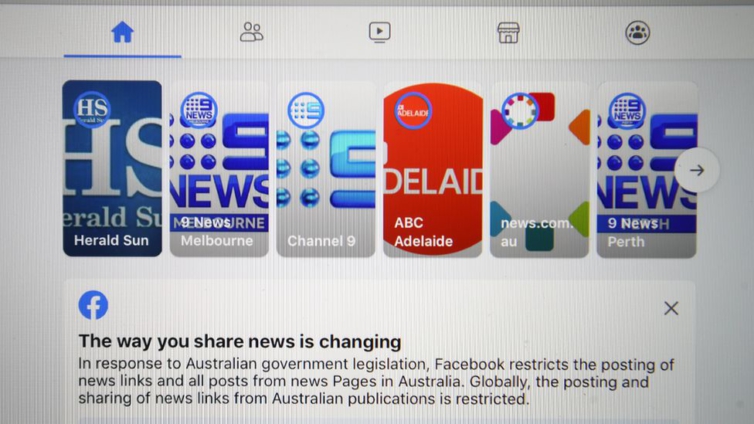
Last week Facebook blocked all news content to Australians over the row, but reversed its decision this week after negotiations with the government.
Following those talks, the law passed with new amendments which make it possible for Facebook and Google not to be subject to the code.
However, both companies have now committed to paying lucrative sums to some big Australian publishers outside of the code. These deals have been widely viewed as a compromise by the tech giants.
Australia's law has been seen as a possible test case for similar regulation in other countries to get payment from digital platforms for news.
The amended legislation was passed in the House of Representatives on Thursday, after earlier going through the Senate.
Facebook and Google argued it "fundamentally" misunderstands how the internet works.
What does the law do?
The law incentivises tech giants and news organisations to negotiate payment deals between themselves. If such talks fail, digital platforms could be dragged into independent arbitrations.
The government argues this prescribes a "fairer" negotiation process between the parties, as it gives news organisations more leverage.
The Australian Competition and Consumer Commission (ACCC) - a market regulator - says publishers have had little negotiating power until now because they are so reliant on tech monopolies like Google and Facebook.
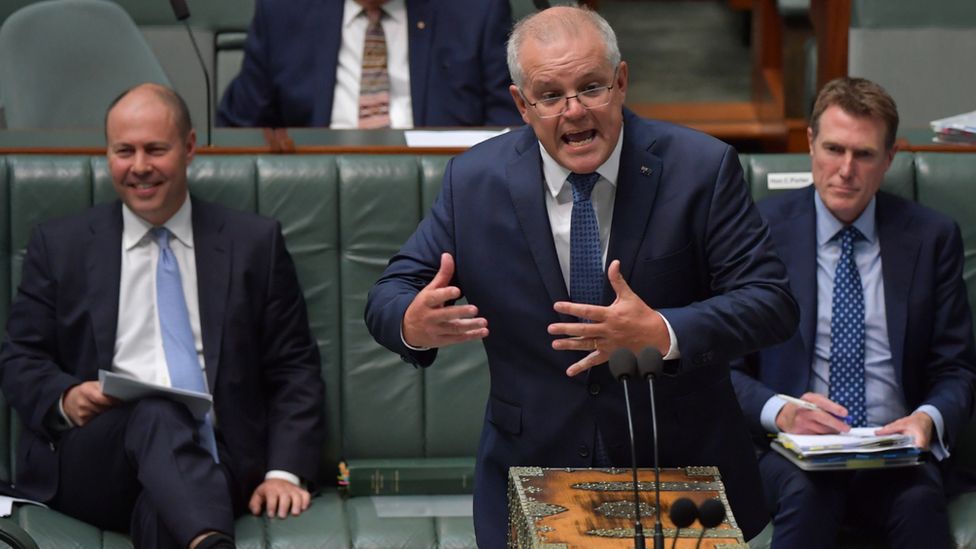
Any dispute over the value of news content would be settled by the arbitrator - something analysts say benefits the news groups.
The code also forces tech platforms to give notice to news publishers of changes to their algorithms.
However, the amended law now requires the government to consider a platform's existing contributions to journalism - such as commercial deals with publishers - before applying the code to them.
This means Facebook and Google could escape the arbitration process entirely.
The government also has to give the platform a month's notice if it is considering applying the code to them.
What do Google and Facebook say?
The tech firms argue they already help news publishers by driving traffic back to news sites from their platforms.
Facebook and Google simply help people find news content in the first place, the platforms say.
Both tech companies lobbied the Australian government to amend the law, while also pursuing contracts with local news companies.
Google had threatened to withdraw its primary search engine from Australia, but the company recently agreed deals with local media companies including Nine Entertainment and Seven West Media worth an estimated A$60m ($47m; £34m) in total.
It has also signed a deal for an undisclosed sum with Rupert Murdoch's News Corporation.
In a statement on Tuesday, Facebook promised to reverse its ban on news content, though Australian news pages remain unavailable.
It has since signed at least one deal - with Seven West Media - and is in talks other Australian news groups.
Both firms have also committed to spending $1bn each in the news industry globally over the next three years.


When Facebook decided to restore news content in Australia, the big question became who blinked first: Australia or the tech giant?
But this was really a major face-saving exercise.
The government - which was blindsided by the social media company - can say triumphantly that it convinced Facebook to reverse its decision.
Facebook - which has done its reputation much damage globally by the move - can also claim it brought the highest levels of government to the negotiating table, and gained crucial amendments to a law it deeply disliked.
Compromise seems to be a key word here.
But this whole stand-off isn't just about power - it's essentially about precedent. The world is watching this closely. And if Australia's move works, you can be sure that other countries will want to start their own negotiations.
What happens now?
Facebook's black-out of Australian news content in past week has triggered harsh criticism, both in Australia and globally.
The company has admitted it overstepped in also removing over 100 non-news pages, including key health and emergency agencies.
But its powerful action has been interpreted as a warning shot to lawmakers elsewhere - such as in Canada, the UK and the EU - who have expressed interest in Australia's law.
As more news readership has shifted online, tech giants have faced calls internationally to pay more for news stories hosted on their platforms.
They have also faced increased scrutiny over their power, including calls for them to do more to combat misinformation and abuse.
Latest Stories
-
Renewed flood intervention at Mallam Junction raises hopes among residents, businesses
7 minutes -
St Augustine’s College retain National Investment Quiz title after nail biting grand finale
16 minutes -
Education infrastructure investment will drive Banda’s development – Ahmed Ibrahim
23 minutes -
Teacher unions strike: Gov’t presents fresh proposals as talks end inconclusively
1 hour -
51,000 teachers’ promotion arrears to be validated for October payment – Education Minister
2 hours -
Kwabena Boamah appointed Board Chair for Impact Investing Ghana
2 hours -
Striking teacher unions to meet Fair Wages and Salaries Commission on October 6
2 hours -
EOCO working with AG to arraign Nana Baffour Awuah before weekend court
2 hours -
Duraplast reassures customers after fire, announces October 5 reopening
2 hours -
Call off strike, gov’t will not renege on promotion arrears pledge – Haruna Iddrisu appeals to teacher unions
2 hours -
Committee set up to validate teachers eligible for 20% deprived-area allowance – Education Minister
2 hours -
Five-member committee to search for new Black Stars coach after Sports Ministry-GFA meeting
3 hours -
Pinktober: Breast cancer survival exceeds 90% when detected early – Breast Society of Ghana
3 hours -
TCDA to adopt Upper West’s MATCO mango farm as northern prototype, issues warning against felling shea trees
3 hours -
‘Fear delegates’ tag: Afoko touts genuineness among delegates ahead of NPP delegates conference
3 hours