

Audio By Carbonatix
It is widely understood that municipal solid waste, if not managed correctly, can be an environmental and health hazard. However, medical waste, by its very nature poses a significantly higher risk to both the environment and especially to the community. In addition, it is estimated that 15% of waste created by health-care activities are classified as hazardous waste, which includes biomedical waste.[1]
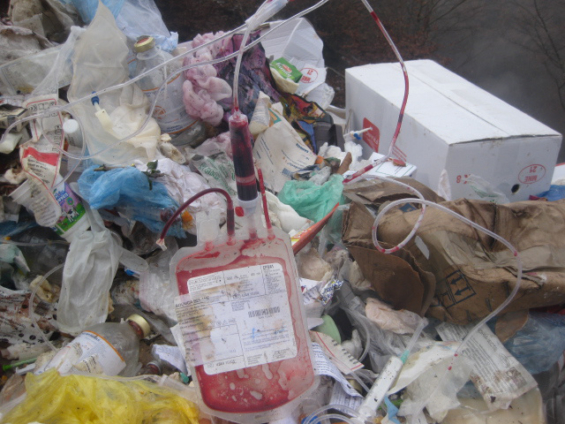
Biomedical waste is waste generated from biological and medical sources including medical laboratories, hospitals and clinics. This classification of waste includes discarded blood, tissue from surgery or birth, gloves, used bandages, and sharps such as syringes, needles, and blades. An estimated 16 billion injections are administered worldwide annually. In Africa, and specifically Ghana, a large proportion of the needles and syringes are discarded as general solid waste and not treated as medical waste.
Biomedical waste has a higher risk of injury or infection compared to ordinary waste, therefore, safe and reliable methods for its management are crucial. Inadequate and inappropriate handling of biomedical waste is likely to have serious public health ramifications through direct contact or indirectly through the environment. An example of the indirect impact is observed when farmers irrigate their crops with the same source of water from drains that are used to dispose of the biomedical waste. In 2012, this allegedly occurred in Accra, when liquid medical waste from the 37 Military Hospital flowed freely into the main gutters of the capital city for over a year, affecting the health especially of those living close to the hospital.[2]
According to the World Health Organization (WHO), “National legislation is the basis for improving medical waste practices in any country. It establishes legal controls and permits the national agency responsible for the disposal of medical waste, usually the ministry of health, to apply pressure for their implementation. The law should be complemented by a policy document, and by technical guidelines developed for implementation of the law.”[3] National legislation combined with rigorous enforcement, is thus one of the major prerequisites for effective management of biomedical waste in Ghana.
Despite a detailed Ministry of Health Policy guideline on medical waste handling published in March 2006, the purported need for complementarity between the law and the policy paper does not exist in Ghana because national legislation on handling biomedical waste does not exist. It is against this backdrop that this report aims to expatiate on the advantages of such legislation and the potential health risks of not having it.
Read the full report below:
Latest Stories
-
GRA assures Tullow of collaboration to settle $393m tax liability without disrupting its petroleum operations
14 minutes -
South Korea demands apology from Pyongyang for landmine blasts that injured three
18 minutes -
Carlos Queiroz not the sort of coach Black Stars need – Nii Lante Vanderpuye
48 minutes -
AFCON 2027Q: ‘Our Black Stars team is gone’ – Former Sports Minister
1 hour -
Prof. Prempeh calls for public review of draft constitutional reform bills
1 hour -
AFCON 2027Q: ‘I have never seen a poor performance from Black Stars like against Gambia’ – Nii Lante Vanderpuye
1 hour -
Nigeria set to launch National Digital Address System 9 years after Ghana showed the way
2 hours -
Policy rate decision takes time to reflect in lower lending rates – BoG
2 hours -
Western Regional Minister applauds Karpowership’s role in Ghana’s power sector
2 hours -
Playback: Road safety crises: Where are we getting it wrong?
2 hours -
Enterprise Life celebrates 25 years of protecting families and building trust
3 hours -
ICC London rules in favor of Ghana against Tullow over $400m tax charge
3 hours -
We are disappointed in ICC’s ruling over our corporate income tax assessment in Ghana – Tullow Oil
3 hours -
Cost of building inflation for August 2026 increases to 4.6% – GSS
3 hours -
Today’s front pages: Wednesday, September 30, 2026
3 hours