

Audio By Carbonatix
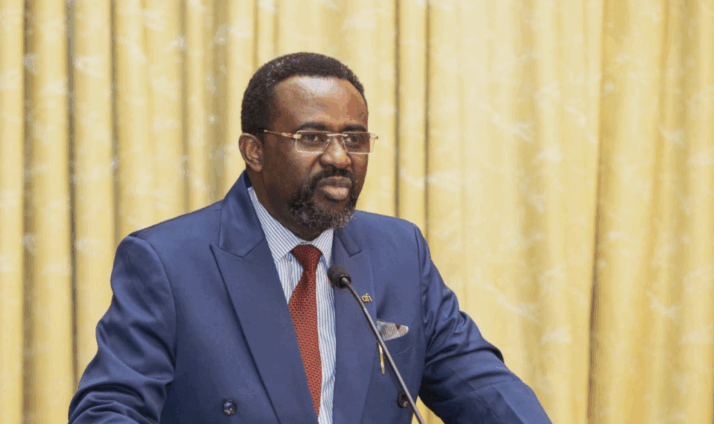
Dr. Johnson Pandit Asiama, Governor of the Bank of Ghana (BoG), has allayed fears of businesses and investors of a shortage of dollars for their daily transactions following recent concerns.
While indicating that the Central Bank has observed some reduction in remittances since April 2025, he noted that, for instance, where investigations were carried out, it was observed that there was no appropriate documentation by some importers.
He said this at the 125th Monetary Policy Committee (MPC) press briefing in Accra on Wednesday, July 20.
“We do not expect a shortage of dollars at the bank. There have been instances like that, and we moved in to investigate, only to find out that some of those importers did not have the appropriate documentation, and that was what was delaying it,” the Governor said.
“What we’ve seen is that certain inflows appear to have reduced, especially remittances since April – we’re investigating that thoroughly,” the Central Bank Chief said, indicating that they were enhancing monitoring mechanisms to shore up foreign exchange inflows.
He stated that on Tuesday, July 29, BoG released a notice to banks, Payment and Remittance Service Providers (PRSPs), and Money Transfer Operators (MTOs) to ensure foreign exchange properly entered the Ghanaian financial system.
He said that the Bank was following up with certain data requirements from all the players in the remittance space, which would increase inflows, and gave an assurance, saying, “… and whatever pressures you might be seeing locally will be contained.”
He also announced a stricter oversight of banks’ nostro accounts [foreign currency accounts held abroad that banks use to finance international trade] to prevent unauthorised capital flight and make Ghana’s foreign exchange earnings remain within the domestic financial system.
“From now on, we will be monitoring transactions in the nostro balances of banks, all in an attempt to make sure that we don’t have offshoring going on and that all Ghana foreign exchange that’s earned from abroad is made available to the system to fund our imports and economic activities,” Governor Asiama stated.
The Governor explained that contrary to the concerns of a seeming shortage of dollars at banks, businesses are rather financed through nostro accounts rather than requiring physical dollar deposits from importers to facilitate trade payments.
“Banks finance trade using their nostro account – it is out of it that they pay for imports – you don’t have to carry US dollars in Accra to pay for your imports, banks are expected to fund that for you,” he stated.
The enhanced monitoring measures, he said, were expected to further stabilise the Cedi, which has appreciated by 40.7 per cent against the dollar, 31.2 per cent against the pound sterling, and 24.2 per cent against the euro.
Latest Stories
-
Global health must be led by countries, not designed for them – Mintah Akandoh
42 minutes -
Mahama honoured at 2026 World Health Summit in Berlin for global health leadership
50 minutes -
Breast cancer is not a death sentence – Besease Kontire Obaapanin, Magmina Foundation lead awareness campaign
52 minutes -
EcoBank invests in digital education of 4 Garisson School to mark 40 years in Africa
1 hour -
AGI urges investment in skills and raw materials to strengthen local manufacturing
1 hour -
GPL 2026/27: ‘We have to rectify our mistakes’ – Boadu reacts to Aduana FC defeat
1 hour -
No disability access, no building permit – KMA declares
1 hour -
Asantehene to lead environmental restoration effort at Jimi Land Reclamation Site
2 hours -
Poor Ghanaians are being jailed because they cannot afford justice – Crime Check Foundation
2 hours -
No conflict in appointing Emelia Agbenyo as Deputy EC Chair – NDC
2 hours -
87-year-old man jailed 20 years for defiling 9-year-old girl at Ofankor
2 hours -
Sankofa Gold targets 70kg output after 9-month shutdown
2 hours -
Tamale, Bolgatanga had just one Legal Aid lawyer between them – Kwesimintsim MP
2 hours -
PAC orders eviction of former irrigation company MD from official residence
2 hours -
Legal Aid Commission has offices in only 45 of Ghana’s 261 districts, needs 180 more staff
2 hours