

Audio By Carbonatix
The Bank of Ghana (BoG) has mopped up GH¢65 billion from circulation since the start of 2025, in what Governor Dr Johnson Asiama describes as a costly but necessary step to maintain macroeconomic stability and curb inflation.
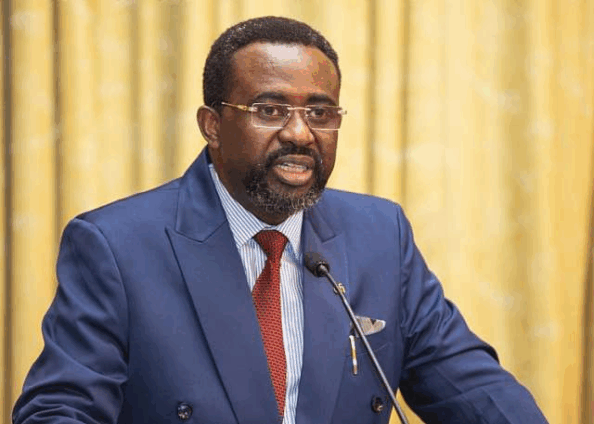
Speaking at the Governor Talks Programme on the sidelines of the IMF/World Bank Annual Meetings in Washington D.C., USA, Dr Asiama revealed that the central bank has undertaken large-scale open market operations to absorb excess liquidity in the economy — a key strategy to keep inflation under control.
However, he admitted that the process has come at a significant financial burden to the Bank of Ghana.
“The cost to the central bank’s balance sheet has been immense,” he said.
“Almost total money supply is around GH¢85 billion currently, and out of that, the sterilisation we have done this year alone accounts for about GH¢65 billion. But there’s a price to stabilisation. There’s a cost to it.”
According to the Governor, the central bank has been issuing high-interest short-term papers and bills to withdraw liquidity from the financial system, a move that helps control inflationary pressures but simultaneously increases the bank’s interest expenses.
Dr Asiama described this balancing act as one of the toughest policy challenges facing the central bank this year.
“We are in discussions with the fiscal authorities for them to assist us, probably to pick up part of that cost,” he said.
“As they always say, stability is a public good. When there’s macroeconomic stability, someone needs to pay for it.”
The Governor emphasised that the central bank’s focus remains on achieving long-term price stability, even if it means short-term financial strain.
He explained that the BoG is simultaneously working to rebuild its balance sheet after years of fiscal dominance and the effects of the 2022/23 domestic debt restructuring programme, which weakened its capital position.
“Remember, at the beginning, I made the point that I needed to rebuild the balance sheet of the central bank,” he said.
“We came in to meet a bank that was hardly solvent, policy-wise, and that is also being tackled alongside the stability we are achieving.”
The Bank of Ghana has been using open market operations — including repurchase agreements, bill issuance, and liquidity sterilisation — to mop up excess money in the system as part of its inflation management strategy.
These interventions have played a crucial role in stabilising the Ghana cedi and moderating price increases, with headline inflation easing in recent months.
Economic analysts say the central bank’s actions have restored some confidence in the monetary policy framework, but they warn that the sustainability of these sterilisation operations depends on support from the fiscal side.
The cost of maintaining stability, they argue, could eventually weigh on the Bank of Ghana’s reserves and profitability if government support does not materialise soon.
Still, Dr Asiama insists that maintaining stability is non-negotiable. He reaffirmed that the central bank will continue to prioritise its price stability mandate even in the face of mounting costs.
“We know the cost is heavy, but stability remains the foundation of growth,” he noted. “We must all share in that responsibility.”
Latest Stories
-
President Mahama ends Resetting Ghana tour of Ahafo Region
22 minutes -
African negotiators seek delivery of climate commitments at COP31
24 minutes -
BoG develops AI rules for financial sector
26 minutes -
‘Big Push’: Government assures contractors of prompt payments
30 minutes -
Court fines miner for breaking into gold buying shop
40 minutes -
Tarkwa court jails labourer for three years over GH¢123,000 theft
2 hours -
GAEC must retain nuclear scientists for Ghana’s nuclear ambitions – Minister
2 hours -
Man reportedly mistaken for game and shot by hunter dead in forest
2 hours -
19-year-old mason jailed 15 years for defiling seven-year-old pupil
2 hours -
Ghana’s banking sector assets rise 20.47% to GH¢500.2bn – BoG Governor
2 hours -
22 injured as Sprinter bus overturns at Sege after tyre burst
2 hours -
UN housing expert urges Ghana to strengthen Rent Control Department amid housing affordability concerns
2 hours -
Delta-BCI partnership reaches 166,000 people with breast cancer education
3 hours -
Power restoration fault suspected in Kumasi Central Market fire
8 hours -
The 7-foot giant of Ngleshie Amanfro: Seven-foot Ghanaian Ephraim Saawa dreams of joining the national basketball team
8 hours