

Audio By Carbonatix
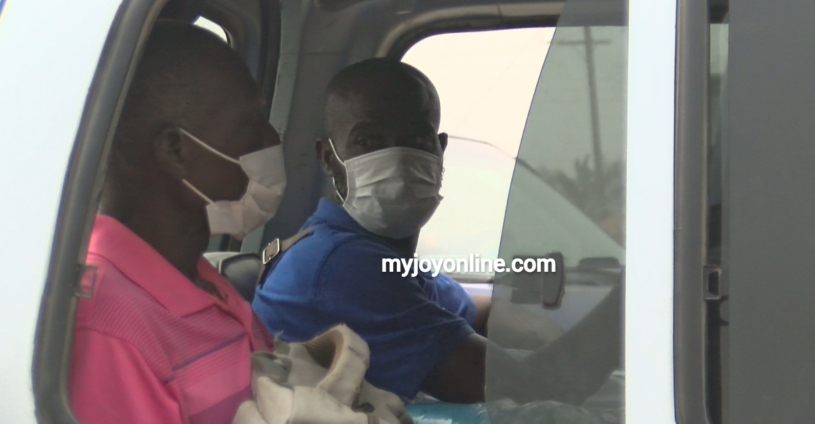
If you abandoned your masks, it’s time to grab them as Accra earns the unenviable title of one of the cities in the world with the worst air quality.
IQAir, an air quality monitoring centre with more than a dozen sensors around the country, has ranked Accra's air quality as the worst, surpassing Mumbai in India and Wuhan in China.
Researchers are warning that this year’s harmattan is about to get worse, with the dust season expected to peak in the coming days.
Analysts with Clean Air Fund, including Victoria Owusu Tawiah, expressed concern, stating that "during February, we reach the peak of the harmattan.
"Mostly, the dust levels and concentration are quite high in February. Getting to the latter parts of February, conditions are expected to improve, thereby improving air quality over Accra."
Joshua Asamoah, a Senior Meteorologist with the Ghana Meteorological Agency, emphasises the variability of seasons, noting that "when we compare this year to that of last year, we can see we are getting the peak somewhere around late January into February."
The World Health Organisation (WHO) underscores the severe impact of air pollution on health, especially PM2.5 (tiny particles in the air).
Annual average concentrations of PM2.5 should not exceed 5 μg/m3, yet Accra's current situation surpasses these limits. Ghana’s air quality predicament is significantly attributed to the ongoing harmattan season, exacerbating pollution levels.
As Accra braces for the intensifying harmattan, residents are urged to take immediate precautions. With experts advising on the need for face masks, especially for children, and the importance of indoor activities, the city is on high alert for the challenges posed by this year’s relentless harmattan.
Dr. Sandra Kwarteng Owusu, a Paediatric Pulmonologist and air pollution advocate, advises parents and caregivers to "keep the children indoors as much as possible.
"If they need to come outdoors, we encourage them to wear face masks."
She underscores the impact of the current humidity, stating, "A lot of children are coming down with respiratory tract sections.
"So we need to encourage caregivers and parents to hydrate children adequately, but we can wear the face mask."
This story was a collaboration with New Narratives. Funding was provided by the Clean Air Fund. The funder had no say in the content of the story.
Latest Stories
-
‘Our missing players are more important’ – Gambia coach fires shot at Ghana
56 minutes -
Today’s front pages: Tuesday, September 29, 2026
58 minutes -
Ghana ‘showing up differently’ on global stage – Joyce Bawah Mogtari
1 hour -
Ghana’s tuna industry in crisis as 20 hook-and-line vessels collapse
2 hours -
South Tongu MP launches apprenticeship programme for 159 young people
2 hours -
The Pusiga connection behind Gertrude Atongi’s work in New York
3 hours -
Teachers took promotion exams in December to beat government clearance deadline – GNAT
3 hours -
NPA launches 2026 staff welfare week with focus on teamwork and employee wellbeing
3 hours -
Ghana, Saint Kitts and Nevis sign labour deal to strengthen protections for Ghanaian nurses
3 hours -
Delayed promotions put teachers’ retirement benefits at risk – GNAT
3 hours -
No ‘Bawumia candidates’ in NPP executive elections – Anthony Karbo
3 hours -
Over 3,000 displaced as flooding overwhelms Hohoe communities
3 hours -
Sunyani East NPP executives begin reconciliation drive ahead of 2028 polls
3 hours -
Agric Minister engages Ga Mantse on agriculture transformation agenda
3 hours -
Aayalolo expansion targets private car users, not trotro operators – Mahama Ayariga
3 hours