

Audio By Carbonatix
The West African Centre for Cell Biology of Infectious Pathogens at the University of Ghana is pushing for the COVID-19 levy to be channelled into research and innovations to improve how the country responds to health emergencies.
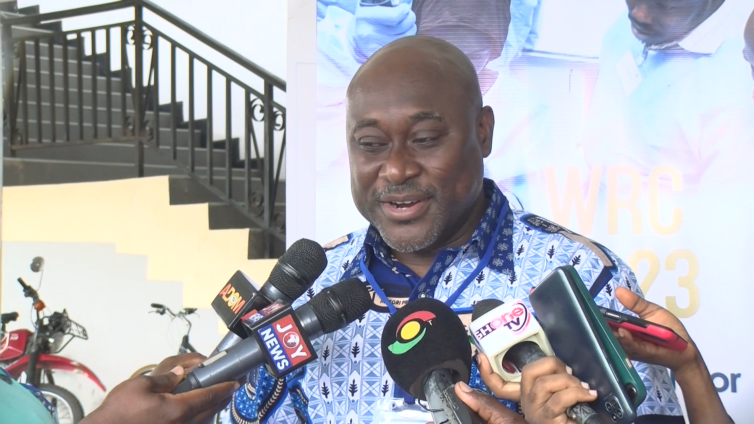
Speaking at the Developing Excellence in Leadership, Training and Science in Africa programme, head of the Centre, Prof. Gordon Awandare stated that the country must take funding of research and innovations serious and not always rely on foreign sources for support during emergencies.
“Currently, we have a COVID-19 levy, and I have suggested that from next year, now that we are quite confident that COVID is behind us for the most part, let’s re-designate this levy as a research levy and put that in the Research and Innovation fund,” he stated.

This, he explains, will be part of a robust approach to shore up the country’s research to take care of the country’s health emergency needs. He emphasized, “What that does is that you create a mechanism for Ghanaians to bring innovative ideas.”
Prof. Awandare stated at the conference that year-in-year-out, many countries pump funds into research but sadly, most African countries have not taken the steps to commit more resources to research on an ongoing and sustainable basis.
“It's not when there's a pandemic or when there's fear and panic that we go and start putting out fires and putting some money for the research institutions. We need to fund research as a going concern,” he averred.

He continued, “It means that every year in our national budget, we should dedicate some money to research. And this government, you know, took the right step by passing a bill to establish a research and innovation fund. But unfortunately, it hasn't been operationalised because the start-up funding has not been put into the fund. So, it is time for us to operationalise that.”
The conference, arguably one of the biggest capacity building programmes on the African continent brought together seasoned professionals and academics in the health sector to deliberate on matters on health on the African continent.

The West African Centre for Cell Biology of Infectious Pathogens at the University of Ghana and its research partners have been selected as one of the 14 leading science consortia to receive funding under Phase II of the developing excellence in leadership, training, and science in Africa programme.
Prof. Gordon Awandare further stated that the DELTAS II is to build on the successes from DELTAS I, by providing high quality training and advanced research on the mechanisms underlying the development of infectious diseases and non-communicable diseases.
The DELTAS Africa II PROGRAM which was launched in Kenya is a $70 million programme jointly funded by Wellcome Trust and the United Kingdom’s Foreign, Commonwealth Research and African Scientific leaders for the continent while strengthening African institutions.

He indicated that the priority IDs for the programme include malaria, tuberculosis, bacterial infections that infect internal parts of the body, COVID-19, HIV-AIDS, and hepatitis B and C, while NCDs of interest include cancer, renal disease, sickle cell disease, diabetes, and non-syndromic hearing impairment. In addition, he says the project will significantly impact health research capacity by training 60 graduate interns, 15 masters students, 12 PhD students, five early-career postdoctoral fellows, two advanced technology training fellows, and two senior research fellows.

“The centre will also enhance the skills of at least 250 health sector professionals through targeted short courses and build research infrastructure in several collaborating and partner African institutions to enhance their capacity for high-quality research and competitiveness for future research funding.

The WACCBIP DELTAS II will be implemented with partners at the institutional (West African Genetic Medicine Centre and Noguchi Memorial Institute for Medical Research), regional research council unit, (The Gambia, University of Liberia, University of Lagos and University of Cape Town), and international (London School of Hygiene and Tropical Medicine, University of Cambridge, Francis Crick Institute, UK, and Johns Hopkins University, USA).
The DELTAS II, is set to run from 2023 to 2026, support 114 programmes in 75 institutions, across 36 countries, which now includes institutions in North Africa and Lusophone countries that had previously not been covered.
Latest Stories
-
I assure Otumfuo, Mahama will join him to commission KNUST Teaching Hospital by end of this year – Haruna Iddrisu
15 minutes -
Gov’t to roll out free special education for persons with disabilities from July 1 – Education Minister
37 minutes -
“We used it to test our officiating officials’ readiness” – Bawah Fuseini after CAA Athletics event
1 hour -
Volleyball emerges as Ghana’s fastest rising sport
1 hour -
National Sports Fund needs strong leadership from the top – Administrator David Wuaku
1 hour -
JoySports Exclusive: Steve McLaren in talks with GFA after expressing interest in Black Stars job
2 hours -
Fire guts auto parts warehouse at Bubuashie, one fire officer injured
2 hours -
I owe my victory to coach Ofori Asare – Allotey after winning WBA Africa Gold Super Flyweight belt
2 hours -
Church of Pentecost supports over 2,000 BECE candidates in Obuasi with career guidance seminar
3 hours -
Brandon Asante and Coventry all but promoted to Premier League despite Sheffield Wednesday draw
4 hours -
GPL 2025/26: Late Kwartemaa strike downs Hearts in Tema
4 hours -
Ghana Faces Sierra Leone Moment as Prosecutorial Powers come under strain
4 hours -
Don’t consume fish or seafood from Tema Shipyard until further notice – FDA warns
4 hours -
Why volunteering might be Africa’s most underrated career accelerator
4 hours -
ActionAid Ghana raises concern over gender gaps in Feed Ghana Programme
4 hours