

Audio By Carbonatix
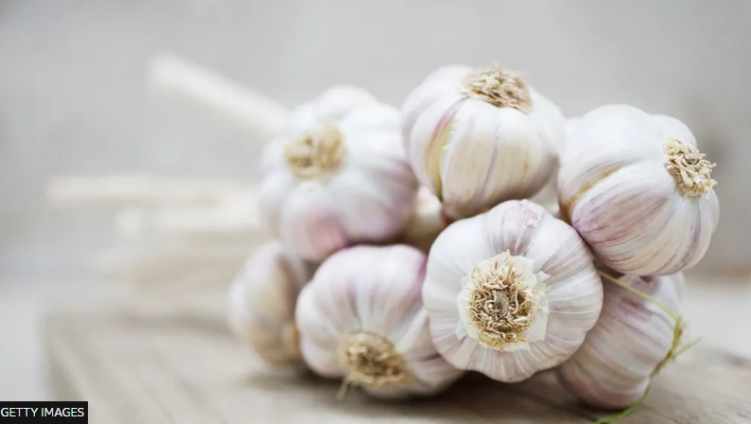
A US senator has called for a government investigation into the impact on national security of garlic imports from China.
Republican Senator Rick Scott has written to the commerce secretary, claiming Chinese garlic is unsafe, citing unsanitary production methods.
China is the world's biggest exporter of fresh and chilled garlic and the US is a major consumer.
But the trade has been controversial for many years.
The US has accused China of "dumping" garlic on to the market at below-cost price.
Since the mid-1990s it has levied heavy tariffs or taxes on Chinese imports in order to prevent US producers from being priced out of the market.
In 2019, during the Trump administration, these tariffs were increased.
In his letter Senator Scott refers to these existing concerns. But he goes on to highlight "a severe public health concern over the quality and safety of garlic grown in foreign countries - most notably, garlic grown in Communist China".
He refers to practices which, he says, have been "well documented" in online videos, cooking blogs and documentaries, including growing garlic in sewage.
He has called for the Department of Commerce to take action, under a law which allows investigations into the impact of specific imports on the security of the US.
Senator Scott also goes into much detail about the different types of garlic that should be looked into: "All grades of garlic, whole or separated into cloves, whether or not peeled, chilled, fresh, frozen, provisionally preserved or packed in water or other neutral substance."
He argues: "Food safety and security is an existential emergency that poses grave threats to our national security, public health, and economic prosperity."
The Office for Science and Society at McGill University in Quebec, which attempts to popularise and explain scientific issues, says there is "no evidence" that sewage is used as a fertiliser for growing garlic in China.
"In any case, there is no problem with this," an article published by the university in 2017 says.
"Human waste is as effective a fertilizer as is animal waste. Spreading human sewage on fields that grow crops doesn't sound appealing, but it is safer than you might think."
Latest Stories
-
Video: Immunity should be exercised without creating classism – Inusah Fuseini on cocaine bust
3 minutes -
Ghana Air Force passes out 293 recruits after six months of intensive training
11 minutes -
EOCO vrs Baffour Awuah: EOCO should have secured warrant before arrest attempt at court – Inusah Fuseini
14 minutes -
Triple fibre cuts disrupt telecom services across Northern, Oti regions – Sam George
18 minutes -
Politicisation could undermine parliamentary probe into cocaine seizures – Dr Osae-Kwapong
24 minutes -
EOCO chases MP: Can Section 41 cure lacuna in EOCO Act? – Inusah Fuseini asks
27 minutes -
GNFS, GWL inspect fire hydrants in Ministries enclave; 23 found faulty
32 minutes -
Gov’t directs release of 50,000 bags of grain to ECOWAS
34 minutes -
Ghana, Germany deepen cooperation on railways, labour mobility
39 minutes -
Huge crowds greet Pope in Paris for open-air Mass
50 minutes -
‘I never said I’ll declare a state of emergency’ – President Mahama on galamsey
2 hours -
Bobby Banson condemns EOCO’s attempted arrest of Nana Agyei Baffour Awuah
2 hours -
When Kumasi begins to look like somebody is in charge
2 hours -
Parliamentary probe into cocaine seizure would be a waste of time – Inusah Fuseini
2 hours -
Cocaine seizure: Focus on Ghana’s reputation, not partisan blame – Osae-Kwapong
2 hours