

Audio By Carbonatix
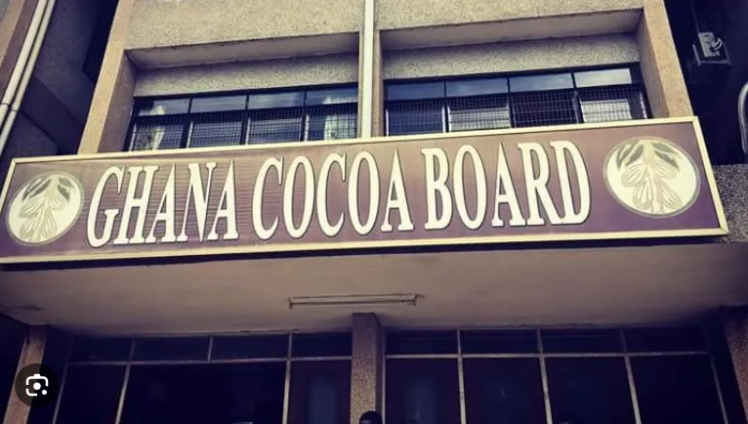
Bank of Ghana Governor, Dr. Johnson Asiama, has revealed that COCOBOD is expecting over $4 billion in inflows before the end of this year.
He explained that the funds are part of a new financing arrangement introduced by COCOBOD to support cocoa purchases for the new crop season.
Speaking in an exclusive interview with Joy Business’ George Wiafe, Dr. Asiama said the inflows should boost the Bank of Ghana’s reserves and strengthen its ability to support the local currency in the coming weeks.
According to him, this development will also signal to the market that the central bank is well-positioned to intervene when needed to meet the demands of businesses and commercial banks.
The Bank’s Economic and Financial Data released in July put Ghana’s international reserves at $11.1 billion.
COCOBOD’s New Financing Deal
In 2023, COCOBOD introduced a new funding model for cocoa bean purchases, requiring global traders to deposit at least 60% of the value of their forward contracts at the start of the season.
The system replaces a three-decade-old pre-export syndicated loan from international banks.
Part of the traders’ deposits will be used to finance purchases from farmers through an existing partnership with licensed cocoa buying companies (LBCs).
In this arrangement, traders fund LBCs to buy cocoa while COCOBOD acts as an intermediary.
Cedi’s Outlook
Dr. Asiama maintained that the development indicates a favourable outlook for the Ghana cedi, despite recent pressures. “As regulator, we have taken the needed actions to ensure that things do not get out of hand,” he assured.
He argued that the macroeconomic situation remains solid and should give businesses confidence in the cedi’s outlook as well as in ongoing measures to improve market liquidity.
“Our net international reserves have not run out, and all the indicators point to a favourable outlook. We currently have it,” he stressed.
The Governor also assured that through “discipline, transparency and firm regulation,” the central bank will build a market where the cedi can trade freely but predictably, anchored in confidence.
However, he warned that those exploiting loopholes—whether offshoring, fueling the black market, or filing fake import forms—will face sanctions.
Latest Stories
-
New Mexico wants Meta to pay up to $40 billion in penalties after data privacy trial
57 minutes -
Oil rises slightly as market weighs mixed supply signals
1 hour -
Jordan ‘Last Dance’ jersey sells for £9m
1 hour -
Nigeria charges man with running fictitious government agency
1 hour -
COMAC renews call for full deregulation of fuel prices
2 hours -
Putin warns West that Russia is ready to use every weapon to protect Kaliningrad
2 hours -
Fuel sector overcrowded as 245 OMCs compete for market share – COMAC CEO
4 hours -
Mobile Money Fintech LTD, UMB train hairdressers and beauticians
4 hours -
COMAC boss blasts gov’t interference in fuel pricing, demands full deregulation
4 hours -
OpenAI fires workers for mishandling ‘sensitive information’
4 hours -
What’s gone wrong at Nike? How the world’s sportswear giant lost its mojo
4 hours -
Carney pitches oil pipeline as a response to US-Canada trade war
5 hours -
Badenoch welcomes expanded grooming gangs inquiry
5 hours -
GACL MD sues Samuel Buabeng over alleged Facebook defamation
5 hours -
Asylum votes show people want help, says Kemi Badenoch
5 hours