

Audio By Carbonatix
After a frustrating two-week climate change negotiations, parties at the COP29 at Baku, Azerbaijan, finally reached a new deal in climate finance.
Known formally as the New Collective Quantified Goal on Climate Finance (NCQG), the new finance goal is to help countries protect their people and economies against climate disasters, and share in the vast benefits of the clean energy boom.
The agreement will triple finance to developing countries, from the previous goal of US$100 billion, to USD 300 billion annually by 2035; and secure efforts of all actors to work together to scale up finance to developing countries, from public and private sources, to the amount of US$1.3 trillion per year by 2035.
"This new finance goal is an insurance policy for humanity, amid worsening climate impacts hitting every country,” said Simon Stiell, Executive Secretary of UN Climate Change. “But like any insurance policy – it only works – if premiums are paid in full, and on time. Promises must be kept, to protect billions of lives.”
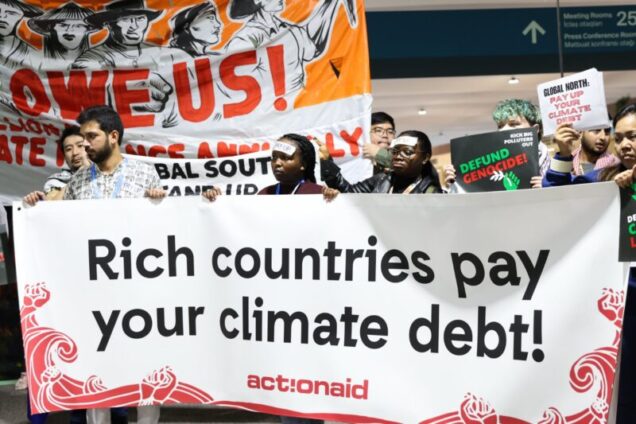
But it was not the deal Africa and other vulnerable regions hoped for. India, Bolivia and Nigeria rejected the deal after its adoption.
Chair of the African Group of Negotiators on Climate Change (AGN), Ali Mohamed, did not hold back the group’s frustrations during the closing plenary, labelling the deal “too little, too late, and too ambiguous in its delivery.”
“At this COP, we achieved progress in some respects, but we appear to be regressing in others,” said Ambassador Mohamed. “Let it be clear that, the agreed figure of $300 billion per annum is an inadequate amount, which has to be reviewed in 2030 and revised upward in line with needs of developing countries.”
The two main contentious issues revolved around the quantum and mode of delivery, as the obligation aspect is clear in both the Convention and the Paris Agreement, placing responsibility on developed parties to provide climate finance.
However, developing parties left Baku frustrated as this responsibility was watered down in the agreed climate finance deal—it puts obligations on all parties, “with developed country Parties taking the lead,” and includes “a wide variety of sources, public and private, bilateral and multilateral, including alternative sources.”
With such language in the text, some experts believe this effectively kills the spirit of the climate convention, which clearly places obligations on developed countries to provide climate support based on their historical and current contribution to the climate crisis.
“Africa stands here with a sense of realism and resignation. Delivery of the aims of the Convention and its Paris Agreement remains deeply uncertain. We are realistic about the journey ahead. But let us remember that these commitments are not acts of charity. They are acts of survival, shared prosperity, and solidarity. Climate finance is not a handout – it is the moral and economic imperative of our age,” said the AGN Chair.
The “Finance COP” was Africa’s push to address the gap in adaptation needs and climate funding for vulnerable people.
However, the rich countries, known as the historical polluters most responsible for the climate crisis, focused almost completely on shifting responsibility to other growing economies.
For the Pan Africa Climate Justice Alliance (PACJA), Baku remains one of the worst deals in the history of COPs, expressing fears developing countries are poised to sink deeper into debt as climate becomes a new source of debt as they grapple with rising development demands.
“The deal does not inspire hope for less developed countries who have suffered unjustly low access to climate finance due to their constrained fiscal space. And the problems for Africa do not end in the size of commitment,” said the group.
But COP29 President, Mukthar Babayev, believes “the Baku Finance Goal represents the best possible deal we could reach, and we have pushed the donor countries as far as possible.”.
Latest Stories
-
National Defence University to strengthen Ghana’s response to emerging security threats – Haruna Iddrisu
3 minutes -
Pupil arrested after two teachers shot at French school
10 minutes -
Lamisi takes ‘Let Us Clap’ tour across five countries and 18 dates
28 minutes -
DVLA cuts roadworthy contract cost from $155.4m to GH¢2m – CEO
29 minutes -
Okyeame Kwame calls for free university education for farmers’ children
32 minutes -
Black Stars: Two decades of coaching triumphs and turmoil (2006–2026)
36 minutes -
DVLA plans simulator-based driving tests to assess prospective drivers in Ghana
44 minutes -
FDA disposes of 40-foot container of non-compliant diapers imported from Spain
47 minutes -
PAC disappointed by Agric Ministry’s failure to present key witnesses in GH¢69bn special audit inquiry
55 minutes -
DVLA to digitise road accident reporting, requiring location coordinates before reports are filed
56 minutes -
GJA accepts Mahama’s request to organise national forum on hate speech
1 hour -
Democratizing the judiciary: Why Judges in Ghana should engage “We the People” through social media platforms.
1 hour -
Bond market: Turnover increases by 47% to GH¢4.07bn
2 hours -
DVLA prepares electronic queue system to reduce congestion
2 hours -
Hearts of Oak coach Kapor raises alarm over poor pitches in Ghana football
2 hours