

Audio By Carbonatix
Canada’s big six banks will allow mortgage payment deferrals for up to six months as part of extraordinary measures to help customers struggling with the financial impacts of the novel coronavirus pandemic.
In a tweet on Wednesday morning, Neil Parmenter, president of the Canadian Bankers Association, said the measures are “effective immediately.” RBC, TD, BMO, Scotiabank, CIBC and National Bank will also offer “opportunity for relief” on other credit products.

Effective immediately @BMO @cibc @nationalbank @RBC @scotiabank @TD_Canada offer support for Cdns impacted by #COVID19 incl. a 6-month payment deferral for mortgages, & opportunity for relief on other credit products. Talk to your bank
In a joint press release, the big six banks said they are committed to working with retail and business customers to provide “flexible solutions” for those facing hardship due to the disruptions caused by COVID-19.
It is unclear whether customers will be able to postpone mortgage payments interest-free. Global News asked all the big banks whether interest on deferred mortgage installments will accrue until borrowers make those payments.
Scotiabank told Global News it will be reviewing all requests for mortgage deferral “on a case-by-case basis,” adding it is committed “to working directly with our customers to provide relief from financial stresses due to COVID-19. ”
However, the bank also pointed Global News to its COVID-19 FAQ page, which reads: “During the time you defer your mortgage payments, interest will continue to accrue – so your payments will be slightly higher after the deferral period ends.”
National Bank and TD stopped short of saying deferred mortgage payments will not accrue interest.
“There are different scenarios depending on client files and loan parameters,” the National Bank said, adding: “The objective is to allow clients to get back on their feet as quickly as possible, with sound advice.”
TD also said it is committed to work with personal and small business clients “on a case-by-case basis,’ adding that it is taking a similar approach to the one it adopted in the 2008 financial crisis with its “TD Helps program.”
RBC, BMO and CIBC did not respond to Global News’ media request.
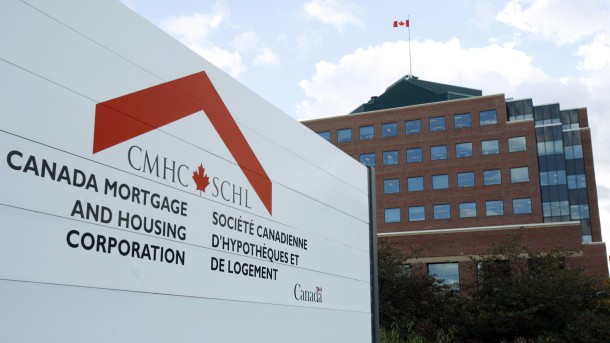
The announcement comes as Canada’s housing agency, the Canada Mortgage and Housing Corporation (CMHC), has been working to ensure struggling homeowners aren’t forced into default during the health-care emergency.
“The message that CMHC is putting out is just that no Canadian should default as a result of this health crisis,” said James Laird, president of CanWise Financial, an independent mortgage brokerage, and co-founded of Ratehub.ca
On Monday, CMHC announced it would bring back a revised version of the Insured Mortgage Purchase Program it used during the 2008-09 financial crisis. The government plans to purchase up to $50 billion worth of insured mortgage pools.
The move, CMHC said, is meant to “provide stable funding to banks and mortgage lenders in order to ensure continued lending to Canadian consumers and businesses.”
Deferred mortgage payments are typically added back to the mortgage amount, meaning borrowers are simply postponing — not skipping — payments.
Mortgages with other lenders
For insured mortgages, there are a variety of tools that can help borrowers stave off default.
Possible solutions include allowing borrowers to defer or temporarily reduce payments, stretching out the mortgage term or amortization period, adding missed payments back onto the mortgages and lowering the mortgage rate.
Canada’s three providers of mortgage default insurance, which include CMHC as well as Genworth Canada and Canada Guaranty, which are private, are stepping up efforts to help struggling homeowners amid the novel coronavirus emergency.

3:11Coronavirus around the world: March 17, 2020 Coronavirus around the world: March 17, 2020
Canada Guaranty announced on its website it’s ready to extend its Homeownership Solutions Program to allow the deferral of up to six monthly payments, up from a current limit of four payments.
In Canada, homebuyers with a down payment of less than 20 per cent must have mortgage default insurance.
For uninsured mortgages, many lenders offer flexible payment options, often allowing borrowers to avoid making one or more regular payments per year without affecting their credit rating.
Flexible payment options may be special features attached to specific kinds of mortgages or standard offerings available on all mortgages, depending on the lender.
Latest Stories
-
La Beach demolition: Senyo Hosi condemns lack of consultation
19 seconds -
Russian glide bomb attack on Zaporizhzhia kills at least 15 people
15 minutes -
Jinapor warns underperforming energy sector CEOs of consequences, says no protection for failure
17 minutes -
Fire destroys head of tipper truck on Lower Volta Bridge
21 minutes -
Palmer signs new Chelsea contract until 2034
23 minutes -
World Cup visa scandal: Mahama will act on corruption allegations – Abass Nurudeen
25 minutes -
Abass Nurudeen accuses Minority of ‘scandal scavenging’ over World Cup visa controversy
26 minutes -
US Embassy recognised NSA, GFA and GTA as separate entities for visa applications – Sports Minister’s aide
32 minutes -
Only 30% of Ghanaian teachers satisfied with their jobs – CAPCOE data reveals
43 minutes -
Communities affected by construction of Akosombo Dam urge government to speed up compensation process
1 hour -
World Cup visa scandal: Sports Ministry not shielding anyone – Sports Minister’s special aide
1 hour -
World Cup visa scandal: Over 30 people misrepresented as GTA board members to US Embassy – Vincent Assafuah alleges
1 hour -
Fire destroys wooden structure near Yesu Mo Villa at Bush Road
1 hour -
NDC threatens sanctions over oversized campaign posters, gives aspirants 5 days to comply
2 hours -
Star Oil paid GH¢2.7bn in taxes, levies in nine months of 2026
3 hours