

Audio By Carbonatix
Cost of loans continue to fall but marginally, as average lending rate stood at 20.61% per annum in June this year.
This is equivalent to 1.72% interest on loans per month.
However, the average lending rate varies among the banks and the respective sectors.
For instance, some banks will offer loans as low as 17% per annum, whilst others charge rates as high as 27%. Overall, it will depend on the risk profile of the customers.
Also, lending to the agriculture sector is considered riskier than the manufacturing sector, and therefore credit to the agriculture sector will be higher.
According to data from the Bank of Ghana, average lending rate fluctuated in the first quarter of the year, but has since retreated.
In January, average lending rate was 20.97% but shot up marginally to 21.02% in February 2021, and then fell to 20.96% in March 2021.
It has since been falling albeit slightly. In April 2021, it was 20.93% but went down again to 20.85% in May 2021 and then to 20.61% in June 2021.
In March 2020, average cost of credit was estimated at about 23%, but took a nose dive to about 21.95% in June 2020. Though a marginal reduction, many analysts and market watchers will welcome it, since the cost is quiet substantial when you compute it.
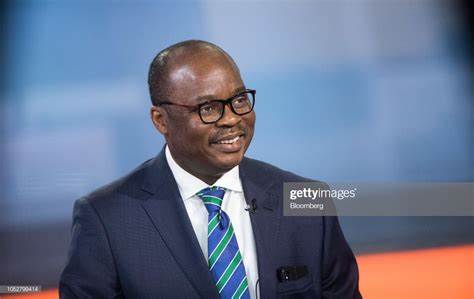
Many have commended the Central Bank, led by Dr. Ernest Addison, for its impressive policies that have ease the cost of credit in the country.
BoG policies key in stabilising prices and lowering interest rates
Senior Partner at accounting and auditing firm, Anthony Sarpong, said policy interventions by the Bank of Ghana including the Monetary Policy have been key in stabilising prices and keeping interest rates relatively low despite the impact of covid -19 on the economy.
According to him, economic growth generally after a pandemic slows down, but the policy interventions by the Central Bank in stimulating demand and supply in the economy has played a key role in supporting growth.
He told Joy Business that the Central Bank has done well in supporting the economy in this time of difficulty
“If I take it from the monetary point of view from the Bank of Ghana, you will notice that they [BoG] have fairly manage the exchange rate well. For a long time, the Ghana cedi has stabilised and even in its [BoG] last report appreciated against the dollar and of course a little marginally against the British Pound”, he mentioned.
Fiscal economy a concern
However, going forward, the concern will be about the fiscal management of the economy that is the ballooning debt and high fiscal deficit which is very crucial because of its rippling effect on the monetary economy.
There are concerns that banks may take a hit from the country’s sovereign debt as outlook deteriorates.
Latest Stories
-
The hypocrisy must stop; pass Anti-LGBTQ+ Bill now – Alhassan Tampuli to Mahama
6 seconds -
Imprisonment should be rehabilitative, not punitive – Ghana Prisons boss at UNGA
22 minutes -
Ga Adangbe traditional priests petition Mahama over McDan aviation licence revocation
33 minutes -
Anti-LGBTQ Bill: NDC’s arrogance is worrying – Hassan Tampuli
44 minutes -
Let’s give OSP time to mature, not to scrap it – Hassan Tampuli
47 minutes -
Nigeria convicts 386 Islamist militants in mass trials
53 minutes -
Djibouti president wins election with 97.8% of vote, state media says
57 minutes -
We don’t have mandate to deduct tax from rent allowance of security services personnel – Interior Ministry clarifies
1 hour -
Ablakwa receives Presidential Special Envoy on Reparations to advance global agenda
1 hour -
Christina Koch becomes first woman to travel around the moon on Artemis II
2 hours -
Epstein survivors’ calls to meet King Charles and Queen harder to ignore as US visit approaches
2 hours -
UN Secretary-General names Ghana’s Anita Kiki Gbeho as South Sudan envoy
2 hours -
Mali withdraws recognition of Sahrawi Republic, backs Morocco’s autonomy plan
2 hours -
Gov’t distributes over 8,500 laptops to One Million Coders project
2 hours -
Julius Debrah, ‘man to beat’ as NDC’s James Agbey dismisses Musah Dankwah’s polls
2 hours