

Audio By Carbonatix
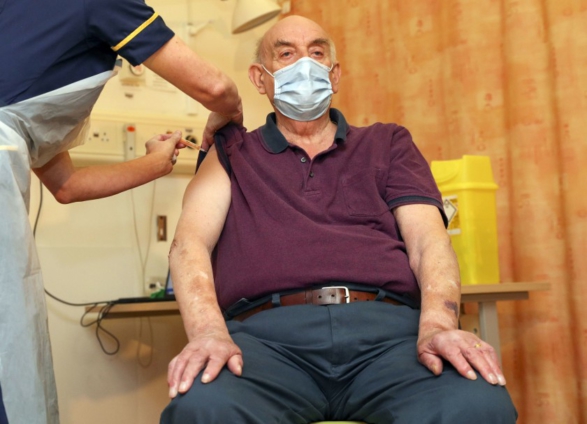
An 82-year-old man has become the first person in the world to receive the Oxford-AstraZeneca vaccine since it was approved for use in the UK.
Brian Pinker, a patient at Churchill hospital on dialysis for kidney disease, was the first to receive the jab on Monday morning.
The retired maintenance manager said he was looking forward to spending his 48th wedding anniversary with his wife Shirley in February.
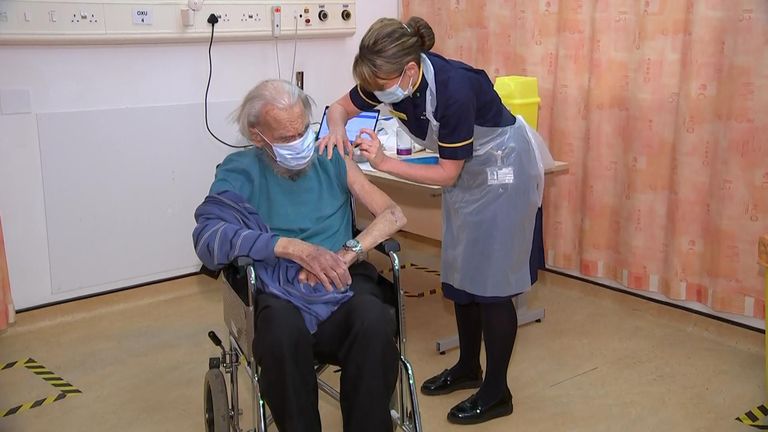
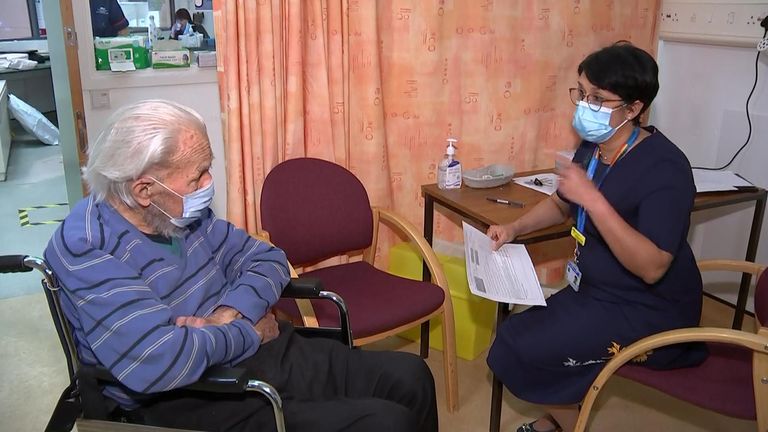
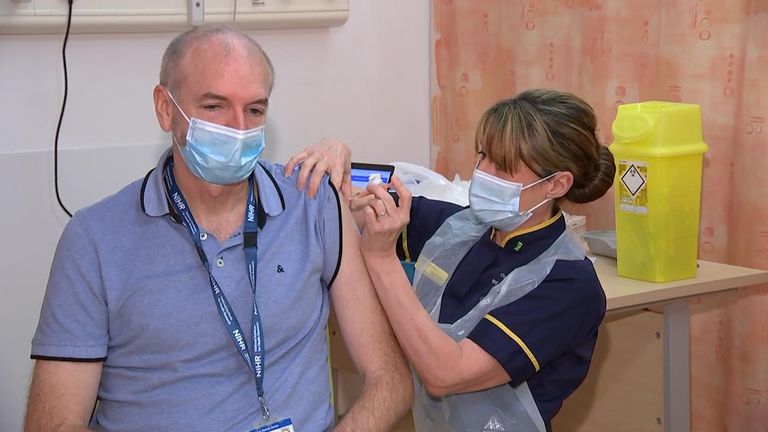
The second person to receive the jab was Trevor Cowlett, an 88-year-old music teacher, and the third was Professor Andrew Pollard.
Around 53,000 doses of the Oxford University jab are initially being rolled out at six hospital trusts in Oxford, Sussex, Lancashire, Warwickshire, and two in London.
The bulk of the supplies will then be sent to more than 700 GP-led services and care homes.
The government hopes it will deliver tens of millions of doses within months, with the reported goal of administering two million per week.
It is the second vaccine to be rolled out in the UK, after the Pfizer/BioNTech vaccine was first given to grandmother-of-four Margaret Keenan on 8 December.
Health Secretary Matt Hancock said it was a "big British success story, starting today".
But he said that fighting the virus was "a massive national effort".
"It isn't about blame, it's about how we collectively, as a society, keep this under control for the next couple of months… until the vaccines can make us safe," he said.
"We obviously have the very positive news this morning of the Oxford-AstraZeneca vaccine started to be rolled out - it's a triumph of British science that we've managed to get to where we are, but this new variant does make it so much harder to control the virus in the meantime."
He added that from today, there were "700 vaccination sites open across the UK, and by the end of the week it's due to be over 1,000".
Mr Hancock had earlier said: "This is a pivotal moment in our fight against this awful virus and I hope it provides renewed hope to everybody that the end of this pandemic is in sight."
So far, around one million people in the UK have received the other approved vaccine, which is produced by Pfizer and BioNTech.
The Oxford-AstraZeneca vaccine, which was approved on 30 December, is cheaper and easier to store and transport.
In a shift from practices in the US and elsewhere, Britain plans administer patients second doses of both vaccines within 12 weeks of the first shot rather than within 21 days, to accelerate immunisations across as many people as quickly as possible.
The government's deputy chief medical officer, Professor Jonathan Van-Tam, said on Sunday that decision is "the right thing to do for the nation as a whole."
The UK has secured 100 million doses of the Oxford-AstraZeneca vaccine as part of its contract - enough for most of the population.
The spread of the new more transmissible variant has forced the government to prioritise giving the first dose of the vaccine to as many people as possible, rather than concentrating on giving a smaller group of people the full two doses first.
Following his jab, Mr Pinker said: "I am so pleased to be getting the Covid-19 vaccine today and really proud that it is one that was invented in Oxford. The nurses, doctors and staff today have all been brilliant and I can now really look forward to celebrating my 48th wedding anniversary with my wife Shirley later this year."
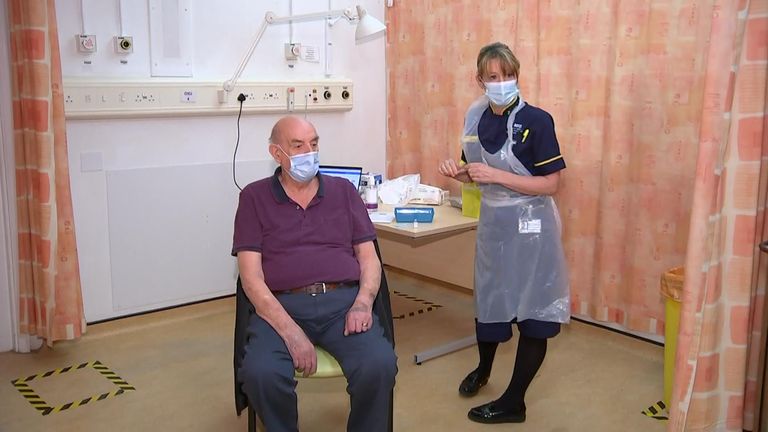
Sam Foster, chief nursing officer at Oxford University Hospitals NHS Foundation Trust, who administered the vaccine to Mr Pinker, said: "It was a real privilege to be able to deliver the first Oxford vaccine at the Churchill Hospital here in Oxford, just a few hundred metres from where it was developed.
"We look forward to vaccinating many more patients and health and care staff with the Oxford vaccine in the coming weeks which will make a huge difference to people living in the communities we serve and the staff who care for them in our hospitals."
The UK is currently battling with an acute outbreak, recording more than 50,000 new Covid-19 infections a day over the past six days.
On Sunday, it reported another 54,990 cases and 454 virus-related deaths - taking the official number of deaths from the virus to 75,024.
Latest Stories
-
Black Stars: Seven years of decline while hashtagging love
9 minutes -
Today’s front pages: Thursday, October 1, 2026
10 minutes -
Gov’t to suspend GH¢1 D-Levy on diesel for October and November
42 minutes -
Fire destroys belongings in Akweteyman apartment
1 hour -
Baffour Awuah to turn himself in to EOCO today – JoyNews sources
1 hour -
Government identifies payment discrepancy holding up teachers’ strike resolution
2 hours -
BoG signals no FX intermediation for October as GoldBod plans $1bn support for banks
2 hours -
When share ownership becomes personal: The African mindset of the Dangote IPO
2 hours -
Why MFWA Legal Fund matters to Ghana’s democracy
2 hours -
Fuel prices to rise from October 1; diesel could hit GH¢19.60 – COMAC
2 hours -
Parliament must investigate how 3.9 tonnes of cocaine left Ghana undetected – Samuel Jinapor
2 hours -
Government pledges to pay striking teachers as payment dispute is resolved
2 hours -
Government cannot investigate drug exports under its own watch – Abu Jinapor
2 hours -
Government extends GH¢2 diesel subsidy for two more months
2 hours -
GTEC flags over 100 tertiary institutions as unrecognised
2 hours