

Audio By Carbonatix
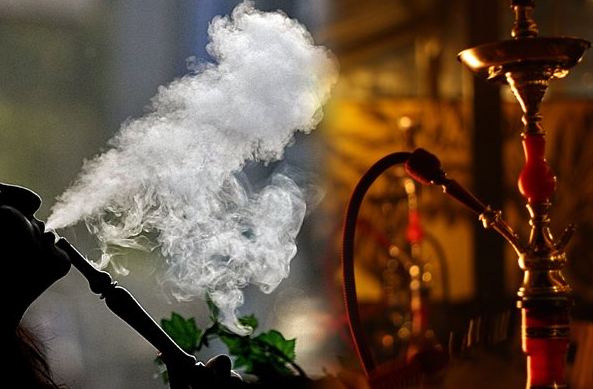
A policy document on Covid-19 and tobacco use by the School of Public Health, Kwame Nkrumah University of Science and Technology has called for the ban of Shisha use in Ghana to prevent the spread of Covid-19.
It further called for the ban of the sale and importation of tobacco products including cigarettes during the Covid-19, noting that the disease is a respiratory illness and tobacco could aggravate symptoms and worsen outcomes.
The document which was prepared in August, 2020 and copied to the Ghana News Agency, reports key result from a rapid response study (the Covid-19 and Tobacco Project) and it was set up to examine tobacco use and tobacco control during Covid-19 while building on an existing multi-country collaboration.
The study was carried out by Ellis Owusu-Dabo, Divine Darlington Logo and Patricia Amoah Yirenkyi with grant support from the UK Global Challenges Research Fund and additional funding from the University of Edinburgh’s Scottish Funding Council Global Challenges Research Fund (GCRF).
The document said: “Shisha use prevails among the youth, and involves sharing of the same mouth-piece which can be a route for SARS-Cov-2 transmission and other communicable diseases.”
It urged the government to increase tobacco taxes, ideally by 50 per cent to generate revenue to support healthcare delivery in the wake of Covid-19, adding that; “It is very necessary to raising tobacco tax to make money available for treating people who suffer from tobacco-related diseases as well as Covid-19”.
The document said this would reduce tobacco use among the youth because they were sensitive to high prices of tobacco products.
It said cigarettes remained the commonest form of tobacco use, pipe smoking (shisha), chew, sniffing, smokeless tobacco and ‘tawa’ use among other forms by Ghanaians and that the most recent Demographic and Health Survey in 2014 reports the prevalence of cigarette smoking among males to be 4.8 per cent and females 0.1 per cent.
It said the regional trend continues to show high prevalence from the northern part of Ghana – 31.2 per cent, 22.5 per cent and 7.9 per cent in the Upper East, Northern and Upper West Regions respectively.
The document said the recent data indicated that close to one in 10 junior high students use any form of tobacco products.
It said the current tobacco use could, from existing evidence, affect Covid-19 severity and therefore there was the need for government to integrate communicable and non-communicable disease risks into the overall health and wellbeing of the population.
Latest Stories
-
Conflicts among care providers linked to maternal, neonatal deaths – Expert
2 hours -
GIS marks 10th TIME conference, champions improved teaching practices
2 hours -
BRICS Or Balance? What Ghana’s bid really means
2 hours -
GPRTU wants full TRAFFITECH-GH implementation to start in 2027
2 hours -
Mahama announces plans to import electric wheelchairs for PWDs
2 hours -
KGL U17 Colts 2026: Western beat Prempeh Elite Academy to set up final final with Greater Accra Region
3 hours -
Late Solanke strike salvages 10-man Spurs draw at Man United
3 hours -
Gender Ministry to monitor welfare of Nana Akua Addo’s children amid domestic violence case
3 hours -
Benedict Okyere Yeboah: Ghana’s football problem goes beyond sacking a coach
3 hours -
GPL 2026/27: Darkwah Wiafe’s winner sees All Blacks beat Kotoko
3 hours -
ITF World Tour : Patel Wins Boys’ Singles Final at J100 Accra
3 hours -
Ghana must pursue BRICS partnership if it brings economic benefits – Kpebu
4 hours -
Success and Wright Claims J100 Accra Girls’ Doubles Championship
4 hours -
ITF J100: America’s Wright wins J100 Accra Girls’ Singles Title
4 hours -
Expedition hopes to find aviator Amelia Earhart’s plane on remote island
4 hours