

Audio By Carbonatix
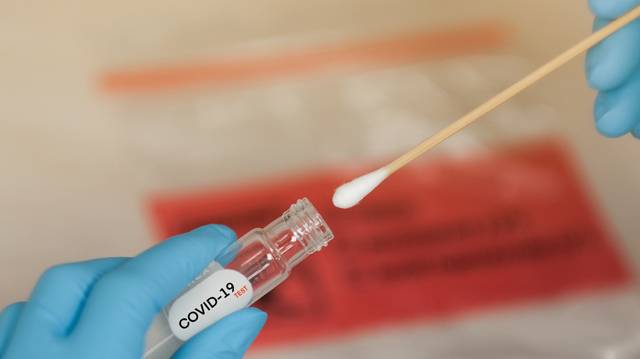
Public health facilities in the Greater Accra Region are running out of Viral Transport Medium (VTM) and swab kits used for Covid-19 test.
This is as a result of the increasing number of people rushing to the facilities for voluntary tests, with the country‘s case count going up.
Checks indicate that people who voluntarily go to the Korle- Bu Teaching Hospital and the Ga South Municipal Hospital for Covid-19 test are referred to private health facilities or asked to come another time due to the shortage of the kits.
A health worker at the Korle-Bu Teaching Hospital who spoke to the GNA on condition of anonymity, said in the past few days, the Facility received many requests for Covid-19 test, but testing kits were inadequate.
"What is happening now is that when the people come for testing, we ask them to go and come back later, and this is risky because some may not come back again," the source said.
The source described the situation as dire, saying, “we, workers here don’t even have the kits to use for ourselves. We are all at risk.”
A Senior Nurse at the Ga South Municipal Hospital said the Facility was almost overwhelmed by requests for Covid-19 tests after the yuletide and called for support from stakeholders to contain the spread of the virus.
“Requests are coming every day but we don’t have the swab kits. Francis, a staff, was just referred to a private facility an hour ago,” the Nurse said.
Emanuel Gyasi-Qauo, a trader, who suspected he had contracted the virus told the GNA that when he visited the GSMH on Friday to test for Covid-19, he was asked to come back later.
He said he had lost the sense of taste and smell, felt uncomfortable, and wanted to know his status in time but turned away.
"I couldn't wait to be called by the GSMH because I was not given any specific date, my only option was to get tested in a private facility and the results were delivered to me after four hours," he said.
Meanwhile, GNA has gathered that some private facilities had taken advantage of the medical emergency and doing brisk business.
“ It is expensive ooo...My in-law and my son went for the test at a private facility and they paid between ¢350 and ¢400,” a senior journalist told the GNA.
When GNA contacted the Ghana Health Service, Dr Franklin Asiedu-Bekoe, Director of Public Health, said the Service was not aware of the shortages.
He said his checks with the national reference laboratory showed that the kits had been distributed to all health facilities across the country.
"The situation now is that with the introduction of the Covid-19 walk-in test, the facilities are using more than expected," he said.
The Director of Public Health said he had as a result of the increased walk-in test directed that the Covid-19 test kits, which were distributed earlier, be redistributed to ensure that kits, which were not urgently needed at some regional hospitals were brought to facilities in Accra, where the demand was high.
Commenting on contact tracing, he said GHS was facing some challenges and explained that, “previously, the test was solely handled by the Service, now with the introduction of testing in private health facilities, we are unable to do it effectively."
Dr Asiedu-Bekoe said the Service was putting in place measures to ensure that, private laboratories collaborated with the Service to address gaps in tracing contacts.
He said while GHS and frontline health workers were doing their best to contain the virus, it was important for the public to strictly observe the Covid-19 safety protocols.
Dr. Asiedu-Bekoe appealed to the public to wash hands regularly with soap under running water before touching the mouth, nose and eyes.
He underscored the need for everyone to observe physical distancing, wear nose mask at all times, and disinfect objects and surfaces regularly.
Coronaviruses are said to be a large group of viruses that are common among animals.
In rare cases, they are what scientists call zoonotic, meaning, they can be transmitted from animals to humans, according to the US Centre for Disease Control and Prevention.
They are said to be the cause of dangerous diseases with incubation period between 4-6 days. Signs and symptoms are; fever, runny nose, cough, sore throat, and possibly a headache.
According to the Ghana Health Service, the country’s Covid-19 active cases had increased to 1,261, with 193 new cases recorded by first week of January, 2021.
As at Saturday, January 16, Ghana recorded 56,981 confirmed Covid-19 cases, 1,404 active cases, 175 new cases, 341 deaths and 55, 236 recoveries/discharges.
Latest Stories
-
“We used it to test our officiating officials’ readiness” – Bawah Fuseini after CAA Athletics event
5 minutes -
Volleyball emerges as Ghana’s fastest rising sport
12 minutes -
National Sports Fund needs strong leadership from the top – Administrator David Wuaku
30 minutes -
JoySports Exclusive: Steve McLaren in talks with GFA after expressing interest in Black Stars job
36 minutes -
Fire guts auto parts warehouse at Bubuashie, one fire officer injured
42 minutes -
I owe my victory to coach Ofori Asare – Allotey after winning WBA Africa Gold Super Flyweight belt
46 minutes -
Church of Pentecost supports over 2,000 BECE candidates in Obuasi with career guidance seminar
2 hours -
Brandon Asante and Coventry all but promoted to Premier League despite Sheffield Wednesday draw
3 hours -
GPL 2025/26: Late Kwartemaa strike downs Hearts in Tema
3 hours -
Ghana Faces Sierra Leone Moment as Prosecutorial Powers come under strain
3 hours -
Don’t consume fish or seafood from Tema Shipyard until further notice – FDA warns
3 hours -
Why volunteering might be Africa’s most underrated career accelerator
3 hours -
ActionAid Ghana raises concern over gender gaps in Feed Ghana Programme
3 hours -
Windstorm wreaks havoc in Gushegu, displacing nearly 2,000 residents and damaging schools
3 hours -
Friends of Bridget Bonnie Marks her 35th birthday with donation to Kasseh Model Health Centre
4 hours