

Audio By Carbonatix
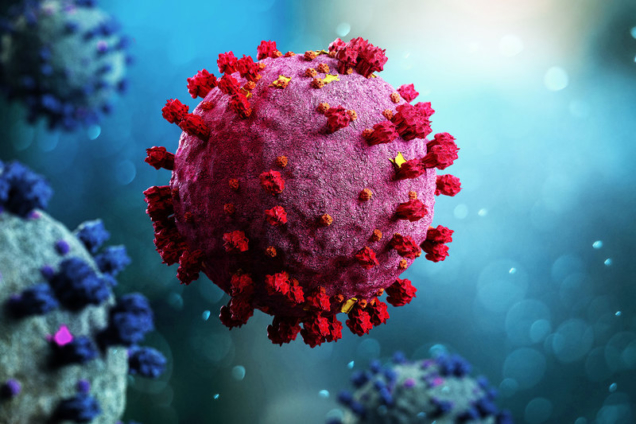
The World Health Organization (WHO) has announced a new naming system for variants of Covid-19.
From now on the WHO will use Greek letters to refer to variants first detected in countries like the UK, South Africa and India.
The UK variant for instance is labelled as Alpha, the South African Beta, and the Indian as Delta.
The WHO said this was to simplify discussions but also to help remove some stigma from the names.
Earlier this month the Indian government criticised the naming of variant B.1.617.2 - first detected in the country last October - as the "Indian variant", though the WHO had never officially labelled it as such.
"No country should be stigmatised for detecting and reporting variants," the WHO's Covid-19 technical lead, Maria Van Kerkhove, tweeted. She also called for "robust surveillance" of variants, and for the sharing of scientific data to help stop the spread.
Today, @WHO announces new, easy-to-say labels for #SARSCoV2 Variants of Concern (VOCs) & Interest (VOIs)
— Maria Van Kerkhove (@mvankerkhove) May 31, 2021
They will not replace existing scientific names, but are aimed to help in public discussion of VOI/VOC
Read more here (will be live soon):
https://t.co/VNvjJn8Xcv#COVID19 pic.twitter.com/L9YOfxmKW7
Letters will refer to both variants of concern, and variants of interest. A full list of names has been published on the WHO website.
These Greek letters will not replace existing scientific names. If more than 24 variants are officially identified, the system runs out of Greek letters, and a new naming programme will be announced, Ms Van Kerkhove told STAT News in an interview.
"We're not saying replace B.1.1.7, but really just to try to help some of the dialogue with the average person," she told the US-based website. "So that in public discourse, we could discuss some of these variants in more easy-to-use language."
On Monday, a scientist advising the UK government said the country was in the early stages of a third wave of coronavirus infections, in part driven by the Delta, or Indian variant.
It is thought to spread more quickly than the Alpha (UK; Kent) variant, which was responsible for the surge in cases in the UK over the winter.
Vietnam, meanwhile, has detected what appears to be a combination of those two variants. On Saturday, the country's health minister said it could spread quickly through the air and described it as "very dangerous".
Latest Stories
-
David Selassie Anthony declares bid for NDC Deputy National Organiser
52 minutes -
Amin Adam proposes 13 measures to strengthen Ghana’s debt transparency and market confidence
1 hour -
Mahama announces $2bn annual investment to accelerate industrialisation
1 hour -
Amin Adam urges monthly disclosure of Sinking Fund as Ghana prepares for DDEP repayments
1 hour -
Stronger banks will fuel business growth and jobs – ADB MD
2 hours -
Galamsey: ‘Rivers that fed our grandparents now run the colour of chocolate milk’ – Sam Jonah
2 hours -
We have been scammed by NDC, government is only doing PR – Abanga Fuseini
2 hours -
Republic Bank–JoyNews Habitat Fair opens in Ho today
2 hours -
BoG pledges stability to attract investment, urges stronger Africa–Asia partnerships
2 hours -
Amin Adam warns treasury bill dependence could expose Ghana to refinancing risks
2 hours -
Ghana better placed to withstand commodity price shocks – IMF
2 hours -
GAPTE intensifies efforts to increase bus availability for Aayalolo contra-flow
2 hours -
Amin Adam warns cedi depreciation could reverse Ghana’s debt relief gains
2 hours -
Fiscal discipline crucial for pension fund investments – Finance Minister
2 hours -
BoG Governor rallies IMF to back Africa’s digital sovereignty
2 hours