

Audio By Carbonatix
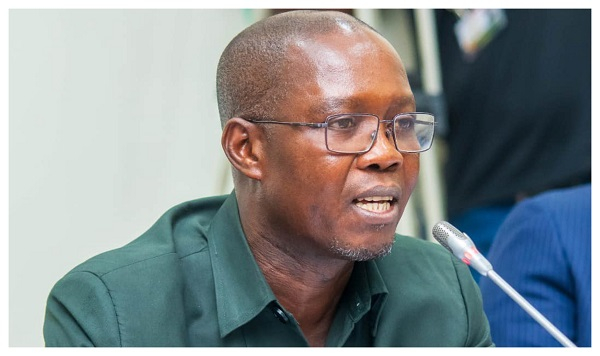
The First Deputy Speaker of Parliament, Bernard Ahiafor, has launched the African Centre for Development Impact (ACDI), describing it as a timely intervention in governance.
He pointed out that decision-making must rely on credible data.
"All over the world, data informs decision-making. Therefore, lawmaking, oversight, and representation must reflect evidence. Policies and laws grounded in evidence would go a long way to impact the lives of the people," he stated.
The launch, which took place last Tuesday in Accra, drew attendees from policymakers, government, academia, and development organisations.
A former Vice-Chancellor of the UG, Professor Ernest Aryeetey, chaired the event, and the Director of Tertiary Education, Dr Emmanuel Newman, represented the Deputy Minister of Education, Dr Clement Apaak.
Public policy
The ACDI seeks to promote the use of rigorous evidence in shaping public policy and strengthening development outcomes in the country and across Africa.
The centre would support Parliament and public institutions with credible data to guide decision-making and improve governance.
It would also operate in collaboration with institutions such as the University of Ghana (UG) and the Centre for Effective Global Action to achieve its objectives.
Crucial intervention
Mr Ahiafor said the launch of the ACDI signalled a renewed commitment to embed evidence in governance.
"It is crucial to have a key platform to connect research with policy and advance sustainable development in Ghana and across Africa," he said.
Mr Ahiafor also emphasised the need for a coordinated national data system and said Ghana must consolidate data across institutions.
He said evidence-informed policymaking would enhance transparency and accountability in national development processes, improving efficiency and consistency in governance.
Mandate
The Executive Director of the ACDI, Professor Charles Amoatey, outlined the centre’s mandate to generate evidence for government decision-making and stressed the importance of locally driven research.
“Our mandate is to make sure that we generate the evidence that is needed for policymakers… so that they can use that evidence to make decisions," he said.
Professor Amoatey explained that the ACDI would evaluate government programmes and guide policy adjustments based on findings.
He said research would determine whether programmes delivered value for money and would inform decisions to scale up or discontinue initiatives.
"We don’t advise any policy changes until we have generated by ourselves the evidence that is needed," he said.
Latest Stories
-
Pentecost University to host international sustainability conference
5 minutes -
Ampofo Ankrah did not collect World Cup visa money – Lawyer
15 minutes -
Baffour Awuah to spend night in EOCO custody – Atta Akyea
17 minutes -
Torgbiga Wenya III opposes proposed elevation of 36 Anlo chiefs to Paramount status
25 minutes -
The strengthening El Niño and what it could mean for Ghana
28 minutes -
Baffour Awuah formally charged with money laundering, loss of public funds – Lawyer
29 minutes -
Drone flight over EOCO building could attract 30-year jail term – Security consultant
37 minutes -
Flying drone over EOCO premises is strictly prohibited – Security consultant
38 minutes -
SIC file was surrendered to client, EOCO has no reason to search Manhyia South MP’s firm – Atta Akyea
38 minutes -
EOCO search of Baffour Awuah’s law firm raises confidentiality concerns – Atta Akyea
39 minutes -
“I will never ignore an invitation from EOCO if I had received one” — Manhyia MP
41 minutes -
Baffour Awuah ready to cooperate fully with EOCO investigation – Bosome Freho MP
1 hour -
How a Ghanaian technology is helping fish farmers detect hidden threats before fish die
1 hour -
AI tool helps Ghanaian farmers identify crop threats from field observations
1 hour -
NEIP: Designing a Ghana Startup Agency that builds enterprises, not programmes
1 hour