

Audio By Carbonatix
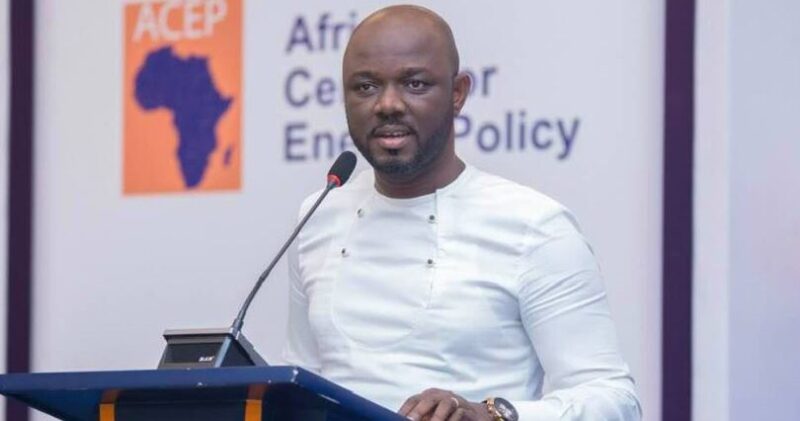
The African Center for Energy Policy (ACEP) says Aker’s AGM decision to relinquish 80% interest in the South Deepwater Tano (SDWT) project shows how Ghanaian Civil Society Organisations (CSOs) fought to protect the country’s interest in the oil industry.
AGM Petroleum announced that it has relinquished work on the project after what it described as careful consideration of all options.
However in a statement ACEP said “this comes after a long and hard-fought battle by Ghanaian CSOs to protect the country’s interests in the oil industry”.
According to ACEP, the battle began in August 2021, when CSOs rallied on fascinating advocacy projects to prevent a composite transaction that would transfer Aker’s interest in the Pecan field and the SDWT block to the Ghana National Petroleum Corporation (GNPC).
“The SDWT Block was valued at an outrageous $700 million at 65% commercial risking ($804m unrisked), based on untested and unappraised Nyankom discovery and bizarre assumptions about contingent resources of about 421 MMbls”, the stamen said.
“When CSOs’ analytical evidence showed that Ghanaian politicians and GNPC were simply seeking to pervert standard practices in the oil industry on valuation and asset acquisition, we were faced with a super coordinated assault on our character by leading members of government, GNPC, sections of the media and members of parliament”, it added.
The statement pointed out that some academics and dark forces on the corridors of power, who had never commented on the oil industry but suddenly became industry experts, endorsed the transaction and vilified activists.
“On the side of the government, we were always prepared for their defence, even though their defence lost decorum and respect for the work of the civil society group. In some instances, we were described as having eaten fufu (a local Ghanaian dish) and lost reasoning. They sponsored high-profile prime-time interviews to tell the nations that CSOs only sought to derail the best decision ever taken in the oil industry”.
Recalling some of the attacks, ACEP said CSOs had their share of the attack in parliament.
“One MP, Honourable K.T. Hammond, now Minister for Trade in the Republic, described CSOs as ignorant people struggling to appreciate that the oil industry is technical. However, he made no technical presentation on the floor of parliament to defend his support for the transaction and at least attempt to debunk the specific issues raised by CSOs”.
The statement however acknowledged that parliament made a significant intervention, despite approving a $1.1 billion cap for GNPC to renegotiate the transaction, which CSOs argued could not be worth more than $300 million.
“I commend some members, particularly the majority leader Osei Kyei-Mensah-Bonsu and the then minority leader, Haruna Iddrisu, for making crucial interventions to reject the Minister of Energy’s request for a blank cheque to borrow about $1.65 billion for GNPC in his memo”.
He stated that the MPs insisted that the records of proceedings should reflect that the Minister would return to parliament with a negotiated price informed by a genuinely independent valuation. In addition, parliament demanded that the ensuing loan agreement be resubmitted for approval
ACEP added that the demands of parliament extended the advocacy window for CSOs to defend the interest of the state, mindful of the fact that the “borrowing hands” were ready for the parliamentary approval.
Thankfully, the resilience of the CSO group and activists attracted the knowledge of Lukoil, a 38% interest holder in the pecan field, who were not informed of the transaction. Lukoil threw in the wrench seeking to be engaged in accordance with good practice and the Joint Operating Agreement (JOA) covering the Pecan Field partnership. This singular act would occasion significant disagreements and back and forth, bolstering the advocacy for transparency on the transaction until it became untenable for government to proceed.
ACEP said after 18 months, Aker Energy has written to relinquish its interest in the AGM block to Ghana for free.
This reinforces CSOs position that the Nyankom discovery announced without effort to test the well was speculative and potentially non-commercial in ultra-deep waters. GNPC could not have been betting on the interest of Ghana.
Latest Stories
-
Mahama’s proposed airline looks to South America, Caribbean as Ghana confronts mounting drug trafficking cases
5 minutes -
5% progress on Suame Interchange Phase One inadequate – Roads Minister tasks contractor to speed up work
8 minutes -
Photos: Vice President joins GAAS Awards to celebrate outstanding women leaders
9 minutes -
OSP vs Ken Ofori-Atta, SML and others: Court gives OSP four more weeks to serve Ofori-Atta with summons
11 minutes -
High Commission sends caution to Ghanaians in South Africa ahead of planned protests
14 minutes -
Okai Mintah outlines vision for NDC Youth Wing as he engages MMDCEs
19 minutes -
Mahama Ayariga leads renewed push for stronger local governance through partnerships
23 minutes -
NDC youth organiser aspirant Okai Mintah consults MMDCEs ahead of elections
24 minutes -
PHOTOS: Ayikuma Methodist Basic School wins National Juniors Challenge
26 minutes -
Silence has entered our homes : Salomey Awiti Bafoh and the chilling effect of free expression in Ghana
27 minutes -
UG Pro-VC calls for stronger research funding to curb brain drain
29 minutes -
Woman in critical condition after shooting at funeral grounds in Yeji
31 minutes -
Breast Cancer awareness must lead to action – Deputy Health Minister
34 minutes -
UK identified as leading destination for Ghana’s illicit cannabis exports – Report
35 minutes -
Drug money allegedly finances Ghana’s political parties and real estate – Global Organised Crime Index
40 minutes