

Audio By Carbonatix
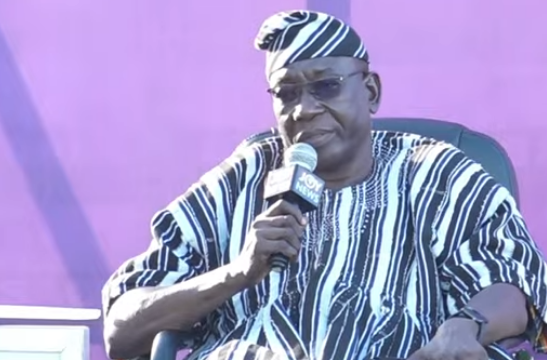
An Associate Professor at the Department of Development Management and Policy Studies at the University for Development Studies (UDS), has warned that the monetisation of elections could eventually lead to the wrong people being elected to Parliament.
Prof Adams Achanso said the demands placed on politicians by the electorate had created competition among them as they sought different ways to satisfy voters, contributing to the growing role of money in the electoral process.
Speaking to JoyNews at the ‘Democracy Is Not For Sale’ programme held in Damongo, Mr Achanso said the influence of money could vary depending on the level of the electoral process.
He pointed to internal party elections, particularly contests involving delegates, where some aspirants spend substantial amounts of money but still fail to win.
“At the delegate level within political parties, we know situations where people spend so much and, at the end of the day, they don't necessarily win,” he said on September 25.
Mr Achanso suggested that this could partly be because delegates tend to be more politically conscious and may not necessarily allow financial inducements to determine their choice at the ballot box.
“Perhaps this is so because at that level we have a lot of level-headed people, people who are politically conscious,” he said.
However, Mr Achanso said the dynamics could be different during general elections, where political parties in government have, on several occasions, lost elections despite having greater access to resources than their opponents in opposition.
Nevertheless, Mr Achanso warned that if the monetisation of elections continued unchecked, it could eventually affect the quality of people elected to Parliament.
“So, if the monetisation does not stop, we'll get to a point where we'll get wrong people going to Parliament,” he cautioned.
Mr Achanso, however, stressed that he could not definitively state that current parliamentarians or the president had been wrongly elected because of monetisation.
He explained that he had not conducted research to establish whether monetisation had directly influenced the election of Ghana's parliamentarians or president.
“I cannot say that for sure for now, because I have not done any research on our parliamentarians, on our president, to see whether they were wrongly elected because of monetisation,” he said.
He called for a solution to the issue, stressing the need to address the growing influence of money in Ghana's electoral process.
“It is something that we need to find a solution,” he added.
Latest Stories
-
I’ll vote for a female president; women are less likely to steal from the state – Okyeame Kwame
14 seconds -
More public education needed to stop vote-buying – Savannah Region MP
9 minutes -
Absa Bank commissions new head office, commits to strengthening operations in Ghana
12 minutes -
Republic Bank-JoyNews Habitat Fair clinic: Day 1 ends on positive note as patrons explore housing solutions at Junction Mall
16 minutes -
Vanderpuye: NDC welfare system needed to support former officials, cadres
20 minutes -
Chamber of Mines extends support to Akropong, Mampong Special Schools
23 minutes -
Tumu chiefs, MP back clearance of road corridor for Ghana-Burkina road corridor
28 minutes -
‘Democracy Is Not For Sale’: Monetisation of elections could lead to wrong people entering Parliament – UDS lecturer
39 minutes -
COCOBOD increases cocoa producer price to GH¢42,400 for 2026/27 season
42 minutes -
Atebubu College of Education receives GETFund boost after years of infrastructure neglect
44 minutes -
64 arrested over alleged unlawful possession of firearms at Achimota lounge
1 hour -
Savannah Regional Minister calls for clear rules to distinguish generosity from vote-buying
1 hour -
TOR secures 950,000 barrels of Sankofa crude from GNPC
1 hour -
NAGRAT calls for probe into alleged inflation of School Feeding enrolment figures
1 hour -
Four more arrested over alleged 2026 school placement fraud
1 hour