

Audio By Carbonatix
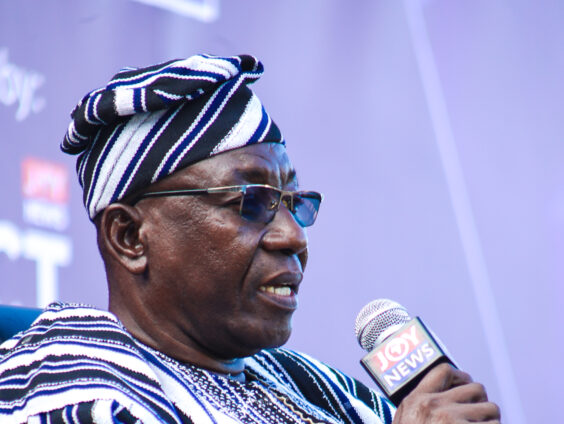
An Associate Professor at the Department of Development Management and Policy Studies at the University for Development Studies (UDS), has warned that the monetisation of elections could eventually lead to the wrong people being elected to Parliament.
Prof Adams Achanso said the demands placed on politicians by the electorate had created competition among them as they sought different ways to satisfy voters, contributing to the growing role of money in the electoral process.
Speaking to JoyNews at the ‘Democracy Is Not For Sale’ programme held in Damongo, Mr Achanso said the influence of money could vary depending on the level of the electoral process.
He pointed to internal party elections, particularly contests involving delegates, where some aspirants spend substantial amounts of money but still fail to win.
“At the delegate level within political parties, we know situations where people spend so much and, at the end of the day, they don't necessarily win,” he said on September 25.
Mr Achanso suggested that this could partly be because delegates tend to be more politically conscious and may not necessarily allow financial inducements to determine their choice at the ballot box.
“Perhaps this is so because at that level we have a lot of level-headed people, people who are politically conscious,” he said.
However, Mr Achanso said the dynamics could be different during general elections, where political parties in government have, on several occasions, lost elections despite having greater access to resources than their opponents in opposition.
Nevertheless, Mr Achanso warned that if the monetisation of elections continued unchecked, it could eventually affect the quality of people elected to Parliament.
“So, if the monetisation does not stop, we'll get to a point where we'll get wrong people going to Parliament,” he cautioned.
Mr Achanso, however, stressed that he could not definitively state that current parliamentarians or the president had been wrongly elected because of monetisation.
He explained that he had not conducted research to establish whether monetisation had directly influenced the election of Ghana's parliamentarians or president.
“I cannot say that for sure for now, because I have not done any research on our parliamentarians, on our president, to see whether they were wrongly elected because of monetisation,” he said.
He called for a solution to the issue, stressing the need to address the growing influence of money in Ghana's electoral process.
“It is something that we need to find a solution,” he added.
Latest Stories
-
Go back to the hand washing days – Ghanaians told
2 minutes -
GoldBod commits GH¢35m to reclaim galamsey-damaged Tano Nimri Forest Reserve
7 minutes -
Afenyo-Markin reflects on loneliness of public service, says survival is largely spiritual
14 minutes -
Achimota Court designated to handle petroleum diversion cases – NPA CEO
22 minutes -
Bekwai court jails mine worker 14 years for defiling 8-year-old girl
27 minutes -
CHASS conference calls for collective action to tackle indiscipline in schools
31 minutes -
Oil edges down as investors weigh possible US sanctions on ‘shadow fleet’
44 minutes -
Netflix names former Disney executive Peter Rice as new content chief as Bajaria departs
54 minutes -
India’s ‘cockroach’ protesters set to return despite police crackdown
1 hour -
Porn showing choking or incest to be banned from early November, government says
1 hour -
Russell Brand accuser says he turned ‘monster-like’ before alleged rape
1 hour -
US police identify remains of man found in barrel in shrinking reservoir
2 hours -
My uncle told me I will never make it in music – Lojay
2 hours -
Martinez apologises for outburst and fined by Man Utd
2 hours -
Infantino apologises to FIFA Council – but told he is still not fit to lead
2 hours