

Audio By Carbonatix
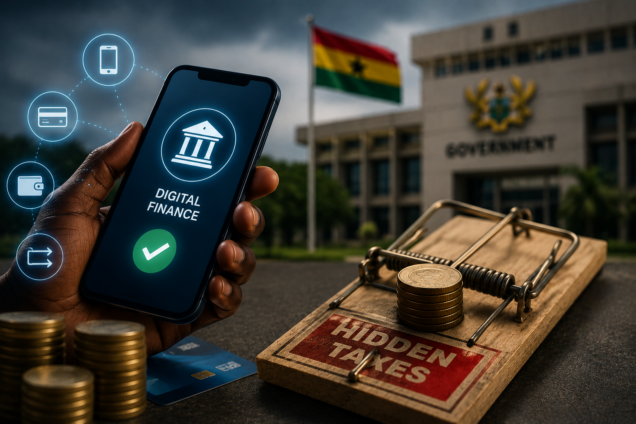
Economist and Professor of Finance at the University of Ghana Business School, Godfred Bokpin, has cautioned government against treating Ghana’s digital finance ecosystem mainly as a tool for taxation.
He says digital payments, fintech platforms and mobile money services should first be used to build an inclusive and productive economy.
Prof. Bokpin argues that if government places taxation ahead of the broader benefits of digitisation, consumers and businesses may respond negatively.
“We should not only look at it from the perspective of taxation. We should look at it in terms of the broader economic benefit. If you always put tax ahead of digitisation, the market will react differently,” he indicated.
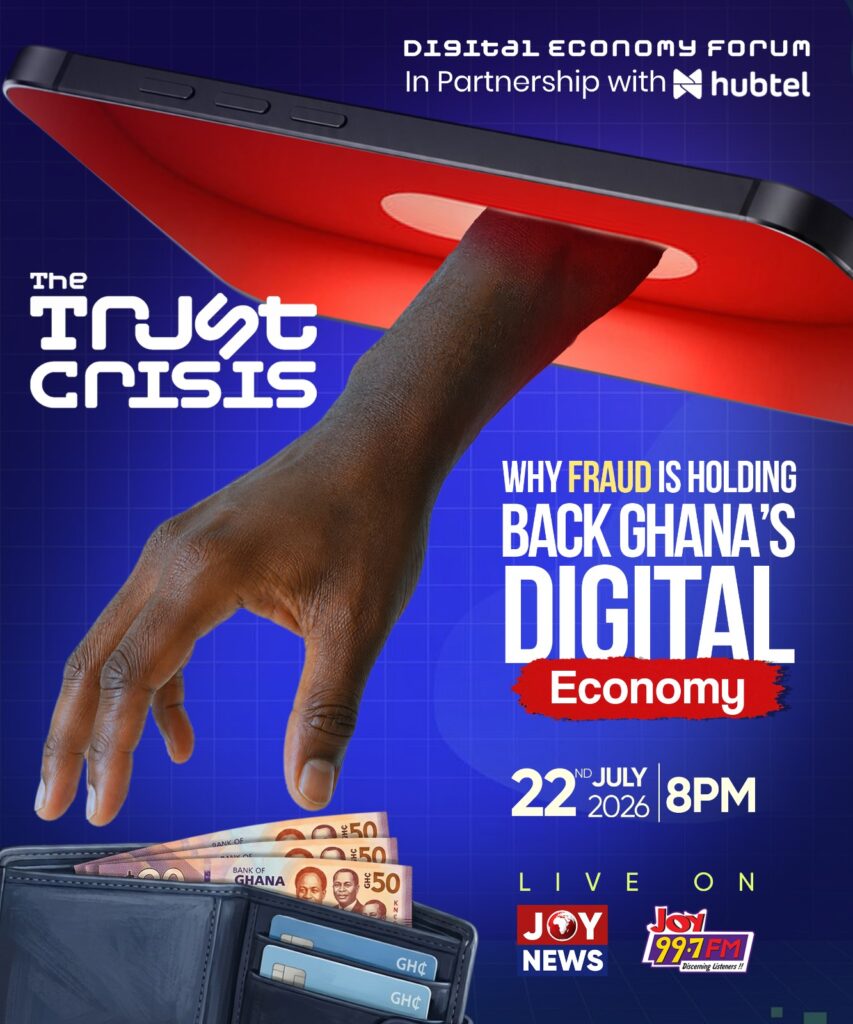
Prof. Bokpin was speaking in a yet-to-be-aired documentary, "The Trust Crisis," ahead of the maiden Digital Economy Forum under the theme, "The Trust Crisis: Why Fraud Is Holding Back Ghana’s Digital Economy."
The thought-leadership platform, an initiative of Hubtel, will air on JoyNews and Joy FM on Wednesday, July 22, 2026, at 8 p.m.
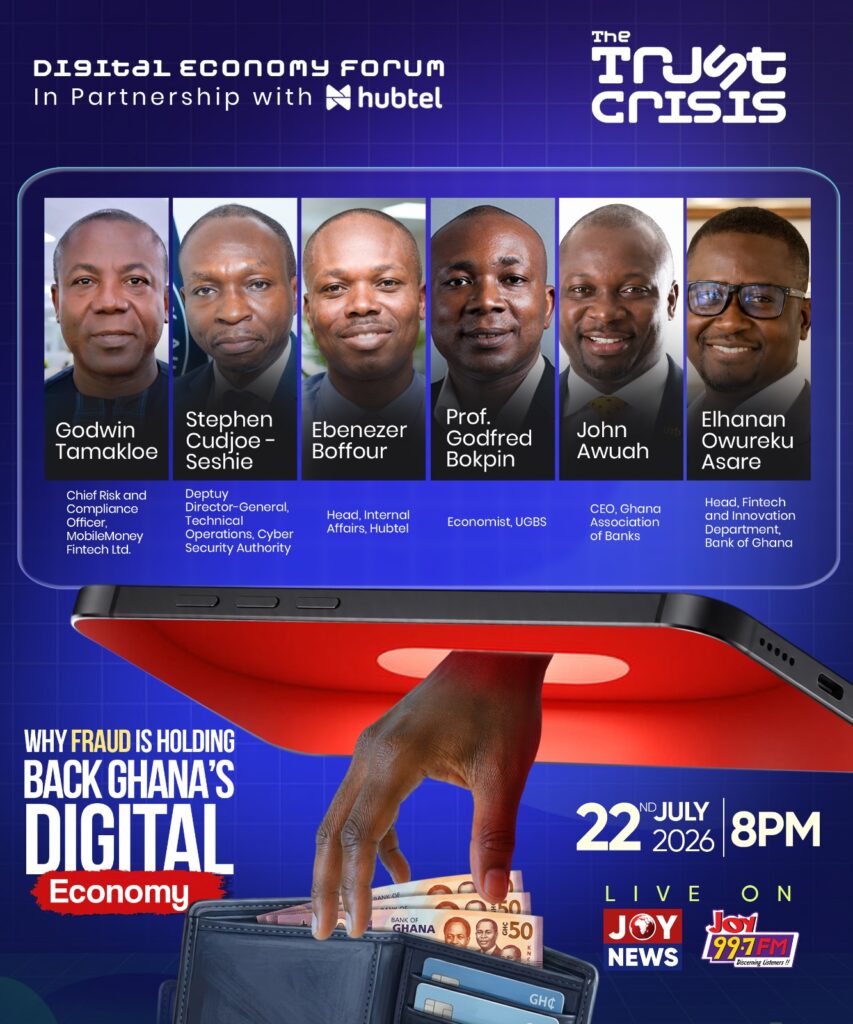
The forum will bring together regulators, banks, fintech companies, telecommunications firms, security agencies and consumers to examine whether Ghana’s regulatory system is keeping pace with the growth of digital finance.
Prof. Bokpin said Ghana’s large informal sector and unbanked population make digital finance critical to economic transformation.
“For a country like Ghana, with a huge informal sector and a huge unbanked population, these avenues allow the economy to rope in the unbanked, who traditionally would not be comfortable opening a bank account to do transactions,” he said.
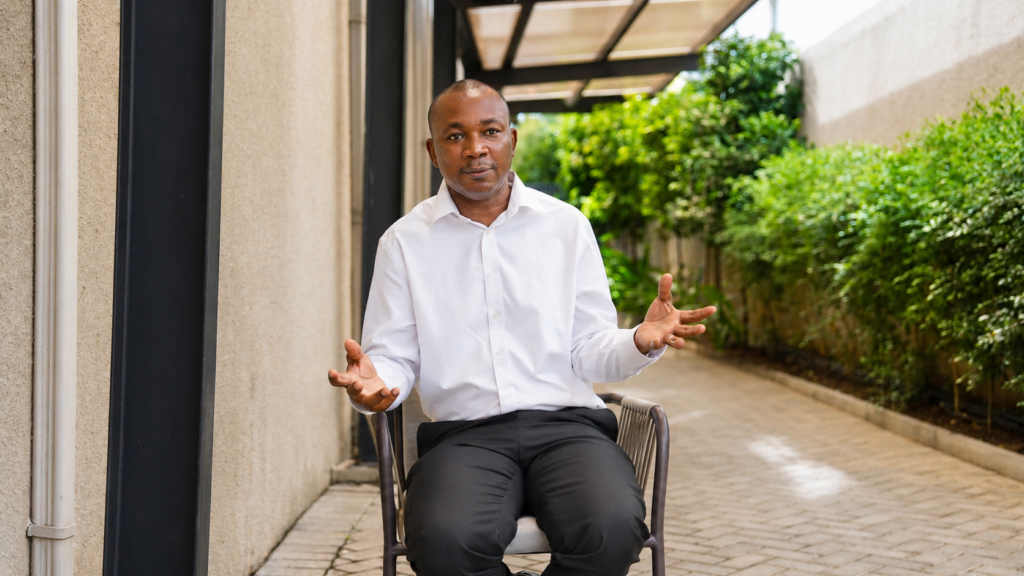
He explained that many informal-sector workers struggle to meet the documentation requirements of conventional banking.
“These days, when you want to open a bank account, they still ask you for certain documents that the average Ghanaian in the informal sector may not be able to provide. So, digital payments, digital apps and fintech open up the market and rope in all these people,” he indicated.
According to him, the real value of digitisation lies in financial inclusion, greater transaction flows and a stronger foundation for economic activity.
“The real benefit is that it increases financial inclusion and helps to ensure that there is increased flow within the financial system, which can also aid intermediation. If government is able to put in place the right structure, we are able to trace transactions and formalise the informal sector in a certain way that allows us to build an inclusive economy,” he added.
Prof. Bokpin said taxation should follow from a stronger and more formal economy, not be the first signal government sends to users of digital platforms.
“The government’s goal should not be that we want to leverage this to tax you. Let us look at how we want to leverage it to grow an economy, a taxable economy that allows the state to get the maximum tax revenue from that. That is the approach we should adopt,” he further said.
His comments come as Ghana’s digital payment ecosystem continues to grow rapidly.
The Bank of Ghana’s 2024 Payment Systems Oversight Report shows that payment service providers processed about 8.1 billion transactions valued at approximately GH¢3 trillion in 2024. The Bank said the growth reflected increased adoption of digital payments and stronger oversight of players in the space.
But the growth has also created new risks. The Bank of Ghana’s 2024 fraud report shows that banks, specialised deposit-taking institutions and payment service providers recorded 16,733 fraud cases in 2024, up from 15,865 in 2023.
Payment service providers recorded 15,673 fraud cases, representing a seven per cent increase from 2023, while the value at risk rose by 18 per cent to approximately GH¢19 million.
Prof. Bokpin said fraud and mistrust could weaken public participation in digital finance and push some users back to cash.
He cited traders who reject mobile money payments because of concerns about fraud. The economist said when people lose confidence in digital channels, the broader gains from digitisation are affected.
“We know that in Ghana, because of fraud associated with mobile money here and there, there are communities and traders who do not want to accept mobile money payment. It is simply because they do not have confidence in the system. It may also be because they have had one experience or another, directly or indirectly. One direct effect is unwillingness to participate. What that means is that they will prefer to do more cash-based transactions,” he said.
Prof. Bokpin said this is why government must treat trust as a central part of digital policy.
For him, digital finance should not be framed mainly as a revenue-collection tool. It should be used to reduce transaction costs, deepen financial inclusion, expand the formal economy and support growth.
He said once that broader economy is built, government will be better positioned to mobilise tax revenue sustainably.
The issue will form part of discussions at the maiden Digital Economy Forum as regulators, banks, fintech companies, telecommunications firms, security agencies and consumers examine how Ghana can protect confidence in the digital economy while expanding its benefits.
Latest Stories
-
Mahama urges African governments to treat healthcare as an investment, not budget cost
34 minutes -
Bawumia congratulates John Boadu and new NPP executives, pledges support ahead of 2028
36 minutes -
‘No talent should be left out’ – Bawumia pledges inclusive NPP campaign for 2028
42 minutes -
Prof. Mike Oquaye recounts how he blocked Special Prosecutor’s attempt to arrest Bawku Central MP
57 minutes -
Make health sovereignty a priority for Africa – Mahama
1 hour -
Dorimon Naa, Wa West DCE lead massive clean-up exercise; threaten sanctions against recalcitrant residents
1 hour -
Photos From Adom FM Y2K Jam
1 hour -
Praye Tiatia steals the show at Adom FM Y2K Jam [Watch]
2 hours -
Boakye Agyarko congratulates John Boadu, pledges support for NPP leadership
2 hours -
Antwi HiMight thrills fans with Antwi ne Antwi hits at Adom FM’s Y2K Jam [Video]
2 hours -
Amb. Edward Boateng congratulates Boadu, Kodua on election wins
2 hours -
John Boadu pledges to rebuild NPP from grassroots and restore ‘winning machinery’
2 hours -
Ashaiman Assembly deploys monitoring system to curb dumping in storm drain
3 hours -
John Boadu must rebuild, unite NPP for 2028 – Edward Boateng
3 hours -
Executive intimidation of opposition undermines separation of powers – Prof Oquaye
3 hours