

Audio By Carbonatix
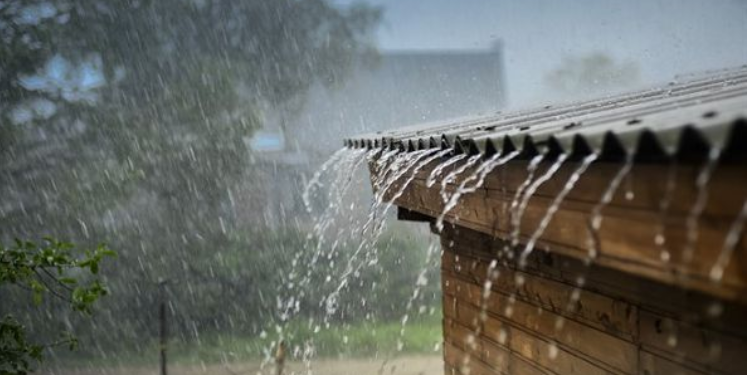
Children and adults are at risk of dangerous health effects from drinking roof runoffs.
That is the conclusion of a research by the scientists at the Department of Chemistry, Kwame Nkrumah University of Science and Technology.
With no potable water running through taps in many homes in Ghana, rainwater harvesting is an alternative source of water.
However, the roofing materials have been identified to affect the water quality.
The research published in the 2022 edition of the journal, Science of the Total Environment, sought to find certain substances and how they can impact consumers’ health.
“We wanted to assess heavy metals concentration, physicochemical and bacteriological parameters in roof runoffs and estimate the water quality index and health risk these metals pose to consumers,” lead scientist, Prof. Osei Akoto said.
For the study, rainwater was harvested from Aluzinc, Aluminum, Galvanized, and Asbestos roofing materials within the Ejisu municipality.
The scientists used rainwater collected directly from the sky as comparison.
They found heavy metals such as Cadmium, iron, chromium and some germs were above the WHO standard.
Cadmium in runoffs from asbestos roofing, for instance, was found to pose the biggest risk.
“All runoffs from the four roofing materials recorded Cd, Fe, Cr, turbidity, pH, E.coli, total and fecal coliform levels above WHO limit for drinking water.
“Cadmium recorded the highest non-cancer health risk to children and adults in all the roof runoffs,” he explained.
“The estimated water quality index for runoffs from the four roofing materials exceeded 100 indicating their unsuitability for drinking.
“Hazard quotients of 9.53 and 4.08 were estimated for a child and an adult respectively via oral exposure to Cd in runoffs from Asbestos roofing material,” he said.
The water collected directly from the sky was however much safer.
“There was a significant variation in pH, EC, Zn, Cd, Cr, Fe, E. coli, total and fecal coliform levels between control samples and roof runoffs,” he noted.
The researchers are therefore advising against drinking rainwater.
Latest Stories
-
Ghana explores centre of excellence for hearing, communication and cochlear implant care
60 minutes -
Schizophrenia-related disorders lead mental health cases recorded in Ghana
1 hour -
Dutch authorities enlist Ghana in hunt for fugitive drug lord Bolle Jos
2 hours -
Ghana housing finance conference adopts communiqué to improve affordable housing access
6 hours -
Special Initiatives Minister urges Wa Technical Institute to enrol more girls as EU-backed solar training lab opens
7 hours -
In the matter of my first year at the Bar
7 hours -
ActionAid Ghana calls for an end to child marriage, greater investment in girls’ rights
7 hours -
Newsfile to tackle World Cup visa scandal, beach demolitions, education strikes, BRICS bid
7 hours -
UK-Ghana Trade & Investment Summit: Trade Resource Centre to help businesses maximise UK-Ghana trade opportunities
8 hours -
Embassy of Denmark celebrates World Maritime Day
8 hours -
Linking LEAP to productive inclusion could cut extreme poverty by 2030 – UNICEF
9 hours -
Trade Ministry backs use of creative arts to rehabilitate prison inmates
9 hours -
Negotiations with government to continue despite strike suspension – GNAT
9 hours -
‘Ghana cannot afford to waste public resources; every cedi has a job’ – Ato Forson
9 hours -
Ghana expects economic boost as World Assemblies of God Congress brings 10,000 delegates to Accra
9 hours