


Audio By Carbonatix
A Congolese journalist who had been raising awareness about the Ebola virus in the Democratic Republic of Congo has been killed at his home.
The army said unidentified attackers raided Papy Mumbere Mahamba's home in Lwebma, in the north-eastern province of Ituri, killing him, wounding his wife and burning their house down.
DR Congo is experiencing the world's second-worst Ebola epidemic on record.
People working to stop the virus are often targets of attacks.
Mahamba's murder is likely to have been fuelled by deep suspicion of the Ebola virus and mistrust of those who are working to stop it, the BBC World Service's Africa editor Will Ross says.
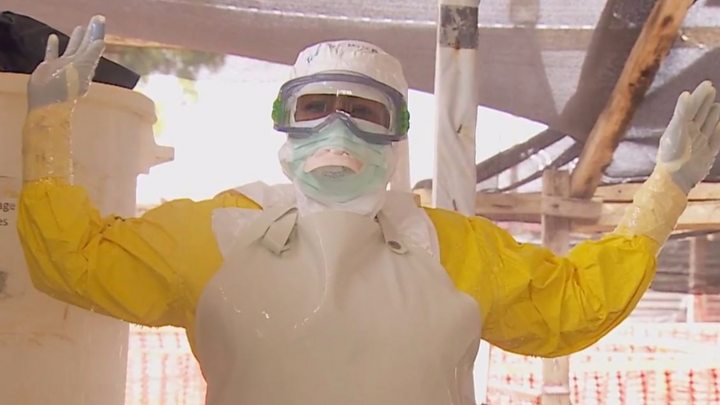 Fears and myths: Why people are still in denial about Ebola
Efforts to control the outbreak have been hampered by violence against healthcare workers and Ebola treatment facilities.
Some do not believe that the virus exists or do not trust health workers, leading people to avoid treatment.
Over the last year there have been some 200 attacks on health workers, ambulances and health centres.
Fears and myths: Why people are still in denial about Ebola
Efforts to control the outbreak have been hampered by violence against healthcare workers and Ebola treatment facilities.
Some do not believe that the virus exists or do not trust health workers, leading people to avoid treatment.
Over the last year there have been some 200 attacks on health workers, ambulances and health centres.
What happened?
Mr Mahamba had just hosted an Ebola awareness programme on a community radio station when the attack took place. Professor Steve Ahuka, national coordinator of the fight against Ebola, confirmed the reports from the army that a "community worker" involved in the fight against Ebola had been killed. A journalist at Radio Lwemba, the local radio station where he worked, also confirmed the details. Jacques Kamwina told AFP news agency that Mahamba had been stabbed to death.What is the situation with Ebola in the DRC?
The DRC declared an Ebola epidemic in August 2018. More than 2,000 lives have been lost amid a total of 3,000 confirmed infections, according to the World Health Organization (WHO). The outbreak is affecting the DRC's North Kivu, South Kivu and Ituri provinces. In July, the WHO said the situation there was a "public health emergency of international concern."
Fears and myths: Why people are still in denial about Ebola
Efforts to control the outbreak have been hampered by violence against healthcare workers and Ebola treatment facilities.
Some do not believe that the virus exists or do not trust health workers, leading people to avoid treatment.
Over the last year there have been some 200 attacks on health workers, ambulances and health centres.DISCLAIMER: The Views, Comments, Opinions, Contributions and Statements made by Readers and Contributors on this platform do not necessarily represent the views or policy of Multimedia Group Limited.
DISCLAIMER: The Views, Comments, Opinions, Contributions and Statements made by Readers and Contributors on this platform do not necessarily represent the views or policy of Multimedia Group Limited.
Latest Stories
-
Diaspora Nasara Caucus congratulates Mohammed Ali Suraj, new NPP executives
30 minutes -
Dr Antwi-Boasiako’s cybersecurity book showcased at UN crime prevention congress
32 minutes -
We will empower the grassroots and protect every vote – NPP’s 1st Vice Chair Kojo Bamba
42 minutes -
I do not see myself as better than anyone – NPP’s 1st Vice Chair Kojo Bamba
1 hour -
Police blur the line between invitations and arrests – Reindorf Twumasi Ankrah
2 hours -
Turning invitations into arrests is making citizens reluctant to assist police – Twumasi Ankrah
2 hours -
The Traffitech-GH SMS spot-fine system: The good, the sad, and the funny – Bright Simons writes
3 hours -
Hawa Koomson pledges experienced and mature leadership of NPP women’s wing
4 hours -
Young woman found dead at Kasoa Peace Town
4 hours -
Playback: The Law examined lawful arrest in Ghana
5 hours -
Mahama urges African governments to treat healthcare as an investment, not budget cost
5 hours -
Bawumia congratulates John Boadu and new NPP executives, pledges support ahead of 2028
5 hours -
Aksa Energy delegation pays courtesy call on GRA Commissioner-General
5 hours -
‘No talent should be left out’ – Bawumia pledges inclusive NPP campaign for 2028
5 hours -
Prof. Mike Oquaye recounts how he blocked the Special Prosecutor’s attempt to arrest Bawku Central MP
6 hours