

Audio By Carbonatix
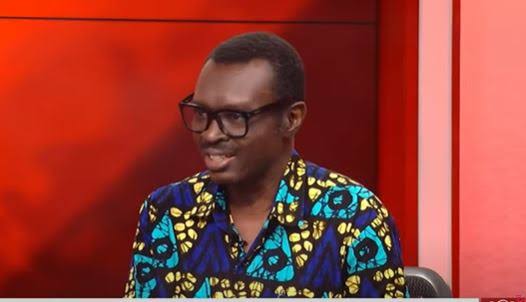
Anti-corruption campaigner and Vice Chair of the African Union Advisory Board Against Corruption, Edem Senanu, has called for clearer laws and stronger sanctions to ensure public officials who breach conduct rules can be effectively held accountable.
He said Ghana's legal framework does not adequately prescribe specific sanctions for some violations involving public officials, creating difficulties when prosecutors seek to pursue cases of alleged wrongdoing.
His comments followed a Corruption Watch investigation into the use of public funds in the construction of astroturf facilities under the One Constituency, One Astroturf programme introduced during the administration of former President Nana Akufo-Addo.
The programme became one of the administration's major sports infrastructure initiatives, with astroturf pitches constructed in several constituencies.
Speaking on the Joy FM Super Morning Show, Mr Senanu said although the 1992 Constitution establishes standards of conduct for public officials, specific legislation is needed to define the consequences for breaches.
“Till date, we've not had appropriate laws,” he said.
Mr Senanu cited conflict of interest as an example, noting that while the Constitution prohibits public officers from placing themselves in situations involving conflicts of interest, there must be clear legislation prescribing the sanctions where such rules are breached.
He said Parliament had been reviewing legislation on the conduct of public officers and expressed hope that the process would be completed.
According to him, clearly defined sanctions would provide prosecutors with a stronger legal basis to pursue cases where evidence of wrongdoing has been established.
“You need a law that then begins to prescribe the sanctions. So what happens if, irrespective of the fact that you've been cautioned not to put yourself in a position of conflict of interest, you do so with impunity?” he asked.
He said the absence of clearly defined penalties could create uncertainty over the consequences of breaches and make prosecution more difficult.
“What sanctions we apply? Is that a two-year sentence? Is there a five-year sentence? So we need a clearly defined law that provides the sanctions so that if you have to pick an individual and go to court, there's something sanctioned,” he said.
Mr Senanu argued that the legal uncertainty could also contribute to a perception that public officials can breach established rules without facing meaningful consequences.
“At the moment, that gap, that grey area is what is creating the feeling that I can do whatever I like and get away with it because in court, the prosecution is difficult. What sanctions to be applied is difficult,” he added.
He maintained that the Constitution provides broad guidance on the standards expected of public officials, but those principles must be backed by specific legislation that establishes enforceable penalties.
“Persons get away with murder. So no, we don't have an appropriate law in place, even though our Constitution is very clear on what ought to be the situation,” he said.
His comments come amid renewed scrutiny of public spending and alleged procurement and conflict-of-interest concerns arising from the construction of astroturf facilities across the country.
Latest Stories
-
Christian Council calls for protection of mission schools’ religious identity
11 minutes -
Mahama holds discussions with India’s External Affairs Minister
17 minutes -
Even when you cough, they come after you — Abanga accuses Mahama govt of criminalising free speech
23 minutes -
Mahama Ayariga proposes bank-adopted streets as part of stronger public-private partnership
31 minutes -
NPP will impose $500m bail bond on NDC offenders if we return to power — Abanga
38 minutes -
Gov’t begins 175-hectare Anunuso irrigation project to raise rice production
49 minutes -
Mahama Ayariga urges banks to take responsibility for beautifying public spaces
56 minutes -
I plan to secure 70 ‘orphan’ parliamentary seats for NPP — Abanga
1 hour -
Annoh-Dompreh brokers talks as Zoomlion pledges support for Adipa communities
1 hour -
Account for the old economy before selling us a new one
1 hour -
Abanga sets 4 million youth-vote target for Bawumia ahead of 2028 election
2 hours -
Gold edges lower with focus on Fed minutes, rate path clues
2 hours -
Oil prices rise as storms and air strikes threaten supply
2 hours -
Nigeria nears 2,000 repatriations from South Africa after latest evacuation flight
2 hours -
‘How can an office…close at 5pm?’ – Abanga questions 24-Hour Economy
2 hours