

Audio By Carbonatix
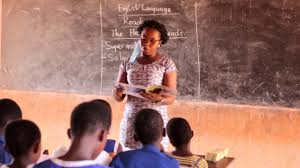
The Ministry of Education has dismissed claims suggesting that the study of English Language has been scrapped from the country’s education curriculum, affirming that English Language remains a key subject of instruction across all schools.
It follows public debate surrounding the compulsory use of Ghanaian languages as the medium of instruction in basic schools.
In a press release issued on Wednesday, the Education Ministry PRO, Mohammed Hashmin, explained that the ongoing discussion concerns the policy on the use of children’s home languages alongside English, not a replacement of the English Language.
“The Ministry of Education is keen to ensure that no learner is left behind in receiving the quality education they deserve. It is their right. We respect their right.
"At the end, we are nurturing individuals into responsible national adults and global citizens. Therefore, the Ministry will not and has not cancelled the study of English and other international languages,” the statement noted.
The Ministry indicated that the mother tongue policy, first introduced after independence, was designed to strengthen literacy and improve learning outcomes, but has faced implementation challenges over the years.
“Our education system needs to equip learners with the foundational skills they need to navigate our increasingly complex and uncertain world. All learners need to develop the skills they need to thrive and be ready for the world of work, further studies, and responsible adulthood.”
The Ministry cited strong global evidence that teaching children in a language they understand, alongside English, significantly boosts comprehension and performance across all subjects. It warned that teaching children in unfamiliar languages often creates major barriers to literacy.
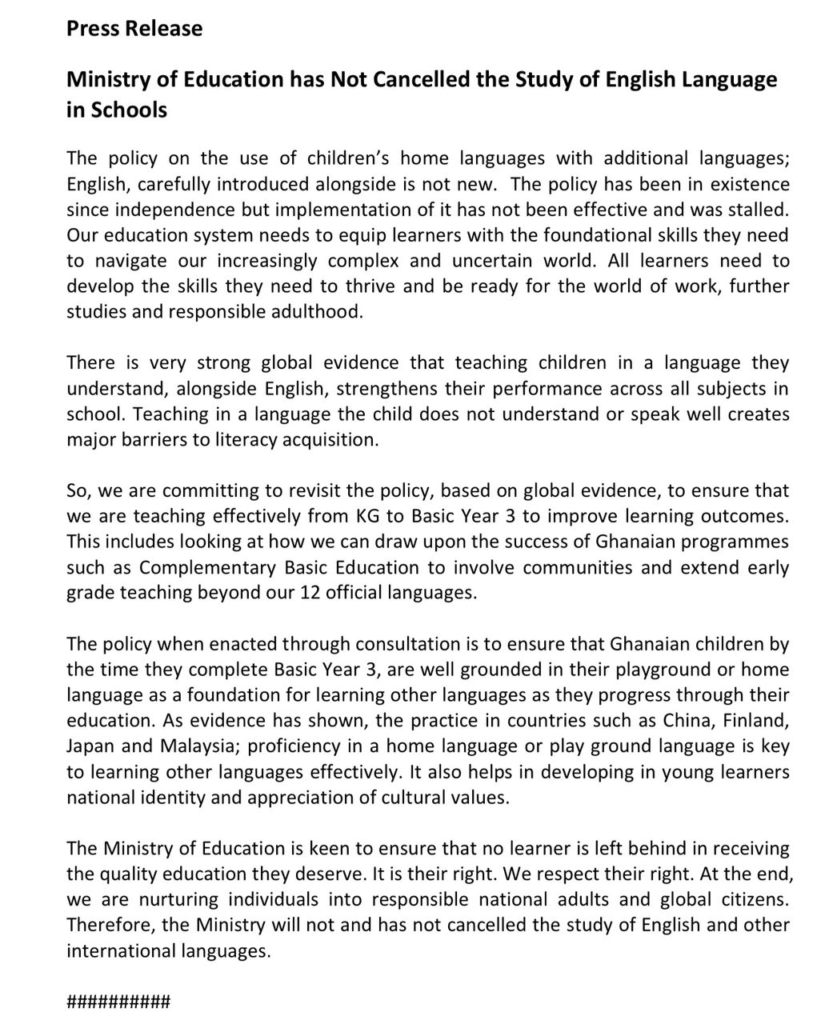
As part of its renewed commitment, the Ministry said it would revisit and improve the policy to ensure effective teaching from Kindergarten to Basic 3, drawing lessons from successful local initiatives such as the Complementary Basic Education (CBE) programme. The new framework aims to engage communities more deeply and expand early grade instruction beyond Ghana’s 12 official languages.
The statement emphasised that the goal of the policy review is to help children become proficient in both their home language and English, providing a strong foundation for learning other languages as they progress through school.
The Ministry referenced international examples from countries such as China, Finland, Japan, and Malaysia, where similar bilingual approaches have yielded strong literacy results and strengthened national identity.
Latest Stories
-
Sam George cautions ministers against reading unverified AI-generated speeches
1 second -
Ghanaian entrepreneur Mary Nyamekye Asamoah wins Africa Travel 100 award
3 minutes -
Obuasi SHTS abuse: Sanction all officials who failed to act – Moving Masculinity
8 minutes -
Lucy Agyepong honoured for excellence in engineering education at maiden GAAS Women’s Awards
11 minutes -
Harriet Afia Konadu Asiedu
18 minutes -
AFCON 2027: Sports Minister ‘convinced’ Black Stars will qualify despite losing opening two games
19 minutes -
CUTS welcomes VAT collection on cross-border digital services, urges fair treatment of Distance Learning students on overseas programmes
23 minutes -
Leave the Chiefs and fix the Galamsey Problem: Dr Solomon Owusu Advises President Mahama
26 minutes -
Pay attention to teachers and give them what is due – Ho District GNAT tells government
30 minutes -
Authorities knew of abuse allegations against Obuasi headmaster months before suspension – JoyNews investigation
34 minutes -
US teenager appears in court over alleged Hindu temple shooting plot
37 minutes -
Academic City donates paediatric rehabilitation staircase to Ga East Hospital
40 minutes -
Services drive 7.4% expansion in Ghana’s economic activity
52 minutes -
‘I don’t make music for awards, I make it to connect people’ – Rocky Dawuni
1 hour -
Farmer jailed for three months over assault on wife in viral video
1 hour