

Audio By Carbonatix
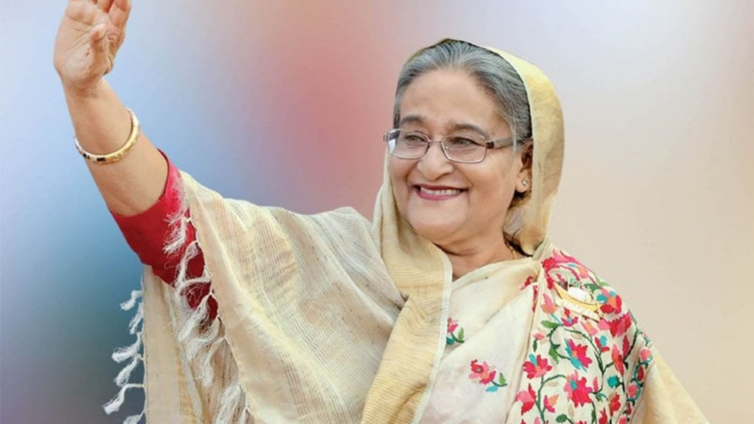
Bangladeshi Prime Minister Sheikh Hasina has resigned after weeks of deadly anti-government protests, putting an end to her more than two decades of dominating the country's politics.
Ms Hasina, 76, fled the country, reportedly landing in India on Monday.
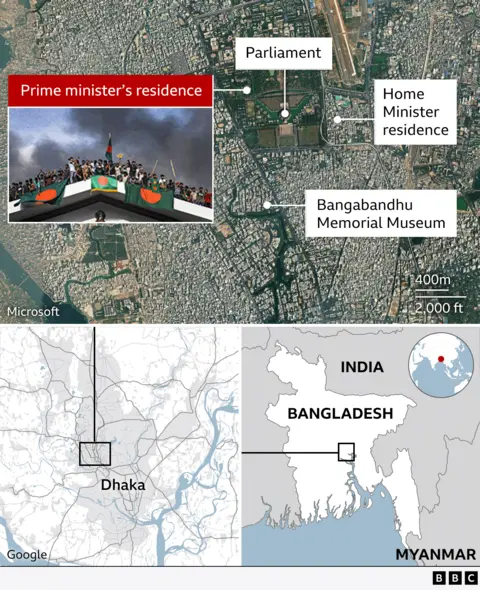
Jubilant crowds took to the streets to celebrate the news, with some storming the prime ministerial palace, reportedly looting and vandalising parts of her former residence.
Hours after Ms Hasina's resignation, President Mohammed Shahabuddin ordered the release of jailed former prime minister Khaleda Zia and all students detained during recent protests against a quota system for government jobs.
President Shahabuddin said he had chaired a meeting of army chiefs and political representatives.
He said an interim government would be formed, new elections called and a national curfew lifted.
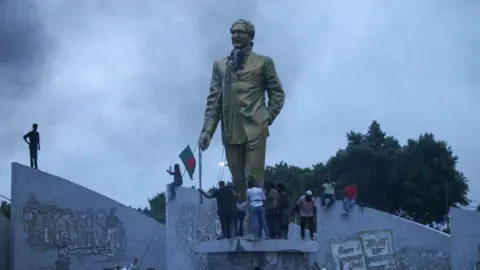
In Dhaka on Monday, police and other government buildings were attacked and set on fire. Protesters attempted to tear down a statue of independence leader Sheikh Mujibur Rahman, Ms Hasina's father.
Army and police units were deployed across the city. Mobile phone service was reportedly cut off for several hours before being restored.
On Monday, protesters were seen carrying out furniture from the prime minister's residence.
Dozens were reported killed on Monday, although the precise toll remained unclear. The AFP news agency reported the toll as 66 dead, though local outlet the Dhaka Tribune said as many as 135 had been killed.
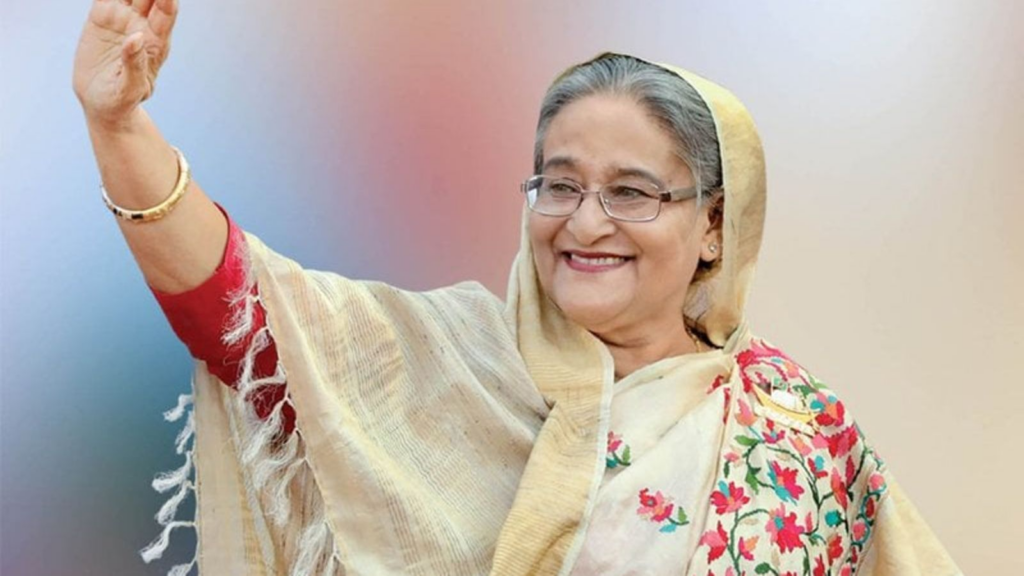
Ms Hasina's departure leaves a vacuum in Bangladeshi politics, which has long been characterised by a rivalry between her Awami League and the Bangladesh Nationalist Party.
The country has experienced several military coups, most recently in 2007.
The US commended the army for its "restraint" and said an interim government should be formed. The EU urged an "orderly and peaceful transition" towards a democratically elected government.
There was no official reaction from neighbour and regional power India.
Debapriya Bhattacharya, a senior economist with the Centre for Policy Dialogue in Dhaka, told the BBC that while the resignation had been met with "euphoria" in the streets, attacks on the Hindu minority had escalated, posing an immediate challenge to the new authorities.
"There is a feeling that India completely backed Sheikh Hasina's government. Protesters make no distinction between India and Hindu citizens of Bangladesh, which has already led to attacks on temples and people.
"Now there is a power vacuum, there is nobody to implement law and order. The new government will need to protect religious minorities."
Ms Hasina's allies said she would not return to the country's politics. The former prime minister has spent a total of 20 years in office, first coming to power in 1996.
Her son, Sajeeb Wazed Joy, told the BBC's Newshour programme: "She’s in her late 70s. She is so disappointed that after all her hard work, for a minority to rise up against her, I think she’s done.
"My family and I are done."
Critics say Ms Hasina's rule was characterised by forced disappearances, extra-judicial killings and the crushing of opposition figures and government critics.
But Mr Wazed, who also served as a adviser to the prime minister on technology, defended his mother's record.
"She has turned Bangladesh around in the last 15 years.
"When she took over power, it was considered a failing state. It was a poor country.
"Until today, it was considered one of the rising tigers of Asia."
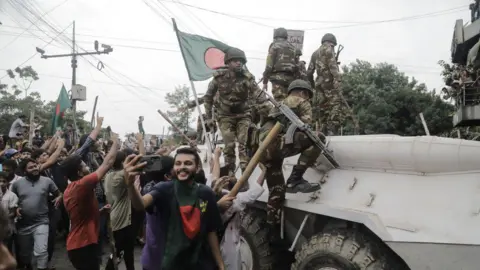
About 300 people have been killed since protests broke out a month ago over a quota system for government jobs. The demonstrations, met with harsh repression by government forces, developed into a broader anti-government movement.
Dr Chietigj Bajpaee, a senior research fellow at the Chatham House think tank, said the country's high unemployment rates had made the quotas, which reserved a third of civil service jobs for descendants of veterans of the country's 1971 independence war with Pakistan, a particularly salient political issue.
"Public sector job quotas – with 400,000 new graduates competing for 3,000 civil service jobs – became a lightning rod for anti-government unrest," Dr Bajpaee said.
He added that the speed of events reflected frustration among Bangladeshi youth over the country’s "one-party rule" over the last 15 years.
"In a country with such a vibrant civil society, efforts to curb political freedoms and free speech were bound to trigger a blowback."
Most of the quota was scaled back by the government following a Supreme Court ruling last month, but students continued to protest, demanding justice for those killed and injured, and Ms Hasina' resignation.
Mr Bhattacharya said protesters now expected the new government to go through with their demands, including democratic reforms, better jobs and improvements to the education system.
Latest Stories
-
Church of Pentecost supports over 2,000 BECE candidates in Obuasi with career guidance seminar
2 minutes -
Brandon Asante and Coventry all but promoted to Premier League despite Sheffield Wednesday draw
24 minutes -
GPL 2025/26: Late Kwartemaa strike downs Hearts in Tema
30 minutes -
Ghana Faces Sierra Leone Moment as Prosecutorial Powers come under strain
40 minutes -
Don’t consume fish or seafood from Tema Shipyard until further notice – FDA warns
45 minutes -
Why volunteering might be Africa’s most underrated career accelerator
51 minutes -
ActionAid Ghana raises concern over gender gaps in Feed Ghana Programme
53 minutes -
Windstorm wreaks havoc in Gushegu, displacing nearly 2,000 residents and damaging schools
55 minutes -
Friends of Bridget Bonnie Marks her 35th birthday with donation to Kasseh Model Health Centre
2 hours -
From Ekumfi Kokodo to the Pulpit Stage: Essi Donkor’s gospel journey takes shape
2 hours -
Landfilling waste management creates no value, it’s an economic waste
2 hours -
Photos: Speaker Bagbin Commissions MPs constituency office under parliamentary decentralisation programme
2 hours -
Black Stars technical advisor Winfried Schäfer sacked as GFA shakes up backroom staff
3 hours -
Wenchi water project almost complete, critical to gov’t agenda – GWL MD
3 hours -
Anti-LGBTQ+ bill not part of government’s legislative agenda – Inusah Fuseini
3 hours