


Audio By Carbonatix
The clocks went back one hour across Europe at 2am on Sunday October 25, giving everyone across the continent an extra hour in bed, and signaling the start of winter.
In the UK the clock change signals the end of British Summer Time and the beginning of Daylight Saving Time, which will last until the last Sunday in March.
But although the time change means people get a little extra sleep on Sunday morning, there is a downside.
While Daylight Saving Time is designed to give peoplean hour more of daylight in the mornings, the reality is that as winter approaches and the nights draw in, many people who work indoors will find themselves starting work in the dark and finishing in the dark -- with little opportunity to see sunlight.
This can leave some people feeling blue and is when some experts say that Seasonal Affective Disorder (SAD) -- a type of depression that comes and goes with the seasons -- can take hold.
With the coronavirus pandemic still raging across Europe and lockdown measures preventing people from socializing, this winter will feel particularly tough for some.
But the good news is there are things you can do to help keep positive during the winter months. Read on for some mood-boosting tips -- though if the winter blues start to impact your day to day life -- do reach out for some professional support.
Get outdoors, even if just for a few minutes
There are huge benefits to getting outdoors in the daylight each day, even if only for a few minutes. During the working week many people feel as though they are chained to their desks, but a change of scenery, even briefly, can be a real mood booster.
Longer walks on the weekends can also help us feel reconnected to nature and are a great way to exercise.
Sarita Robinson, Deputy Head for the School of Psychology and Computer Science at the University of Central Lancashire, says that getting out into the great outdoors can be a great way to feel more positive.
"We know that green space and blue space are very soothing, so anywhere where the environment looks pretty is actually beneficial -- so having a walk down to a local riverside, or if you can get to a beach," she says.
Even if you live in a city or an urban environment, getting out and looking at your surroundings can still really help -- especially if you go out with a "purpose" -- for example looking at different bird species, or plant varieties.
"You can find nature in anything," she adds.
And if you find you need a mood boost when back indoors, a SAD light therapy lamp, which is said to emit bright light similar to that of the sun, but without the potentially harmful UV rays, might help.
Light therapy lamps work by simulating sunlight -- although for best results, experts recommend shopping for a product that has an exposure of at least 10,000 lux of light.

Improve your sleep
The changing of the clocks can impact the body's circadian rhythm, which regulates sleep by taking cues from the environment, including sunlight and darkness. Not getting enough sleep can significantly affect mood, making it hard to concentrate or be productive.
There are things everyone can do to improve their chances of a good night's sleep, such as avoiding stimulants like caffeine, alcohol, and mobile phones before bed.
Catherine Seymour, Head of Research at British charity the Mental Health Foundation, says getting enough sleep is one of the most important things a person can do to be set for the day ahead -- and she recommends people prioritize it.
In a 24 hour society, she says, people can delay going to bed at night either to scroll on their phones or catch up with everyday tasks. But it is more important to slow down and get a good night's sleep.
"Getting that extra hour's sleep is going to be much more valuable to helping you cope with everything this winter is going to throw at you than an extra hour tidying the house," she says.
"We tend to sometimes think that shaving an hour off of sleep can be a really efficient way of squeezing more time out of the day but in the long run that catches up with us and can damage our mental health."
If you are someone who struggles to get to sleep, weighted blankets have also been growing in popularity for people who suffer with insomnia and anxiety. They work by making us feel more physically secure, and have been reported to ease tension, reducing levels of stress hormones in the body.
And if you wake up feeling groggy in the mornings, a sleep lamp might help you to feel more refreshed. Similarly to light therapy lamps, sleep lamps work by mimicking sunlight. Instead of a loud, beeping alarm, a sleep lamp wakes people up as the light gets gradually brighter and brighter.
Practice mindfulness
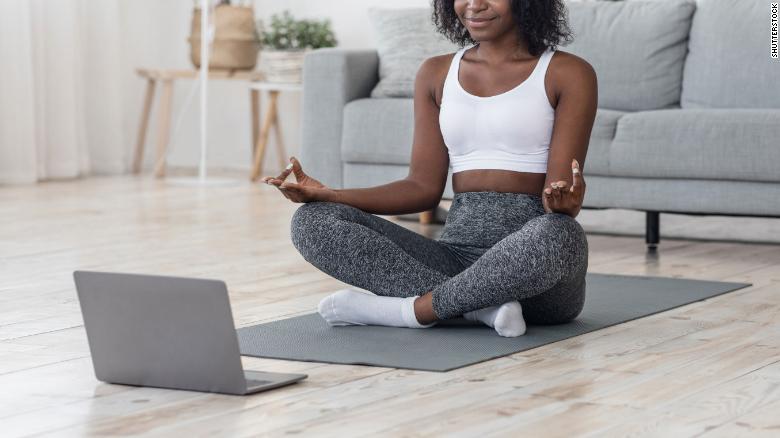
Mindfulness and meditation have been proven to help people relax and approach life's challenges with a more positive mindset. Slowing down and focusing on your surroundings can really help some people to better control their worries and anxiety -- which many people are experiencing more than ever due to the coronavirus pandemic.
Meditation needn't take long. Taking just five minutes out of your day to unwind and focus on your breathing could help you to reset.
CNN has a short meditation guide, which you can find here, that will help you release any negativity or stress and allow your body to relax.
Get your body moving, and look after it
Exercise not only keeps the body fit and healthy, but has been proven to improve sleep, mood, and outlook, too.
"Getting outside and exercising is a good way of keeping your mood up -- and if you want to beat the blues exercising in nature is a great way to do that," says Sarita Robinson.
Catherine Seymour adds that even as it gets darker, colder, and rainier outside, the benefits of wrapping up and going for a walk are strong.
"There's the old adage that there's no such thing as bad weather, just inappropriate clothing -- and almost nobody feels worse after going for a walk than they did before," she says.
"In research we've done into how people are coping throughout the pandemic, the top coping mechanism is going for a walk and spending time in nature. We know [walking] really helps people to feel as though they can cope with the uncertainty."
As well as staying physically active it's also important to eat healthily.
In times of stress and uncertainty it can feel really tempting to reach for junk food -- and possibly booze, too -- but it's really important to have a healthy, balanced diet.
But that doesn't mean being strict with yourself at all times. It's important to be kind to yourself too, so have that bar of chocolate when you fancy it -- just don't forget to eat your five a day.

Sing, dance, and be silly
When you're feeling down, the idea of having fun can seem impossible, but being silly and fooling around can help us feel less glum about the world.
Sarita Robinson says that music and a good dance help her to perk up.
Music has a powerful ability to change the way we feel -- and she says she regularly puts her headphones in and enjoys a solo dance.
"As it gets gloomy outside, another way to boost your mood with exercise is dancing while singing along to some energetic music -- music is a really powerful mood lifter and if you're feeling a bit down turning on the radio and rocking out to some power ballads is a great way to lift your mood. It's one of the things I use to lift my spirits when I'm feeling a bit down," she says.
Catherine Seymour agrees that finding time for simple pleasures is a really great way to give yourself a boost.
To let off steam, her children do a three-minute dance routine throughout the day that they call "go noodles," she says -- and since working from home, Seymour has been joining in.
"Getting up from your seat and just being silly is so good for your mental health and wellbeing. After three minutes I see my children sitting back down with a smile -- it improves everybody's mood and just makes you realize you don't have to get stuck down a rabbit hole of problems and seriousness," she says.
"A bit of being lighthearted is good -- whether that be dancing around, watching comedy, or playing board games. Lightheartedness and silliness is a tonic."
Latest Stories
-
Photos: Speaker Bagbin Commissions MPs constituency office under parliamentary decentralisation programme
15 minutes -
Black Stars technical advisor Winfried Schäfer sacked as GFA shakes up backroom staff
19 minutes -
Wenchi water project almost complete, critical to gov’t agenda – GWL MD
35 minutes -
Anti-LGBTQ+ bill not part of government’s legislative agenda – Inusah Fuseini
38 minutes -
Anti-LGBTQ Bill: Forget the rumour mongers, I’m a man of action, and will pass the bill – Speaker
1 hour -
Women and children among those killed in Sudanese army shelling of wedding celebration
1 hour -
President Mahama is not sincere with Ghanaians on LGBTQ bill matter – Hassan Tampuli
2 hours -
Gov’t to establish Prison Industrial Hub to equip inmates with income-generating skills – Prison Service boss
2 hours -
Alhassan Tampuli donates cement, roofing sheets to support storm victims in Gushegu
2 hours -
Alhassan Tampuli appeals for urgent support for storm victims in Gushegu
2 hours -
The hypocrisy must stop; pass Anti-LGBTQ+ Bill now – Alhassan Tampuli to Mahama
2 hours -
Imprisonment should be rehabilitative, not punitive – Ghana Prisons boss at UNGA
3 hours -
Ga Adangbe traditional priests petition Mahama over McDan aviation licence revocation
3 hours -
Anti-LGBTQ Bill: NDC’s arrogance is worrying – Hassan Tampuli
3 hours -
Let’s give OSP time to mature, not to scrap it – Hassan Tampuli
3 hours